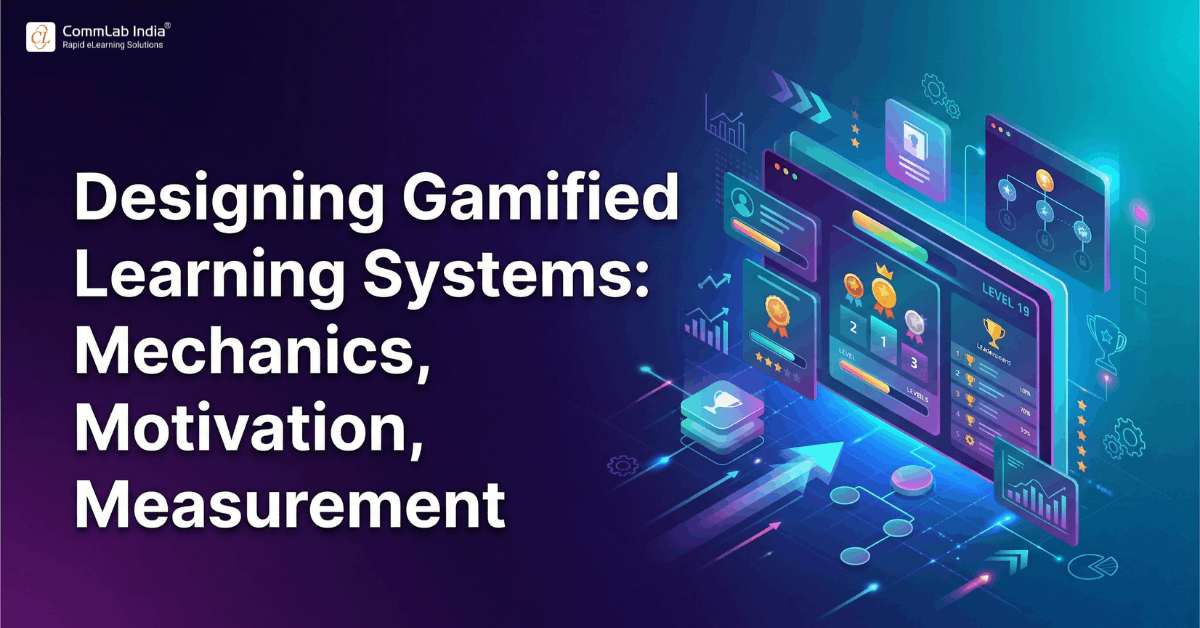
Do you know what is gamification? Gamification is a popular training strategy that involves the use of game-like mechanics in non-game contexts. It introduces healthy competition in the learning process, leading to higher engagement levels and better knowledge retention. It rewards progress in terms of points, ranks, levels, leadership boards, badges, etc.
But gamification becomes even more powerful when combined with AI. AI-powered gamification can analyze learner behavior, adapt challenges in real time, personalize learning paths, recommend next steps, and provide instant feedback. This helps organizations make employee training more efficient, relevant, and impactful.
This blog explores how AI-enhanced eLearning gamification is transforming workplace learning—what it is, why it matters, and the real benefits it brings to corporate training. It also dives into where and how to use it effectively, along with practical steps for implementation and key challenges to watch out for.
Table Of Content
- What is AI-Enhanced eLearning Gamification?
- What are the Benefits of AI-Enhanced Gamification in Learning?
- Where and How to Use AI-Powered eLearning Gamification in Corporate Training?
- How to Implement AI-Powered Gamification in Learning?
- What can be the Key Considerations and Challenges in AI-enhanced Gamification?
What is AI-Enhanced eLearning Gamification?
AI takes gamification to the next level. It can analyze learner behavior, personalize challenges in real-time, provide tailored feedback, suggest relevant content, and even create branching scenarios that adapt based on learner choices. Think of it as a smart game master for your eLearning course!
What are the Benefits of AI-Enhanced Gamification in Learning?
1. Increased Motivation & Engagement
AI-powered gamification taps into our innate desire for reward, recognition, and a sense of accomplishment. Points, badges, leaderboards, and progress bars provide instant gratification, while adaptive challenges maintain an optimal level of difficulty – not too easy, not too hard. This keeps learners engaged, reduces boredom, and makes them want to come back for more.
2. Improved Knowledge Retention
Gamification isn't just about fun! When done right, it reinforces learning. AI can personalize quizzes, create interactive scenarios that mimic real-world situations, and introduce spaced repetition to help information stick. By actively engaging with the material in a playful way, learners are more likely to understand and remember key concepts.
3. Personalized Learning Paths
One of the biggest advantages of AI is its ability to adapt. AI-powered gamification can analyze learner performance in real-time, identifying strengths and weaknesses. It can then serve up content, challenges, and practice questions tailored to each individual's needs. This prevents frustration for those who are struggling and keeps advanced learners challenged.
Watch this video to see how personalized eLearning can make training more relevant, adaptive, and impactful for every learner.
4. Data-Driven Insights
AI-enhanced gamification is a treasure trove of data. It tracks learner interactions, progress, and outcomes far more comprehensively than traditional eLearning tools. Instructors and course designers can use these analytics to identify areas for improvement, pinpoint common knowledge gaps, and continuously refine their custom eLearning content to achieve better results.
5. Enhanced Collaboration and Teamwork
AI-powered gamification can introduce collaborative challenges, quests, or simulations. Learners can work together, pool their knowledge, and earn rewards based on team performance. This can be particularly valuable for eLearning environments focused on developing soft skills and workplace cooperation. Here are a few platforms you can use for workplace collaboration.
6. Real-World Skill Practice
AI can create realistic, branching scenarios that mimic professional tasks or decision-making processes. Game mechanics like scoring, adaptive difficulty, and personalized feedback make it safe for learners to practice skills in a consequence-driven yet low-risk environment. Think of simulations for sales training, customer service, or even medical diagnosis.
7. Behavioral Change
AI-powered gamification can go beyond knowledge transfer to target behavioral change. By tracking learner choices and progress, it can incentivize positive habits, nudge learners towards better decision-making, and help track progress on behaviorally-focused learning programs (e.g., time management, conflict resolution, diversity and inclusion training).
8. Accessibility and Inclusivity
AI can make eLearning more accessible by adapting content and challenges to the needs of learners with different abilities. This might include text-to-speech options, adjustable game difficulty, or alternative ways to demonstrate mastery, making eLearning more equitable and inclusive.
Where and How to Use AI-Powered eLearning Gamification in Corporate Training?
AI-powered gamification is transforming how organizations design engaging, results-driven learning experiences. By combining what is gamification with AI capabilities, training managers can apply gamification in learning across multiple corporate training programs to improve engagement, retention, and performance. Here are practical gamification examples and use cases:
1. Onboarding and New Hire Training
Gamification in corporate training can significantly enhance the onboarding experience by making learning interactive and rewarding.
Watch this video to discover how gamification can make onboarding more engaging, interactive, and rewarding for every new hire.
How to use it:
- Create quests or challenges that introduce company culture, policies, and procedures
- Offer points, badges, and levels for completing onboarding modules
- Use interactive scenarios and virtual tours to build familiarity
Impact:
Improves engagement, accelerates learning, and helps track new hire progress with AI-driven insights.
2. Compliance Training
eLearning gamification makes compliance training more engaging, interactive, and easier to retain.
How to use it:
- Use scenario-based decision-making games and case studies
- Reward learners with badges, points, ranks, and leaderboards
- Add gamified quizzes and challenges for policy reinforcement
Impact:
Boosts completion rates, improves understanding of regulations, and reduces compliance risks.
3. Sales and Product Training
Gamification in learning works especially well for sales teams by tapping into their competitive mindset.
How to use it:
- Integrate role-playing simulations with AI-powered virtual customers
- Run sales competitions with leaderboards and rewards
- Use quizzes and challenges to reinforce product knowledge
Impact:
Improves sales techniques, increases motivation, and enhances negotiation and communication skills.
4. Leadership Training
Gamification in leadership development focus on decision-making and collaboration in safe environments.
How to use it:
- Use scenario-based games for decision-making practice
- Reward learners for feedback, collaboration, and team-based challenges
- Provide AI-driven feedback based on choices
Impact:
Strengthens critical thinking, leadership skills, and team collaboration.
5. Technical Training
AI-powered gamification simplifies complex technical training by making it interactive and challenge-based.
How to use it:
- Introduce problem-solving challenges and timed tasks
- Assign points and badges for correct responses
- Use simulations for hands-on practice
Impact:
Boosts engagement, reduces monotony, and promotes active, immersive learning.
6. Soft Skills Training
Gamification in corporate training helps develop essential workplace skills through experiential learning.
How to use it:
- Create team-based challenges for collaboration and problem-solving
- Use communication simulations for real-world practice
- Reward effective teamwork, leadership, and participation
Impact:
Enhances communication, teamwork, and interpersonal skills across the organization.
How to Implement AI-Powered Gamification in Learning?
Ready to embrace the future of gamified eLearning? Here are some practical steps to get you started:
Identify Learning Objectives: Clearly define the skills and knowledge your eLearning program aims to develop. This will guide the development of personalized challenges and rewards.
Leverage Existing Data: Utilize learner data from your Learning Management System (LMS) or previous eLearning courses. This data can provide valuable insights into learner performance patterns and preferences, informing AI personalization.
Choose the Right Tools: Several eLearning authoring tools and AI tools offer capabilities for personalized gamification. Consider factors like ease of use, integration with your existing LMS, and features that support AI-powered learning paths and adaptive challenges.
Focus on Scalability: While AI-powered gamification offers significant benefits, it's important to choose tools that can scale with your needs. Consider the size of your organization and the anticipated volume of learners who will utilize your eLearning programs.
Data Security and Privacy: When dealing with learner data, security and privacy are paramount. Ensure your chosen tools adhere to industry standards and regulations regarding data protection.
Start Small and Scale Up: AI-powered gamification is a powerful tool, but it's wise to begin with a pilot program. This allows you to test your approach, gather feedback from learners, and refine your eLearning program before full-scale implementation.
What can be the Key Considerations and Challenges Associated with it?
1. Not a Magic Bullet
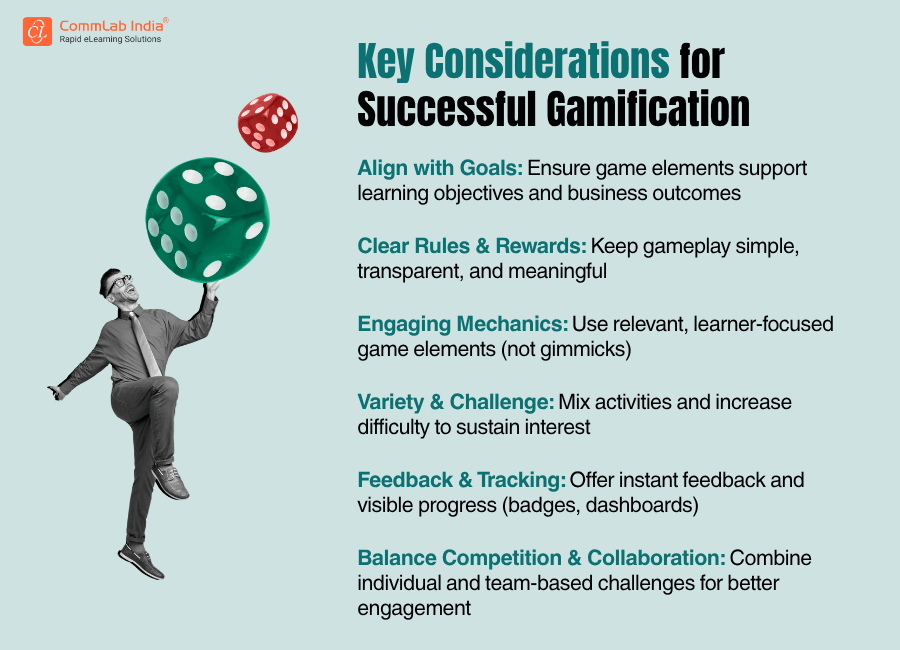
It's important to be realistic. AI-enhanced gamification, while powerful, isn't a silver bullet for every eLearning challenge. Successful implementation requires careful planning and design to ensure the game elements meaningfully support learning goals rather than becoming mere distractions.
2. Cost and Expertise
Developing AI-powered gamified eLearning courses can be more complex and potentially more expensive than traditional approaches. You might need specialized developers and instructional designers with both gamification and AI knowledge.
3. The Importance of Good Design
Poorly designed gamification can backfire. Overly competitive elements might discourage some learners, and rewards that are too easy to obtain lose their value. It's vital to strike a balance between challenge and reward.
Frequently Asked Questions About AI-Enhanced Gamification in Corporate Training
1. Is gamification only about points and badges?
A. No. Effective eLearning gamification goes beyond points and badges. It uses scenarios, challenges, simulations, feedback, and progress tracking to improve learning.
2. How can L&D teams use AI-enhanced gamification effectively?
A. L&D teams can use AI-enhanced gamification by aligning game mechanics with learning goals, personalizing experiences, tracking progress, and using insights to improve outcomes.
3. Can AI gamification help improve training ROI?
A. Yes. AI-enhanced gamification increases engagement, reduces drop-offs, and provides data insights, helping organizations improve training effectiveness and ROI.
Ready to Level Up Learning Engagement?
AI-powered gamification is shaping the future of corporate training by combining the motivational power of game mechanics with the analytical strength of AI. It can transform eLearning from a passive experience into one that is engaging, personalized, and results-driven. By boosting motivation, improving knowledge retention, and offering rich learner insights, AI-enhanced gamification helps training teams create learning experiences that are not just effective but enjoyable and impactful.
Want practical tips to incorporate gamification in eLearning? Download our eBook on eLearning Engagement with AI-enhanced Gamification.