Training videos are no longer optional in corporate learning; they are foundational to modern workplace training. Organizations use training videos to improve compliance adherence, accelerate product adoption, strengthen sales enablement, and simplify technical training at scale. More importantly, well-designed video-based learning delivers greater learner value by making content clearer, more engaging, easier to revisit, and directly applicable to real work situations. As learning demand increases across decentralized teams, AI-powered video creation tools further enhance this value by enabling personalization, accessibility, microlearning formats, and faster updates, ensuring training remains relevant, scalable, and performance-driven.
This blog walks through why videos work for corporate training, how videos support different training types, and how AI enhances training videos to deliver greater learner value.
Table Of Content
- Why Videos for Corporate Training?
- How do Videos Support Different Training Types?
- How Does AI Enhance Training Videos and Deliver Greater Learner Value?
- Frequently Asked Questions About AI Training Videos
Why Videos for Corporate Training?
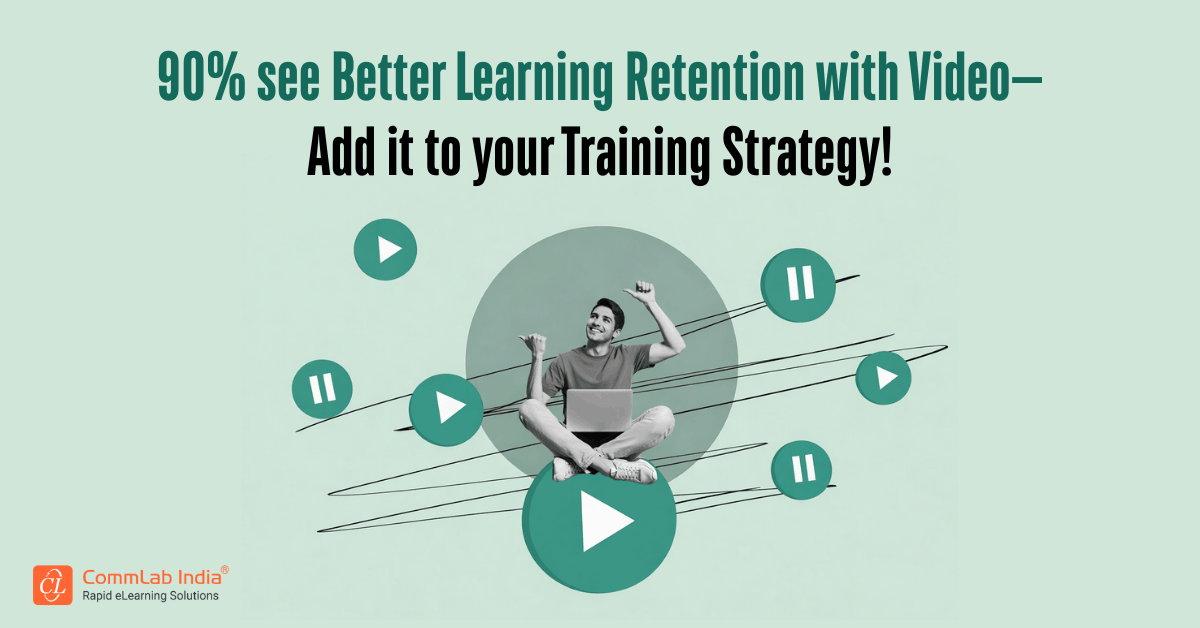
Training videos are becoming indispensable because 90% of L&D professionals report that video content significantly improves learner engagement and knowledge retention compared with traditional formats—a key reason organizations are embedding videos into enterprise training programs. This adoption reflects a broader shift in how employees prefer to learn: short, visual, on-demand content fits with busy schedules.
Training videos help reduce bottlenecks tied to live instruction by enabling asynchronous, reusable learning assets that can be localized and updated quickly. They also support higher completion rates and better learning retention, especially when paired with interactive elements or embedded assessments, making them more effective at driving performance outcomes across technical, compliance, sales, and product training than traditional alternatives. This evolution in learning delivery not only boosts learner engagement but also strengthens the connection between training investments and measurable business impact.
How do Videos Support Different Training Types?
Training videos support different training types by solving scale, consistency, and performance gaps across technical, compliance, sales, and product learning.
Large enterprises face recurring training waves, system rollouts, regulatory updates, and sales launches. Video-based learning reduces coordination bottlenecks and ensures consistent delivery across regions.
Here is how training videos solve specific enterprise pain points:
1. Compliance Training
Training videos improve retention and audit readiness in regulated industries.
Pharma, Healthcare, Manufacturing, and Financial Services operate under strict regulatory oversight. Inconsistent messaging or outdated training creates compliance risk.
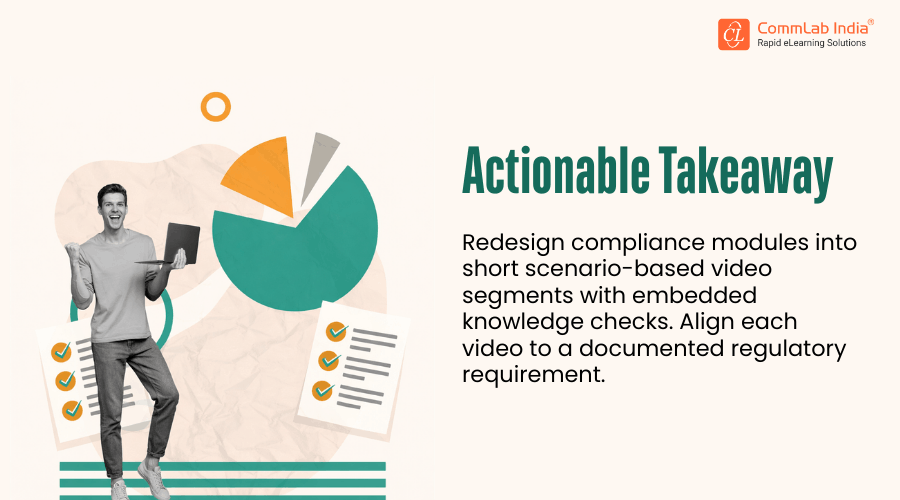
Animated explainers and scenario-based interactive videos help by:
- Simplifying complex regulatory language
- Demonstrating real-world consequences of non-compliance
- Enabling multilingual deployment across US and EU operations
2. Product Training
Training videos speed up product adoption internally and externally.
Product training often overwhelms support teams when employees or partners misunderstand features. Static documentation rarely drives adoption.
Demo videos and animated explainers address this by:
- Showing step-by-step product usage
- Enabling global product rollouts without retraining
- Supporting customer education alongside internal training
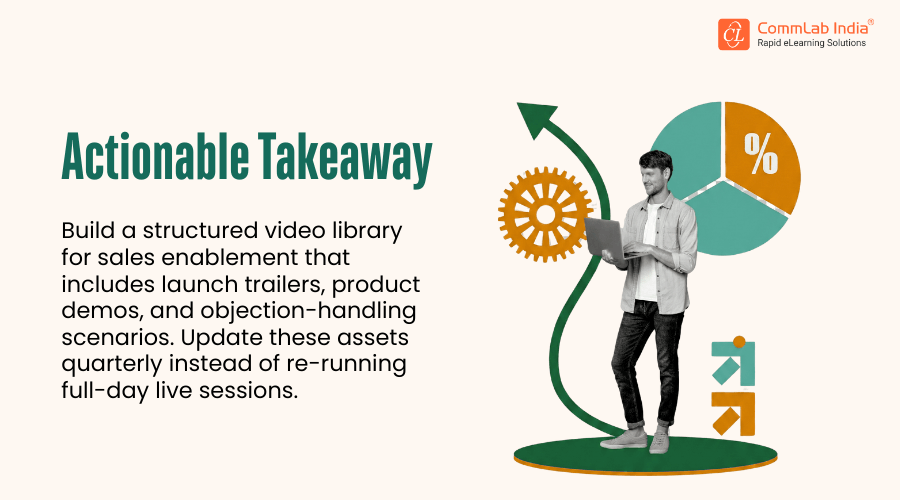
3. Sales Enablement
Training videos create consistent messaging across distributed sales teams.
In large enterprises, sales enablement demand accumulates continuously due to product updates, pricing changes, and market expansion. Live sessions alone cannot keep up.
Trailer videos, talking-head explainers, and interactive scenario videos help by:
- Reinforcing product positioning across regions
- Standardizing objection-handling approaches
- Accelerating onboarding of new sales hires
4. Technical Training
Training videos simplify complex systems and reduce dependency on live experts.
In IT, software, and manufacturing environments, technical knowledge often sits with a few subject matter experts. When those experts spend time repeating onboarding sessions, productivity drops.
Screencasts, simulations, and interactive demos solve this by:
- Standardizing system walkthroughs across locations
- Supporting just-in-time troubleshooting
- Allowing engineers or operators to revisit steps on demand
→ Watch Corporate Training Video Examples
How Does AI Enhance Training Videos and Deliver Greater Learner Value?
Video is the format; AI is what makes it faster, fresher, and fit for continuous learning demand.
AI video creation tools remove the biggest friction points in corporate video creation—studio scheduling, re-shoots, long edit cycles, and slow localization so L&D teams can deliver training videos when the business actually needs them, not weeks later.
But the real payoff goes beyond speed. When you use AI intentionally, it also increases learner value by making video-based learning more personalized, accessible, easier to follow, and easier to apply at work. AI enables personalized versions, accessible formats, microlearning-ready modules, and faster updates so learners get the right training, in the right form, at the right moment.
Want to see how AI is reshaping video creation? Watch this!
For large enterprises facing continuous learning demand, AI-powered training videos shift from being “content to watch” to becoming a scalable performance support system that improves understanding, retention, and on-the-job execution.
Here’s where AI makes the most meaningful difference:
1. Personalization
Generic training fails in decentralized enterprises because learners don’t see their reality reflected in the content. AI helps create targeted versions quickly while keeping governance intact.
What AI enables
- Role-based versions (individual contributor vs manager vs support).
- Industry-specific scenarios (Pharma vs Manufacturing vs Financial Services).
- Terminology and workflow alignment by function and SBU.
- AI avatars for consistent presenter-led delivery without studio shoots, enabling faster updates and smoother localization.
Spotlight AI Tool
Synthesia creates professional, presenter-led training videos without cameras, studios, or live presenters. You can build videos using 230+ AI avatars, generate voiceovers in 140+ languages, and produce consistent delivery across regions, ideal for compliance updates, product releases, and sales enablement refreshers.
With options for a custom avatar and voice, Synthesia also supports brand-consistent training at enterprise scale, so learners get familiar, high-quality learning through videos.
2. Accessibility, Learning Equity, and Inclusive Representation
AI-powered animated training videos strengthen accessibility and learning equity by making content visually inclusive, culturally adaptable, and easier to understand across diverse learner groups.
In large US/EU enterprises, learners span regions, languages, cultural backgrounds, and job roles. Representation and clarity influence engagement more than most teams realize.
What AI enables
- High-quality captions and downloadable transcripts for hearing accessibility and low-audio environments.
- Fast multilingual subtitles and voiceovers so non-native speakers can learn without delay.
- Audio enhancement (noise cleanup, clarity, leveling) for frontline or on-the-move learners.
- Inclusive visual representation at scale through animated or avatar-led options—enabling diverse characters, roles, and settings.
Spotlight AI Tool
Vyond’s template library makes enterprise rollout easier by giving you ready-built settings, characters, and props you can standardize and then customize without rebuilding from scratch every time. This makes it easier to standardize enterprise messaging while adapting visuals to reflect different regions or workforce segments.
Next-Gen Training: Unlocking the Power of AI in Video-based Learning
Elevate your Training Videos with AI
- Relevance of Video-based Learning
- Various Video Formats
- Potential of AI in Videos
- And More!
3. Job-Ready Retrieval and Performance Support
AI makes training videos more useful on the job by turning them into a performance support system—and by converting long content into microlearning videos that are faster to consume in the flow of work.
For L&D leaders, this means training videos stop behaving like “courses” and start behaving like on-demand job aids that employees can use during real work moments—system rollouts, compliance checks, customer conversations, or shopfloor procedures.
What AI enables
- Microlearning video created from a single webinar or long recording, each aligned to one learning objective.
- Multi-format training versions from one source file (talking-head, animated explainer, quick demo).
- Instant localization packages including subtitles, voiceovers, and on-screen text variations, without rebuilding the entire training video.
- Scenario variations at scale through adaptable characters, settings, and prompts to create multiple realistic training situations from one foundational storyboard.
Spotlight AI Tool
Meta’s MovieGen pushes customization further by making it easier to generate personalized training videos from minimal inputs. With a photo and text instructions, it can create videos that preserve a person’s identity and motion, enabling role-specific versions.
For L&D leaders, the practical advantage is scale: you can deliver consistent core messaging while adapting examples and scenarios for different regions, teams, or functions, without breaking under pressure.
Frequently Asked Questions About AI Training Videos
If you’re considering AI for training videos, these quick FAQs cover the essentials.
1. Are AI-powered training videos suitable for regulated industries?
Yes. AI-powered training videos can support regulated industries when paired with governance controls, version tracking, and documented alignment to compliance requirements. Many enterprises use AI tools for faster updates while maintaining approval workflows.
2. Do AI video creation tools replace instructional designers?
No. AI tools accelerate production and personalization, but instructional design remains critical for defining learning objectives, sequencing, assessments, and performance alignment.
3. What is the biggest advantage of AI in corporate video production?
The biggest advantage is scalability. AI enables rapid localization, role-based variations, microlearning creation, and faster updates—without expanding production teams.
Ready to Build a Video-Based Learning Strategy That Delivers Learner Value?
Training videos deliver greater learner value because they combine clarity and consistency. When enhanced with AI, video-based learning becomes more personalized, accessible, and performance-driven, helping enterprises meet continuous learning demand.
If you want a deeper look at how video-based learning meets diverse learner needs in the digital age, how different video formats align with specific learning objectives, and how AI elevates video impact across enterprise training, download our ebook. It explores practical strategies and AI opportunities to help you design smarter, future-ready corporate training programs.