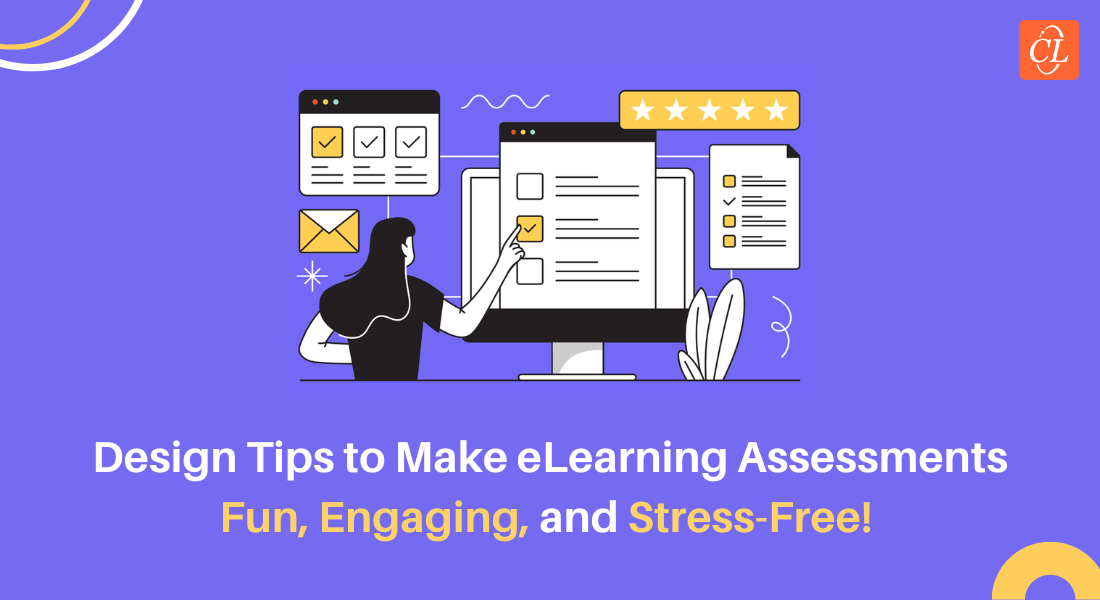
Many digital training programs include quizzes. But not all assessments truly measure learning.
In many organizations, quizzes function as simple completion checks rather than meaningful evaluations of knowledge and skill. Learners answer a few multiple-choice questions, receive a score, and move forward. While this approach confirms participation, it rarely confirms understanding.
Effective eLearning assessment requires far more than placing a quiz at the end of a module. It requires thoughtful alignment between learning objectives, question design, feedback mechanisms, and cognitive skill levels.
When assessments are designed strategically, they do more than evaluate knowledge. They reinforce learning, identify gaps, and help organizations measure the impact of training initiatives.
This article explores the architecture of effective eLearning assessment and quizzing standards. It examines how question design, feedback strategies, and cognitive frameworks work together to transform quizzes into meaningful learning experiences.
Download eBook: eLearning 101 - A Beginner’s Guide
TABLE OF CONTENTS
- The Role of Assessments in Digital Learning
- Defining eLearning Assessment and Quizzing Standards
- Aligning Assessments with Learning Objectives
- Designing Questions Across Cognitive Skill Levels
- Question Types That Strengthen Learning Measurement
- Feedback as a Learning Mechanism in eLearning Assessments
- Building Assessment Systems That Improve Training Outcomes
- Common Mistakes That Weaken eLearning Assessments
- A Practical Workflow for Designing High-Quality Assessments
- FAQ
The Role of Assessments in Digital Learning
Assessments are often viewed as the final step in a course. In reality, they are an integral part of the learning process.
Well-designed assessments serve multiple purposes:
- verify whether learners understood key concepts
- reinforce knowledge through retrieval practice
- identify knowledge gaps
- provide data on training effectiveness
Quizzes also help organizations evaluate whether training programs are delivering measurable results.
Modern eLearning programs increasingly rely on assessments not just to measure knowledge but to support continuous learning improvement. Quizzes can reveal whether content needs revision, whether learners struggle with particular concepts, and whether training aligns with real workplace needs.
In this sense, assessments become both a learning tool and an evaluation mechanism.
Defining eLearning Assessment and Quizzing Standards
eLearning assessment and quizzing standards refer to the design principles that ensure quizzes accurately measure learning outcomes.
These standards typically focus on four key elements:
- Alignment with learning objectives
- Cognitive complexity of questions
- Feedback mechanisms for learning reinforcement
- Reliable evaluation of performance
Without these standards, assessments risk becoming superficial knowledge checks.
For example, relying exclusively on recall-based questions may confirm that learners remember information, but it does not demonstrate whether they can apply that knowledge in practical situations.
Effective assessment frameworks therefore ensure that quizzes evaluate both knowledge and real-world decision making.
Aligning Assessments with Learning Objectives
Every assessment should begin with a clear understanding of what learners are expected to achieve.
Learning objectives define the knowledge, skills, or behaviors that training aims to develop. Assessments should directly measure whether these objectives have been achieved.
For example:
| Learning Objective | Assessment Example |
| Understand product features | Multiple-choice knowledge questions |
| Apply safety procedures | Scenario-based decision questions |
| Analyze customer situations | Case-based problem-solving questions |
| Evaluate business outcomes | Strategic decision simulations |
When assessments align with objectives, they provide meaningful insight into learning outcomes rather than simply generating scores.
Clear alignment also ensures that assessments support training effectiveness and organizational goals.
Designing Questions Across Cognitive Skill Levels
Not all questions test the same level of thinking.
Educational frameworks such as Bloom’s Taxonomy categorize learning into six levels, ranging from simple recall to advanced problem solving. These levels include Remember, Understand, Apply, Analyze, Evaluate, and Create.
Lower levels focus on recalling information, while higher levels require deeper thinking and decision making. Many eLearning quizzes rely heavily on recall-based questions. However, effective assessments incorporate questions across multiple cognitive levels.
Examples:
| Cognitive Level | Example Question |
| Remember | What is the definition of compliance training? |
| Understand | Explain why safety procedures are important. |
| Apply | What action should you take in this scenario? |
| Analyze | Which factor caused the project failure? |
| Evaluate | Which solution is the most effective? |
| Create | Propose a strategy to improve customer experience. |
Assessments designed across these levels produce richer insight into learner capability.
eLearning 101 - A Beginner’s Guide to Understanding All About eLearning!
What you will learn
- What is eLearning?
- The advantages of eLearning
- The impact of eLearning on businesses
- and more!
Question Types That Strengthen Learning Measurement
Different types of questions evaluate different skills. Relying on only one question format often limits the effectiveness of assessments.
Effective eLearning assessments typically include a mix of formats such as:
- multiple-choice questions
- fill-in-the-blank questions
- matching exercises
- scenario-based questions
- problem-solving activities
Using multiple formats improves engagement and allows instructors to test both knowledge recall and practical application.
Scenario-based questions are particularly valuable in corporate training. These questions simulate real workplace situations and ask learners to make decisions based on their knowledge.
Such questions help bridge the gap between training content and workplace performance.
Feedback as a Learning Mechanism in eLearning Assessments
One of the most powerful elements of effective assessments is feedback. Instead of simply marking answers as correct or incorrect, feedback explains why a particular response is right or wrong.
Well-designed feedback serves several purposes:
- reinforces correct understanding
- corrects misconceptions
- guides learners toward better decisions
- encourages reflection
For example, providing explanations after quiz responses helps learners understand the reasoning behind correct answers.
Feedback can be delivered in several forms:
- immediate corrective feedback
- explanatory feedback with additional context
- hints guiding learners toward the correct answer
- reflective prompts encouraging deeper thinking
When feedback is integrated effectively, assessments become learning experiences rather than simple evaluations.
Building Assessment Systems That Improve Training Outcomes
High-quality eLearning programs treat assessments as part of a broader learning system. Rather than isolated quizzes, assessments can be integrated throughout the learning journey.
Common approaches include:
Knowledge checks during lessons: Short quizzes embedded within lessons reinforce key concepts and prevent cognitive overload.
Scenario-based decision points: Learners apply knowledge in realistic situations, strengthening retention.
Module-level quizzes: These assessments evaluate understanding of major topics.
Final assessments: Comprehensive evaluations measure overall learning outcomes.
Together, these elements create a continuous feedback loop between learning and assessment.
Common Mistakes That Weaken eLearning Assessments
Even well-designed courses sometimes struggle with ineffective assessments.
Common mistakes include:
- Overreliance on recall questions: Assessments that focus only on memorization fail to measure deeper understanding.
- Ambiguous question wording: Poorly written questions confuse learners and undermine reliability.
- Lack of meaningful feedback: Without explanations, learners cannot understand their mistakes.
- Misalignment with learning objectives: Assessments that test irrelevant knowledge provide misleading results.
- Limited question variety: Using only multiple-choice questions restricts assessment depth.
Avoiding these issues improves both learning quality and training evaluation.
A Practical Workflow for Designing High-Quality Assessments
Effective assessment design typically follows a structured process.
Step 1: Define Learning Objectives
Clearly specify the knowledge, skills, or behaviors learners should demonstrate after completing the training. Well-defined objectives ensure that every assessment question measures something meaningful rather than testing random information.
Step 2: Identify Cognitive Levels
Determine the level of thinking required for each objective, such as recalling facts, applying procedures, or solving problems. Using multiple cognitive levels helps assessments measure both basic understanding and deeper decision-making ability.
Step 3: Select Appropriate Question Types
Choose question formats that best evaluate the targeted skill, such as multiple-choice for recall or scenarios for application. The right question type makes it easier to measure whether learners can use knowledge in practical situations.
Step 4: Write Clear, Scenario-Based Questions
Frame questions in realistic workplace contexts so learners must apply what they learned to solve problems. Scenario-based questions make assessments more engaging and better reflect how knowledge is used on the job.
Step 5: Provide Meaningful Feedback
Offer explanations that help learners understand why an answer is correct or incorrect. Constructive feedback reinforces learning and helps correct misunderstandings immediately.
Step 6: Evaluate Assessment Performance
Review quiz results to identify patterns such as frequently missed questions or weak knowledge areas. These insights help improve both the assessment itself and the overall training program.
This workflow ensures assessments remain aligned, reliable, and instructionally meaningful.
FAQ
1. What are eLearning assessment and quizzing standards?
A. eLearning assessment and quizzing standards refer to the principles used to design quizzes that accurately measure learning outcomes. These standards focus on aligning assessments with learning objectives, incorporating multiple cognitive skill levels, using varied question types, and providing meaningful feedback to support learning improvement.
2. How do you design effective quiz questions in eLearning?
A. Effective quiz questions align with learning objectives and target specific cognitive skills. They use clear wording, realistic scenarios, and varied formats such as multiple-choice, matching, and problem-solving questions. The goal is to measure both knowledge retention and practical application.
3. Why is feedback important in eLearning assessments?
A. Feedback helps learners understand why their answers are correct or incorrect. Instead of simply providing a score, effective feedback reinforces concepts, corrects misunderstandings, and guides learners toward improved performance.
4. What types of questions should be used in eLearning quizzes?
A. Effective quizzes combine several question types, including multiple-choice, fill-in-the-blank, matching, and scenario-based questions. Using a mix of formats helps evaluate different learning levels and keeps assessments engaging.
5. How does Bloom’s taxonomy improve eLearning assessments?
A. Bloom’s taxonomy organizes learning into hierarchical cognitive levels, from basic recall to advanced analysis and creation. Using this framework allows designers to create assessments that measure deeper understanding and problem-solving skills rather than simple memorization.
6. How can assessments improve corporate training effectiveness?
A. Assessments provide data on learner performance and knowledge gaps. By analyzing quiz results, organizations can refine training programs, improve instructional design, and ensure that employees acquire the skills required for workplace performance.
Conclusion
Strong eLearning programs treat assessments as more than end-of-course quizzes.
When thoughtfully designed, assessments become an integral part of the learning experience. They reinforce knowledge, challenge learners to think critically, and provide organizations with meaningful insight into training effectiveness.
The most effective digital learning environments apply clear assessment standards. They align quizzes with learning objectives, design questions across cognitive levels, provide meaningful feedback, and continuously evaluate results.
By approaching assessments strategically rather than procedurally, organizations transform quizzes into powerful tools for learning, performance improvement, and measurable training impact.