As organizations expand across continents, the challenge of training employees consistently becomes more complex. A course designed for one region rarely works unchanged in another. Language differences, cultural context, and regional regulations all influence how employees interpret training.
This is where elearning translation becomes essential.
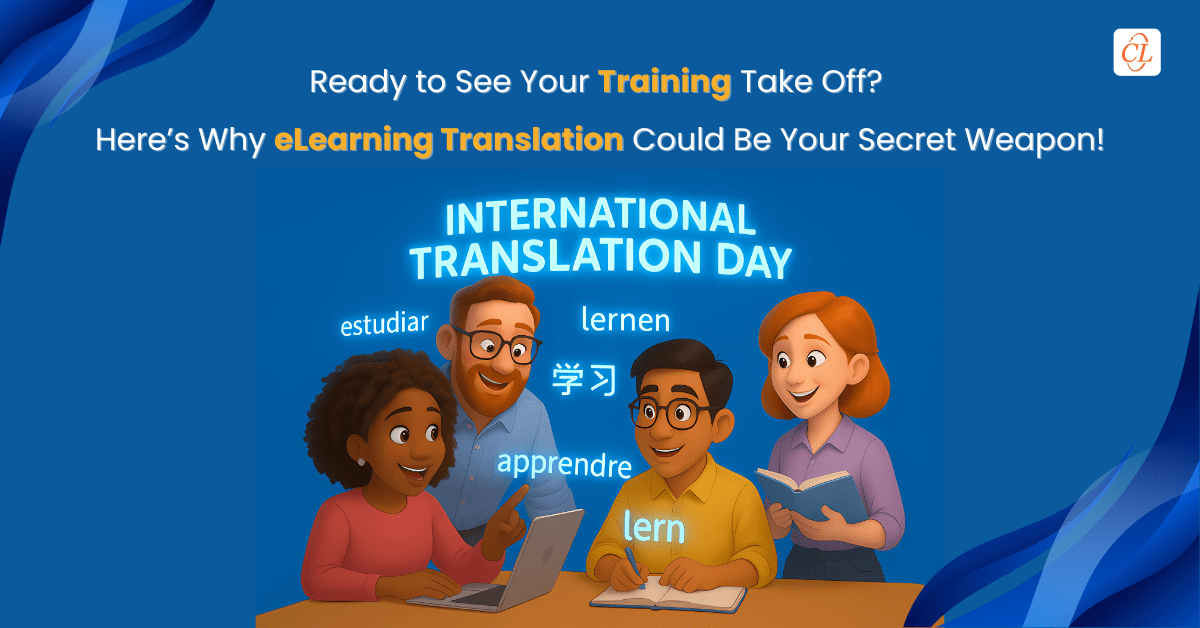
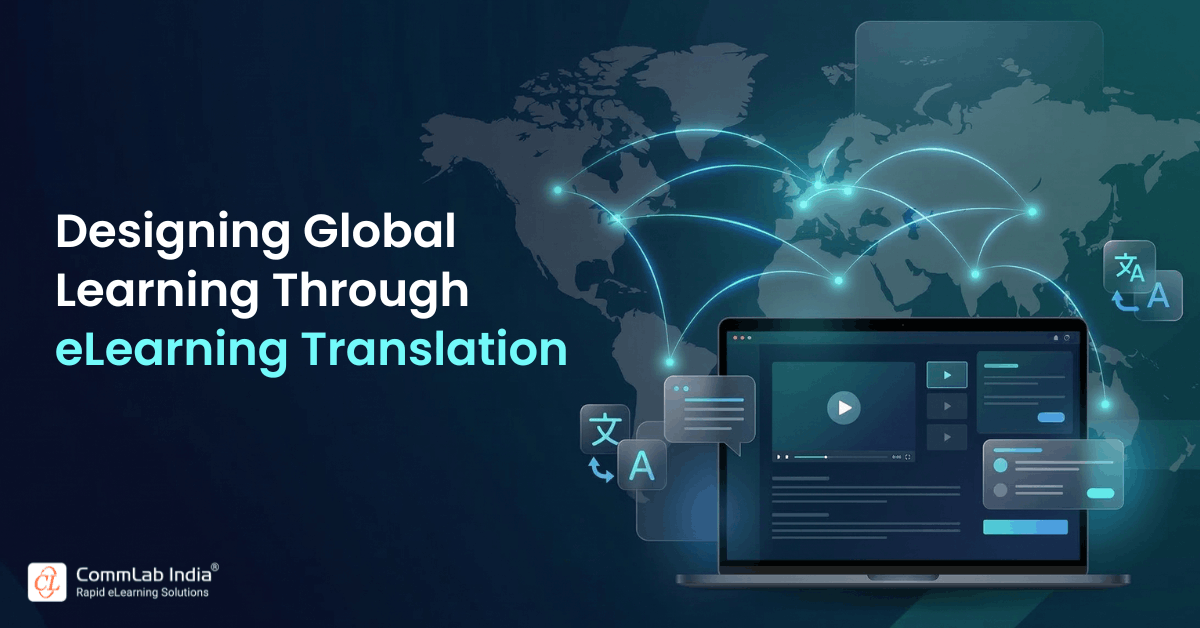
Instead of creating entirely new courses for each region, organizations can translate and adapt existing learning programs so they remain accurate, culturally relevant, and easy to understand for global employees.
But translating training content is not just about replacing words. Effective translation ensures that learning experiences maintain their meaning, instructional integrity, and engagement across languages and cultures.
In this article, we explore how elearning translation supports multilingual corporate training, why organizations invest in it, and how learning teams can design scalable global training programs through structured translation strategies.
Download eBook: eLearning Translations and AI
Table of Contents
- Understanding eLearning Translation in Corporate Training
- Why Global Organizations Translate Training Programs
- Translation vs Localization in Learning Content
- The Business Impact of Multilingual Training
- Designing eLearning Programs for Translation
- The eLearning Translation Process
- Maintaining Learning Quality Across Languages
- Tools and Technologies Supporting Translation
- Scaling Training Across Global Teams
- FAQs
Understanding eLearning Translation in Corporate Training
eLearning translation refers to converting digital training content from one language into another while preserving the original instructional meaning. In corporate learning environments, translation allows organizations to deliver the same training programs to employees working in different languages and regions.
Training programs that commonly undergo translation include compliance training, product training, onboarding programs, sales enablement courses, operational training and more. Without translation, these programs may only benefit employees who speak the original language.
By translating learning content, organizations ensure that training remains accessible and effective for their entire workforce.
Why Global Organizations Translate Training Programs
Modern organizations often operate with teams distributed across multiple countries. Training programs developed at headquarters must reach employees in regional offices, production facilities, or global sales teams.
Translating training programs allows companies to:
Deliver Consistent Knowledge Across Regions
Employees across locations receive the same information, ensuring operational alignment and shared standards.
Support Global Workforce Development
Training becomes accessible to employees regardless of their primary language.
Accelerate Skill Development
Employees learn faster when training is presented in their native language.
Strengthen Compliance and Risk Management
Compliance training must be clearly understood by employees. Translation ensures that legal and safety requirements are communicated accurately.
Translation vs Localization in Learning Content
While translation focuses on language, localization addresses broader cultural adaptation.
Translation: Translation converts the text of a course into another language.
Examples include:
- translating narration
- converting on-screen text
- translating assessment questions
Localization: Localization adapts learning content to reflect regional context.
This may involve:
- replacing images or examples
- adjusting currency and measurement units
- adapting case studies
- modifying scenarios to reflect cultural norms
Localization ensures that translated training feels natural to learners rather than simply converted from another language.
The Business Impact of Multilingual Training
Organizations that implement multilingual learning strategies often see improvements in both operational efficiency and employee engagement.
Improved Training Completion Rates: Employees are more likely to complete courses when training is delivered in their preferred language.
Faster Knowledge Transfer: Native language learning improves comprehension and retention.
Greater Global Consistency: Organizations can maintain standardized processes across international teams.
Stronger Employee Engagement: Learners respond better when training reflects their language and cultural context.
When training programs scale globally, translation becomes a key enabler of workforce development.
Designing eLearning Programs for Translation
Not all training content is easy to translate. Courses developed without translation in mind often require significant rework.
Designing translation-friendly learning programs begins with structured instructional design.
- Use Clear and Simple Language Avoid idioms, slang, and region-specific expressions that may be difficult to translate.
- Separate Text from Graphics Embedded text inside images increases translation complexity.
- Standardize Layout and Navigation Consistent course structures simplify adaptation across languages.
- Prepare Scripts for Narration Voice-over scripts should be documented separately to support efficient translation.
- Organize Source Files Maintaining editable course files ensures translators can update content without rebuilding modules.
Courses built with these principles are easier to adapt for global audiences.

The Future Speaks Every Language: Power of AI in eLearning Translations
Break Down Language Barriers and Foster Inclusive Learning with AI-enhanced eLearning Translations!
- Strategies to Ensure Effective Global eLearning
- How to Choose the Right Translation Partner
- Translations using AI
- And More!
The eLearning Translation Process
Successful translation projects follow structured workflows that ensure accuracy and quality.
Typical stages include:
- Content Analysis: Learning teams identify which components require translation, including text, audio, video, and assessments.
They also review the course structure to identify region-specific elements such as examples, visuals, references, and compliance content that may need adaptation.
This stage helps define the full scope of work, avoid missed components, and estimate timelines, effort, and language-specific requirements more accurately. - Language Preparation: Source content is cleaned and standardized to remove ambiguous phrasing.
This includes simplifying complex sentences, removing idioms, and ensuring terminology is used consistently throughout the course.
Well-prepared source content reduces translation errors, speeds up the workflow, and improves consistency across all target languages. - Translation and Localization: Professional linguists translate content and adapt it for regional context.
They ensure the message remains accurate while adjusting wording, examples, tone, and cultural references to suit local learners.
This step is critical because training should not only be understood linguistically, but also feel relevant and natural in each market. - Multimedia Adaptation: Voice-overs, graphics, and subtitles are updated to reflect the translated language.
On-screen text in images, animations, and videos may also need to be recreated so the learning experience remains seamless and professional.
This ensures that every element of the course supports the translated content instead of creating a mixed-language or confusing experience. - Course Integration: Translated content is integrated back into the learning platform or authoring tool.
Layouts are adjusted to accommodate text expansion, language direction, and formatting differences that may affect the learner interface.
Careful integration ensures the course remains visually clear, easy to navigate, and functionally stable across all localized versions. - Quality Assurance: Courses are tested to confirm linguistic accuracy, functional performance, and layout compatibility.
Reviewers check navigation, audio sync, subtitles, quizzes, and screen formatting to ensure the translated course works exactly as intended.
This final step protects learning quality and helps deliver a polished experience that meets both instructional and technical standards.
This structured workflow ensures that translated courses remain fully functional and pedagogically effective.
Maintaining Learning Quality Across Languages
One of the biggest challenges in translation projects is preserving instructional quality. A poorly translated course may communicate the correct words but fail to deliver the intended learning experience.
Quality can be preserved through several practices.
- Linguistic Review: Native language reviewers confirm translation accuracy.
- Instructional Consistency: Learning objectives and assessment logic must remain consistent across languages.
- Technical Testing: Courses must function correctly in different language layouts and character sets.
- Cultural Sensitivity Checks: Examples and visuals should align with regional expectations.
Maintaining quality ensures that translated training remains as effective as the original program.
Tools and Technologies Supporting Translation
Technology has significantly improved the efficiency of translation projects.
Modern learning teams often use tools such as:
- Translation Management Systems These systems organize multilingual content and track translation progress.
- Translation Memory Previously translated phrases are stored and reused, reducing cost and improving consistency.
- Terminology Databases Approved technical terms ensure consistent translation across courses.
- Subtitle and Captioning Tools These support translation for video-based learning.
These technologies allow organizations to manage large translation projects efficiently.
Scaling Training Across Global Teams
As organizations grow, training programs must scale across regions without losing effectiveness.
Translation allows learning teams to extend existing courses instead of rebuilding training for each language.
Scalable strategies include:
- Designing master courses that can be translated easily
- Building multilingual learning libraries
- Using translation memory to reduce costs
- Standardizing course templates across languages
By building translation into learning strategy, organizations create training ecosystems capable of supporting global teams.
FAQ
1. What is elearning translation?
A. eLearning translation is the process of converting digital training content from one language into another while preserving its instructional meaning. It enables organizations to deliver training programs to employees across different countries and languages.
2. Why do companies translate elearning courses?
A. Companies translate elearning courses to make training accessible to global employees. Translation improves comprehension, increases course completion rates, and ensures consistent knowledge across international teams.
3. What is the difference between elearning translation and localization?
A. Translation converts text and narration into another language. Localization adapts learning content for cultural context by adjusting examples, images, measurements, and scenarios so they feel natural to regional learners.
4. How does elearning translation improve corporate training?
A. When employees learn in their native language, they understand content more easily and retain information longer. This improves learning effectiveness, engagement, and overall training outcomes.
5. Which training programs are typically translated?
A. Organizations often translate compliance training, onboarding programs, product training, operational procedures, and sales training so employees across regions receive the same learning experience.
6. How can organizations prepare courses for translation?
A. Courses should use simple language, avoid cultural references, separate text from graphics, and maintain structured content layouts. These practices make learning programs easier to translate and adapt.
Conclusion
As organizations expand globally, training programs must evolve to support multilingual workforces.
eLearning translation enables companies to scale learning across regions while maintaining consistency, accessibility, and instructional quality.
By designing courses with translation in mind and implementing structured localization processes, organizations can transform single-language training programs into globally accessible learning ecosystems.
When learning content crosses language barriers effectively, organizations unlock the full potential of global workforce development.