The LMS conversation has evolved. It is no longer about whether an organization needs a learning management system. That question has already been answered.
The real question now is more complex. Which type of LMS platform should you build your learning strategy around? And, the answer is no longer straightforward.
Organizations today are navigating a fragmented and rapidly evolving LMS landscape that includes open source platforms, cloud-based systems, enterprise solutions, and specialized tools designed for specific use cases. Each option comes with its own strengths, trade-offs, and long-term implications.
Download Now: State of Learning (Now and Beyond) [eBook]
At first glance, the decision often appears to be technical or financial.
- Should you choose a cost-effective open source LMS?
- Should you invest in a cloud-based platform for scalability?
- Should you adopt a widely used system like Moodle?
But beneath these questions lies a deeper strategic consideration.
The LMS is no longer a standalone system. It is part of a broader ecosystem that shapes how learning is delivered, managed, integrated, and scaled across the organization. Choosing a platform, therefore, is not just about selecting software. It is about defining the architecture of your learning environment.
Organizations that recognize this shift make more resilient, scalable decisions. Those that do not often find themselves constrained by their initial choice.
From LMS Tools to Learning Ecosystems
The traditional view of an LMS as a single system is becoming outdated.
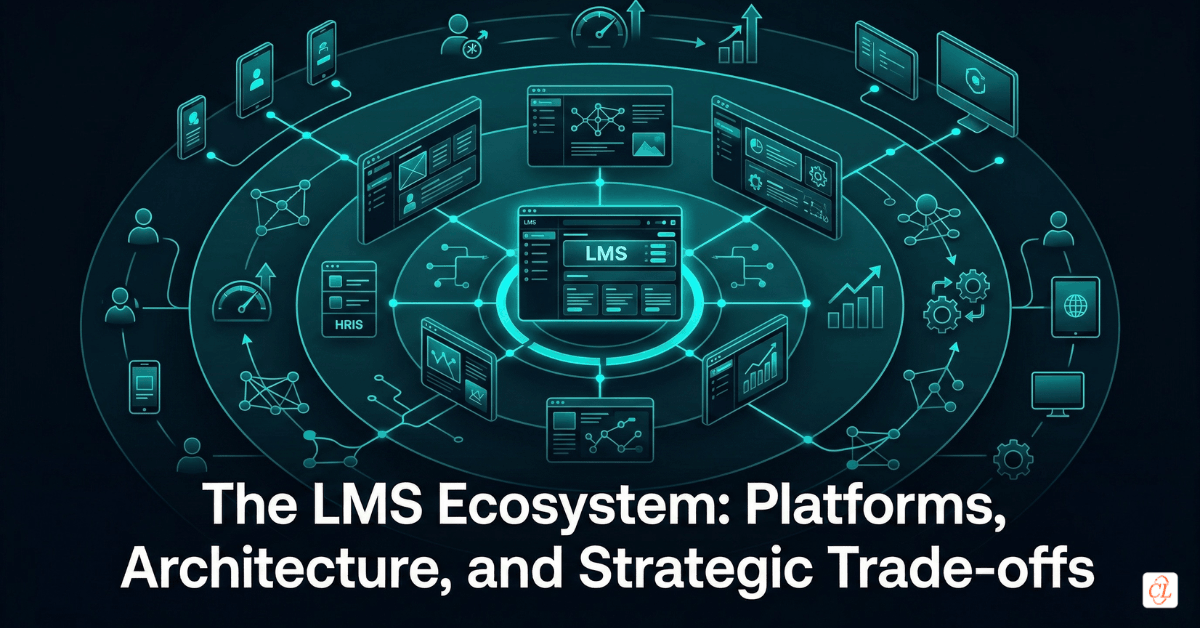
Modern learning environments are composed of multiple interconnected tools that together form a learning ecosystem. The LMS sits at the center, but it interacts with content authoring tools, analytics systems, collaboration platforms, and performance management solutions.
This shift has important implications.
Selecting an LMS is no longer about choosing a standalone product. It is about choosing a platform that can function effectively within a broader ecosystem.
The ability to integrate, scale, and adapt becomes as important as core functionality.
Understanding the LMS Platform Landscape
The LMS market can be broadly categorized into three primary platform models.
- Open source LMS platforms provide access to source code, allowing organizations to customize and control the system extensively.
- Cloud-based LMS platforms offer hosted solutions that prioritize scalability, ease of use, and rapid deployment.
- Enterprise or proprietary LMS platforms combine structured functionality with vendor-managed services, often targeting large organizations with complex requirements.
Each model reflects a different approach to balancing control, cost, flexibility, and scalability. Understanding these differences is essential for making informed decisions.
Open Source LMS: Flexibility, Control, and Trade-offs
Open source LMS platforms are often attractive because of their flexibility and cost advantages.
They allow organizations to customize the system extensively, tailoring it to specific learning needs, workflows, and branding requirements. This level of control can be particularly valuable for organizations with unique or evolving requirements.
However, this flexibility comes with responsibility.
Open source systems require technical expertise for setup, customization, and maintenance. Organizations must manage hosting, updates, security, and integration, which can increase operational complexity.
Cost savings at the platform level may be offset by the need for internal resources or external support.
Open source LMS platforms are most effective for organizations that prioritize control and have the capability to manage the associated complexity.
Moodle as a Case Study in Platform Evolution
Among open source LMS platforms, Moodle stands out as one of the most widely adopted systems globally.
Its popularity is not accidental.
Moodle offers a balance between flexibility and structure, providing a robust set of features while allowing for extensive customization. Its active global community contributes to continuous improvement, ensuring that the platform evolves over time.
Over successive updates, Moodle has incorporated features that support modern learning needs, including improved user interfaces, mobile compatibility, and enhanced integration capabilities.
This evolution reflects a broader trend.
LMS platforms are no longer static systems. They are continuously adapting to changes in technology, user expectations, and learning strategies.
Moodle’s trajectory illustrates how an open source platform can remain relevant by evolving alongside the ecosystem.
Cloud-Based LMS: Scalability and Speed
Cloud-based LMS platforms represent a different approach.
They prioritize ease of deployment, scalability, and reduced technical overhead.
Because they are hosted and managed by vendors, organizations can implement them quickly without investing in infrastructure or extensive technical resources. Updates, maintenance, and security are handled externally, reducing operational burden.
This makes cloud LMS platforms particularly attractive for organizations that need to scale quickly or lack internal technical expertise.
However, this convenience comes with trade-offs.
Customization options may be more limited compared to open source platforms. Organizations must also rely on vendor roadmaps and timelines for updates and enhancements.
Despite these limitations, cloud-based LMS platforms have become the dominant model for many organizations due to their simplicity and scalability.
Comparing Platform Models: Strategic Trade-offs
Choosing between open source, cloud, and proprietary LMS platforms involves balancing multiple factors.
Control versus convenience is one of the most significant trade-offs. Open source platforms offer greater control, while cloud platforms prioritize ease of use.
Cost versus complexity is another consideration. While open source platforms may appear cost-effective initially, they often require additional investment in maintenance and support. Cloud platforms typically involve subscription costs but reduce operational complexity.
Scalability versus customization also plays a role. Cloud platforms scale easily but may limit customization. Open source platforms allow customization but require effort to scale effectively.
These trade-offs highlight the importance of aligning platform choice with organizational priorities rather than focusing on a single factor.
Specialized LMS Platforms and Niche Solutions
In addition to general-purpose LMS platforms, organizations may encounter specialized solutions designed for specific use cases.
Some platforms focus on course creation and delivery, while others emphasize training management, compliance tracking, or extended learning.
Examples include systems designed for rapid deployment, platforms tailored for specific industries, and solutions that integrate tightly with particular tools or workflows.
These niche solutions can be valuable when they align closely with organizational needs. However, they must be evaluated carefully to ensure they fit within the broader ecosystem.
Free LMS Platforms: Opportunity and Limitations
Free LMS platforms often attract organizations looking to minimize initial investment.
They provide an accessible entry point into digital learning and can be useful for smaller organizations or pilot programs.
However, free platforms often come with limitations in terms of scalability, support, and advanced features.
Organizations must consider whether these limitations will impact long-term growth.
A free platform that cannot scale effectively may require replacement, leading to additional cost and complexity.
Building an LMS Ecosystem Strategy
The most effective approach to LMS selection is to think beyond the platform itself.
Organizations must define how the LMS will interact with other systems, support different learning use cases, and evolve over time.
This requires a clear understanding of:
- Learning objectives and business goals
- Technical infrastructure and integration requirements
- User needs and experience expectations
- Future scalability and adaptability
By considering these factors, organizations can build an LMS ecosystem that supports both current and future needs.
Future Direction of LMS Platforms
The LMS landscape continues to evolve.
Platforms are becoming more integrated, more intelligent, and more experience-driven. The distinction between LMS, learning experience platforms, and other learning tools is becoming less defined as systems converge.
Organizations must be prepared for this evolution. Choosing a platform is not a one-time decision. It is part of an ongoing strategy that must adapt to changing needs and technologies.
Organizations that approach LMS selection as a tool choice risk creating fragmented learning environments. Those that think in terms of ecosystems build more resilient, scalable, and adaptable learning infrastructures. The platform is important.
But the ecosystem it enables is what determines long-term success.
FAQ
1. What is the difference between open source and cloud LMS?
A. Open source LMS platforms offer customization and control, while cloud LMS platforms provide hosted solutions with scalability and ease of use.
2. Why is Moodle so widely used?
A. Moodle is popular due to its flexibility, strong community support, and ability to adapt to various learning needs through customization.
3. Are free LMS platforms suitable for corporate training?
A. Free LMS platforms can be useful for small-scale or initial use, but they may lack scalability and advanced features required for larger organizations.
4. What are the benefits of cloud-based LMS?
A. Cloud LMS platforms offer quick deployment, reduced maintenance, automatic updates, and scalability.
5. How do you choose the right LMS platform?
A. The choice depends on organizational needs, technical capabilities, budget, and long-term strategy.
6. What is an LMS ecosystem?
A. An LMS ecosystem consists of interconnected tools and systems that support learning, including content, analytics, and performance management platforms.
Conclusion
The LMS landscape is no longer defined by individual platforms. It is shaped by ecosystems.
Organizations that recognize this shift make more informed, strategic decisions about how they structure their learning environments.
Because in the end, the goal is not to choose a platform. It is to build a system that enables learning to scale, adapt, and deliver impact over time.