
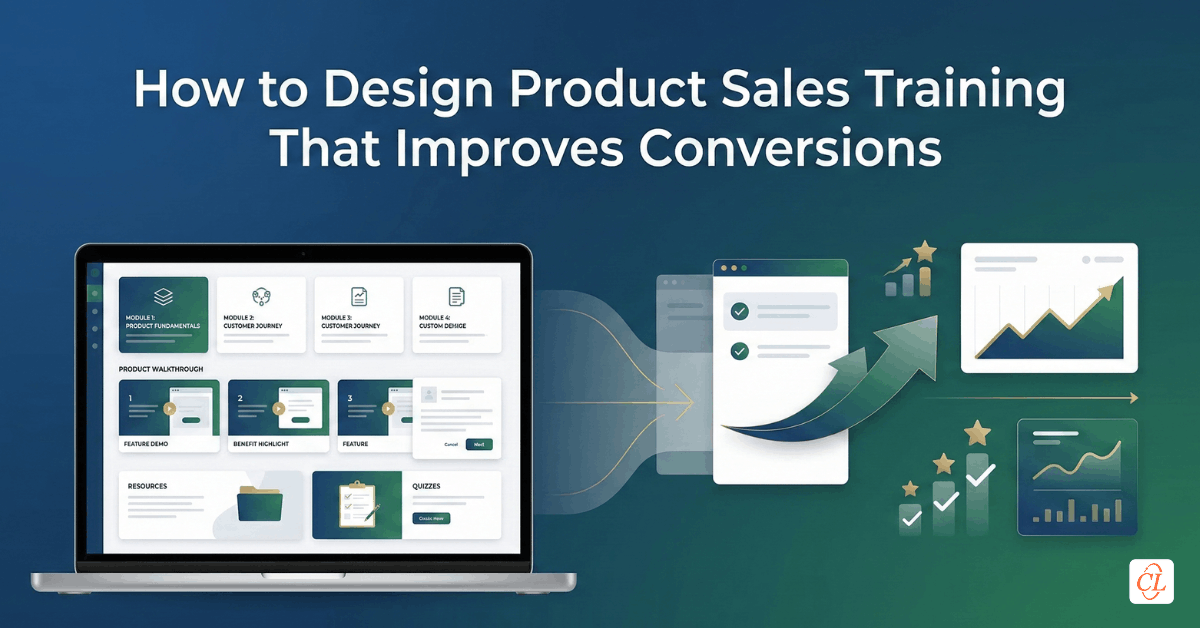
Sales teams rarely struggle because they lack access to product information. In most organizations, the real challenge lies in translating that information into meaningful customer conversations that influence decisions and drive revenue.
Product training for sales teams often focuses heavily on features, specifications, and updates, yet falls short when it comes to enabling sales representatives to position value, handle objections, and adapt messaging to different buyer contexts. As a result, knowledge exists, but performance does not improve at the same pace.
The gap between knowing and selling is where most product training programs break down.
This article explores how to design product sales training that goes beyond information delivery and builds real selling capability. You will learn how to align product knowledge with buyer conversations, structure training for sales performance, and create a system that supports consistent revenue impact across teams.
What Is Product Sales Training
Product sales training is a specialized approach to training that focuses on equipping sales teams with the knowledge, skills, and context needed to effectively position and sell a product.
Unlike general product training, which may focus on features and functionality, product sales training emphasizes:
- communicating value in customer-centric terms
- connecting product capabilities to business outcomes
- handling objections and competitive positioning
- adapting messaging based on buyer needs
It is not just about understanding the product. It is about using that understanding to influence decisions and close deals.
Why Traditional Product Training Fails Sales Teams
Many product training programs are designed with an internal perspective, focusing on how the product works rather than how it is sold. While this information is important, it does not fully support the realities of sales interactions.
One of the most common issues is the overemphasis on features without translating them into customer value. Sales representatives may know what the product does, but struggle to explain why it matters to the buyer.
Another challenge is the lack of real-world context. Training often presents information in a structured format, but does not reflect the dynamic and unpredictable nature of sales conversations, where objections, questions, and competing priorities are constantly evolving.
In addition, sales teams are frequently expected to consume large volumes of information without clear prioritization. This leads to cognitive overload and reduces the likelihood that key messages will be retained and applied.
Finally, many training programs do not align with actual sales processes or performance metrics, making it difficult to connect learning outcomes with business results.
The Shift from Product Knowledge to Sales Enablement
To improve effectiveness, organizations need to shift their focus from product knowledge training to sales enablement training. This shift involves redefining the purpose of training from information delivery to performance support.
Sales enablement training integrates product knowledge with:
- buyer journey understanding
- sales messaging frameworks
- real-world scenarios
- decision-making strategies
Instead of asking, “What should the sales team know?”, the focus becomes, “What should the sales team be able to do in a live conversation?”
This shift transforms training into a tool that directly supports revenue generation.
Building a Sales-Focused Product Training Strategy
Designing effective product sales training requires a structured approach that aligns learning with the realities of selling.
1. Align Training With the Buyer Journey
Sales conversations evolve as buyers move through different stages of the decision-making process. Training should reflect this progression by equipping sales representatives with the right messages and strategies for each stage.
For example, early-stage conversations may focus on identifying pain points and building awareness, while later stages require deeper discussions around value, differentiation, and return on investment.
By aligning training with the buyer journey, organizations can ensure that sales teams are prepared for each phase of the interaction.
2. Translate Features Into Value Narratives
One of the most critical aspects of product sales training is the ability to translate features into meaningful value propositions.
Instead of simply describing what a product does, training should help sales representatives answer questions such as:
- how does this feature solve a specific problem
- what impact does it have on the customer’s business
- why is it better than competing solutions
This requires a shift from feature-based thinking to value-based storytelling.
3. Focus on Real Sales Conversations
Effective training should reflect the realities of customer interactions. This means incorporating scenarios that simulate actual conversations, including objections, questions, and decision points.
By practicing in realistic contexts, sales representatives can develop the confidence and adaptability needed to navigate complex situations.
Scenario-based learning, role-playing exercises, and interactive simulations are particularly effective in achieving this.
4. Prioritize Relevance and Simplicity
Sales teams operate in fast-paced environments where time is limited. Training must be concise, focused, and directly applicable to their daily work.
This involves prioritizing the most critical information and presenting it in a way that is easy to understand and remember. Simplifying complex concepts without losing depth is key to improving engagement and retention.
5. Reinforce Learning Continuously
Sales enablement is not a one-time event but an ongoing process. Continuous reinforcement helps ensure that knowledge remains accessible and actionable over time.
This can be achieved through:
- refresher modules
- quick reference guides
- just-in-time learning resources
- ongoing practice opportunities
Reinforcement supports long-term performance and adaptability.
Designing Training for Sales Engagement
Engagement plays a crucial role in determining how effectively training is absorbed and applied. Sales teams are more likely to engage with training that feels relevant, practical, and aligned with their goals.
One way to enhance engagement is by incorporating interactive elements such as decision-making scenarios and branching conversations. These elements encourage active participation and help learners think through real situations.
Another important factor is the use of storytelling. Presenting information within the context of customer journeys or success stories makes it more relatable and memorable.
In addition, leveraging multimedia formats such as videos can help demonstrate product usage, customer interactions, and sales techniques in a more dynamic way.
Adapting Product Sales Training Across Industries
While the core principles of product sales training remain consistent, their application can vary significantly across industries.
For example, in the pharmaceutical industry, sales representatives often need to communicate complex scientific information while adhering to strict regulatory guidelines. Training in this context must balance accuracy with clarity and ensure compliance without compromising effectiveness.
In retail environments, product training may focus more on quick interactions, customer experience, and immediate value communication, requiring a different level of depth and delivery style.
Recognizing these differences allows organizations to tailor training to specific industry requirements while maintaining a consistent strategic framework.
Leveraging Digital Learning for Sales Enablement
Digital learning plays a critical role in modern product sales training by enabling scalability and flexibility.
Online training platforms allow organizations to deliver consistent content across geographically distributed teams, while also providing opportunities for self-paced learning. This is particularly important for sales teams that operate in dynamic environments and require access to information on demand.
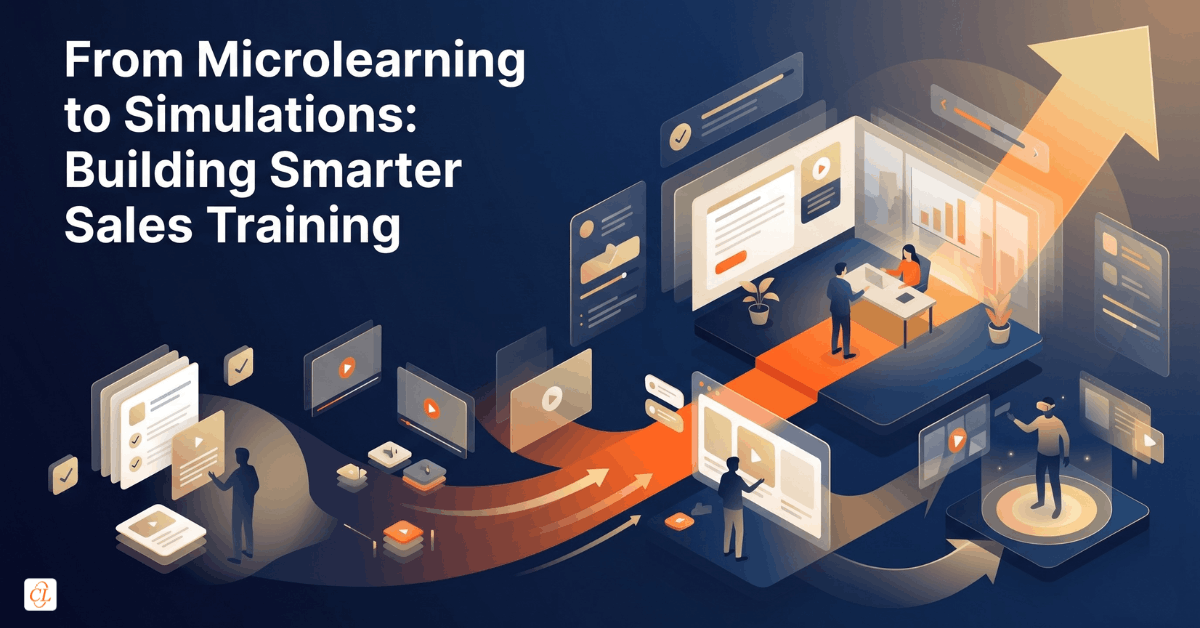
Digital formats also support the integration of various learning methods, including microlearni, video-based training, and interactive simulations, which can enhance engagement and effectiveness.
When designed thoughtfully, digital learning becomes a powerful enabler of sales performance rather than just a delivery mechanism.
Measuring the Impact of Product Sales Training
To ensure that product sales training delivers value, it is essential to measure its impact on performance.
Key indicators may include:
- conversion rates
- deal size and revenue growth
- sales cycle duration
- customer engagement and satisfaction
Tracking these metrics provides insights into how effectively training is supporting sales outcomes and helps identify areas for improvement.
It is also important to establish a baseline before training is implemented, allowing organizations to measure changes over time and assess the true impact of their efforts.
Final Thoughts
Product sales training is most effective when it is designed as a performance system rather than a content initiative. By aligning training with the realities of sales conversations, focusing on value-driven messaging, and supporting continuous learning, organizations can equip their sales teams with the tools they need to succeed.
When product knowledge is transformed into actionable insight and applied consistently in customer interactions, it becomes a powerful driver of revenue and competitive advantage.


![Tips to Boost Health & Safety Training with Simulations [Infographic]](https://www.commlabindia.com/hubfs/blogs/simulations-in-health-and-safety-training-tips.jpg)