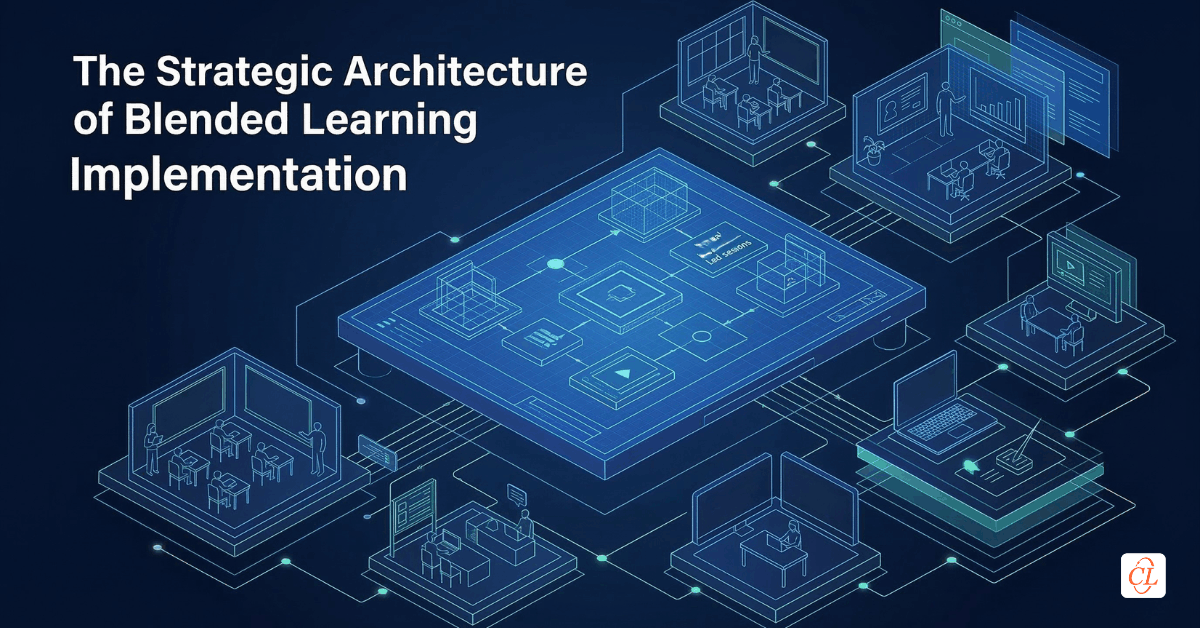
Organizations today face a familiar training challenge. Employees need to learn faster, retain knowledge longer, and apply skills directly to their work. Traditional classroom training alone struggles to meet these expectations. At the same time, purely digital training can lack the interaction and practical engagement learners often need.
Blended learning implementation offers a powerful solution. By combining classroom instruction with digital learning experiences, organizations can create a training environment that balances flexibility, interaction, and practical application.
Blended learning is not simply a mix of formats. It is a deliberate design approach that assigns the right learning method to the right objective. Some learning moments require discussion and coaching. Others benefit from self-paced exploration or quick reinforcement tools.
When implemented strategically, blended learning creates a training ecosystem that supports employees before, during, and after formal instruction. Instead of isolated training events, organizations develop learning journeys that help employees build skills continuously and apply knowledge more effectively on the job.
Download Now: Instructional Design Strategies to Design Engaging eLearning Courses
Table of Contents
- Understanding blended learning implementation
- Start with performance goals instead of learning formats
- Deciding what belongs in classroom training and what belongs online
- Designing the learning blend around real workplace conditions
- Structuring the full blended learning journey
- Using the LMS to coordinate the learning experience
- Common blended learning challenges and how to address them
- Reducing resistance to technology in blended learning
- A practical blueprint for blended learning implementation
- FAQ
Understanding Blended Learning Implementation
Blended learning implementation is the process of designing and delivering training that combines instructor-led sessions with digital learning experiences. The goal is not to divide training equally between formats. Instead, the goal is to use each format where it contributes the most value.
Classroom learning often supports discussion, coaching, and collaboration. Digital learning provides flexibility, consistency, and accessibility. When these formats are aligned properly, learners receive instruction, practice, and reinforcement through multiple channels that support stronger learning outcomes.
Blended learning becomes most effective when organizations treat it as a system rather than a simple training method. Each learning component should serve a specific role within the overall learning journey.
Blended learning is a training model that combines classroom instruction and digital learning experiences to improve flexibility, engagement, and knowledge transfer.
Start with Performance Goals Instead of Learning Formats
A common mistake in training design is beginning with delivery methods rather than performance needs. Effective blended learning implementation begins by defining what employees must be able to do after training.
Key questions to consider include:
- What skills or behaviors must learners demonstrate?
- Which tasks are critical to business performance?
- What challenges do employees face when performing those tasks?
When training design starts with job performance, learning teams can select the delivery methods that best support those outcomes. For example, foundational knowledge may be delivered through digital modules, while complex decision making may require guided discussions in live sessions.
This outcome-focused approach ensures that blended learning improves workplace performance rather than simply modernizing training delivery.
Deciding What Belongs in Classroom Training and What Belongs Online
One of the most important decisions in blended learning design is determining where each learning activity should occur.
When Classroom Training Works Best
Instructor-led sessions provide strong value when learners benefit from interaction and real-time feedback. Classroom environments are ideal for:
- roleplays and simulations
- problem-solving discussions
- collaborative learning
- coaching and feedback
- leadership and behavioral training
These activities rely heavily on conversation, reflection, and peer learning.
When Digital Learning Is More Effective
Online learning modules are well suited for content that learners can absorb independently. Examples include:
- foundational knowledge
- policy or compliance training
- product knowledge
- refresher learning
- assessments and quizzes
Digital learning also allows learners to progress at their own pace and revisit content when needed.
The Role of Performance Support
Some learning should occur during the moment of need rather than inside a course. Job aids, short videos, quick reference guides, and mobile learning assets help employees apply knowledge while performing their work.
A strong blended learning strategy integrates all three layers: instruction, practice, and performance support.
Designing the Learning Blend Around Real Workplace Conditions
Effective blended learning requires understanding how employees actually work. Training should align with the learner’s environment, schedule, and responsibilities.
Consider the following factors when designing the blend:
- Whether learners work remotely or onsite
- How often they can attend live sessions
- The devices they use to access learning
- Their prior knowledge and experience
- How frequently they perform the tasks being taught
For example, mobile employees may benefit from short digital learning modules that can be accessed during travel or between meetings. Operational staff working in facilities may rely more on instructor-led demonstrations combined with quick job aids.
By aligning training with real workplace conditions, organizations increase participation and improve learning transfer.
Instructional Design Strategies to Design Engaging eLearning Courses
Design Learner-Centric eLearning
- Importance of ID Strategies in eLearning
- Parameters to Select the Right ID Strategy
- ID Strategies for Effective Results
- Case Studies
Structuring the Full Blended Learning Journey
Blended learning works best when it is structured as a sequence rather than a single training event.
Pre-training Preparation
Learners can begin with digital modules or short videos that introduce foundational concepts. Pre-learning ensures that participants arrive at live sessions with a shared baseline understanding.
Interactive Learning Sessions
Instructor-led sessions can then focus on higher-value activities such as group discussions, roleplay scenarios, and collaborative exercises.
Post-training Reinforcement
After formal training, learners benefit from reinforcement activities such as follow-up quizzes, practice assignments, and performance support resources.
This structured learning journey strengthens retention and helps employees apply new knowledge more effectively.
Using the LMS to Coordinate the Learning Experience
A Learning Management System plays a critical role in blended learning implementation. Rather than functioning only as a content repository, the LMS can coordinate the entire training experience.
Key LMS functions in blended learning include:
- Scheduling instructor-led sessions
- Assigning pre-learning modules
- Tracking learner progress
- Hosting assessments and learning materials
- Supporting discussion and collaboration
- Reporting training completion and performance
When used effectively, the LMS creates continuity across all training components and ensures learners clearly understand their learning path.
Common Blended Learning Challenges and How to Address Them
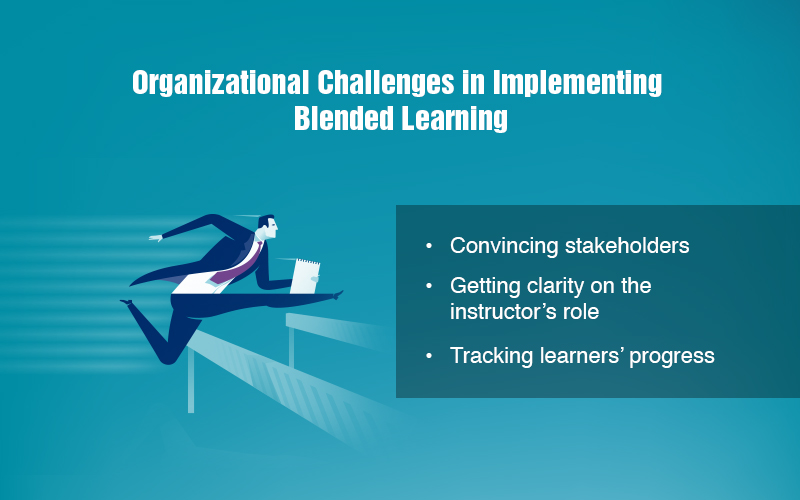
While blended learning offers many advantages, organizations often encounter several implementation challenges.
Poorly Designed Learning Mix
If the learning blend does not align with the content being taught, learners may struggle to engage with the material. Careful planning is required to assign the right delivery method to each learning objective.
Overuse of Technology
Introducing too many digital tools can overwhelm learners and complicate the learning process. Technology should support learning goals rather than dominate the experience.
Limited Monitoring of Learner Progress
Blended programs involve multiple learning activities. Without proper tracking and follow-up, learners may fall behind or skip key learning components.
Lack of Stakeholder Alignment
Managers, instructors, and learners should clearly understand the purpose of the blended approach. Without alignment, participation and engagement may decline.
Addressing these challenges requires strong planning, clear communication, and consistent program management.
Reducing Resistance to Technology in Blended Learning
Technology resistance is a common barrier when organizations introduce blended learning programs.
Employees who are comfortable with classroom training may initially hesitate to adopt digital learning platforms. Organizations can ease this transition by introducing digital elements gradually.
Effective approaches include:
- Using elearning modules as pre-class preparation
- Demonstrating how digital learning saves time
- Providing simple navigation and user guidance
- Maintaining human interaction through discussions and coaching
When learners understand how technology supports their development, acceptance increases significantly.
A Practical Blueprint for Blended Learning Implementation
Organizations can simplify blended learning implementation by following a structured process.
|
Step |
Focus Area |
What to Do |
|
1. Define Training Outcomes |
Performance Alignment |
Clearly identify the workplace behaviors or skills employees must demonstrate after the training. Link training objectives directly to measurable business or performance outcomes. |
|
2. Analyze the Learner Audience |
Learner Context |
Examine learner roles, experience levels, work environments, and technology access. Understanding how employees work helps determine which learning formats will be most practical and effective. |
|
3. Select the Right Learning Methods |
Delivery Strategy |
Decide which topics should be delivered through eLearning, instructor-led sessions, coaching, or performance support tools. Align the delivery method with the complexity and interaction level required for each topic. |
|
4. Design the Learning Journey |
Learning Experience |
Organize training into a structured sequence that includes pre-learning preparation, instructor interaction, practice opportunities, and post-training reinforcement. Ensure each stage builds on the previous one. |
|
5. Activate Learning Technology |
Training Infrastructure |
Use an LMS to manage learning materials, schedule sessions, track participation, and generate reports. Technology should simplify coordination and provide visibility into learner progress. |
|
6. Support Learner Adoption |
Change Management |
Provide clear communication, simple onboarding instructions, and technical support to help learners adapt to the blended model. Encourage managers and instructors to reinforce participation. |
|
7. Evaluate and Refine the Program |
Continuous Improvement |
Monitor learner feedback, completion data, and performance indicators. Use these insights to adjust the blend, update content, and improve future training cycles. |
A blended learning program becomes effective only when these steps operate as a connected system rather than isolated tasks. Learning leaders should document the decisions made at each stage and create a repeatable framework that future training initiatives can follow.
By establishing clear performance goals, aligning delivery methods with learner needs, and continuously improving the program using real learning data, organizations can build a scalable blended learning model that evolves alongside workforce skills and business priorities.
FAQ
1. What is blended learning implementation?
A. Blended learning implementation involves designing and delivering training that combines classroom instruction with digital learning experiences. This approach improves flexibility, engagement, and knowledge transfer by using multiple learning methods within a structured training journey.
2. How do organizations decide what should be taught online versus in a classroom?
A. Content that requires discussion, collaboration, or coaching is typically delivered in live sessions. Foundational knowledge, assessments, and refresher learning can often be delivered through self-paced digital modules.
3. Why do some blended learning programs fail?
A. Blended learning programs often fail when the learning mix is poorly designed, technology is overused, learner progress is not tracked effectively, or stakeholders are not aligned with the training approach.
4. How does blended learning improve employee training?
A. Blended learning improves training by combining flexibility with interaction. Employees gain access to digital learning resources while also participating in discussions and practice sessions that strengthen understanding.
5. What role does an LMS play in blended learning?
A. An LMS coordinates the learning experience by hosting training content, scheduling sessions, tracking learner progress, and providing reports that help organizations measure training effectiveness.
6. How can organizations reduce resistance to blended learning?
A. Organizations can reduce resistance by introducing digital learning gradually, providing clear instructions, maintaining human interaction through discussions and coaching, and demonstrating how blended learning improves convenience and accessibility.
Conclusion
Blended learning implementation works best when it is treated as a strategic training system rather than a simple mix of formats. The strength of the model lies in assigning each learning activity to the environment where it creates the most impact.
By aligning learning design with performance goals, workplace realities, and structured learning journeys, organizations can create training programs that support continuous skill development.
When classroom interaction, digital learning, and performance support work together, blended learning becomes more than a training method. It becomes a sustainable approach to developing a capable and adaptable workforce.