![Which Strategies Strengthen D&I in Today’s Workplace? [Infographic]](https://www.commlabindia.com/hubfs/blogs/diversity-inclusion-strategies-workplaces-infographic-v2.png "Which Strategies Strengthen D&I in Today’s Workplace? [Infographic]")
Inclusive company cultures lead to higher work engagement because employees who feel included within their organizations are about three times more likely than their peers to feel excited by and committed to the organization’s mission. But why do we care so much about Diversity and Inclusion (DI) in the workplace?
The answer is simple: D&I isn't just a concept, it’s a game-changer. When employees feel valued and included, they’re more engaged, productive, and innovative. This sense of belonging drives not only individual performance but also overall company success. By creating an inclusive environment, we’re not only supporting our employees but also propelling our organizations toward greater heights. It’s about creating a workplace where everyone thrives, and that’s something worth investing in.
Download Now: The Training Alignment Checklist
Table Of Content
- What Are the Key Aspects of Diversity and Inclusion in the Modern Workplace?
- What Are the Most Effective DI Strategies for Today’s Workplace?
- How Can D&I Initiatives Improve Employee Experience in the Workplace?
What Are the Key Aspects of Diversity and Inclusion in the Modern Workplace?
Diversity and Inclusion (D&I) in the workplace refers to creating an environment where people of different backgrounds, identities, and abilities not only work together but also feel valued, respected, and supported.
Here are some key aspects:
1. Cultural Diversity
Having employees from various cultural backgrounds brings different ideas and perspectives to the table. This fosters creativity and problem-solving by incorporating diverse viewpoints.
2. Gender Equality
Promoting gender diversity ensures that both men and women have equal opportunities in hiring, promotions, and leadership roles. Incorporating targeted leadership training further supports this effort by equipping managers to recognize bias, champion equity, and create inclusive pathways for career growth. This not only improves team dynamics but also enhances organizational performance.
3. Age Diversity
Incorporating a mix of different age groups can lead to a blend of fresh ideas and seasoned expertise. Younger employees bring new approaches, while older employees offer valuable experience and mentorship.
Watch your DEI (Diversity Equity and Inclusion) training transform from passive awareness to meaningful action with these 8 impactful tips
4. Racial and Ethnic Diversity
Encouraging racial and ethnic diversity helps in addressing systemic biases and promoting a more inclusive environment. It leads to better understanding and respect among colleagues, which can enhance team cohesion and productivity.
5. Disability Inclusion
Ensuring accessibility and accommodation for employees with disabilities is crucial. This includes providing necessary tools, resources, and support to enable them to perform their jobs effectively.
6. Neurodiversity
Recognizing and valuing neurodiversity means appreciating the unique strengths and contributions of employees with neurological differences. Tailoring support and opportunities can maximize their potential.
Fostering diversity and inclusion in these areas creates a workplace where employees feel seen, supported, and motivated—directly driving stronger learner engagement. When individuals feel valued and included, they’re more open to learning, more invested in training, and more willing to participate actively. For modern organizations, implementing supportive D&I strategies is essential to building an environment where every employee is empowered to learn, grow, and contribute.
What Are the Most Effective DI Strategies for Today’s Workplace?

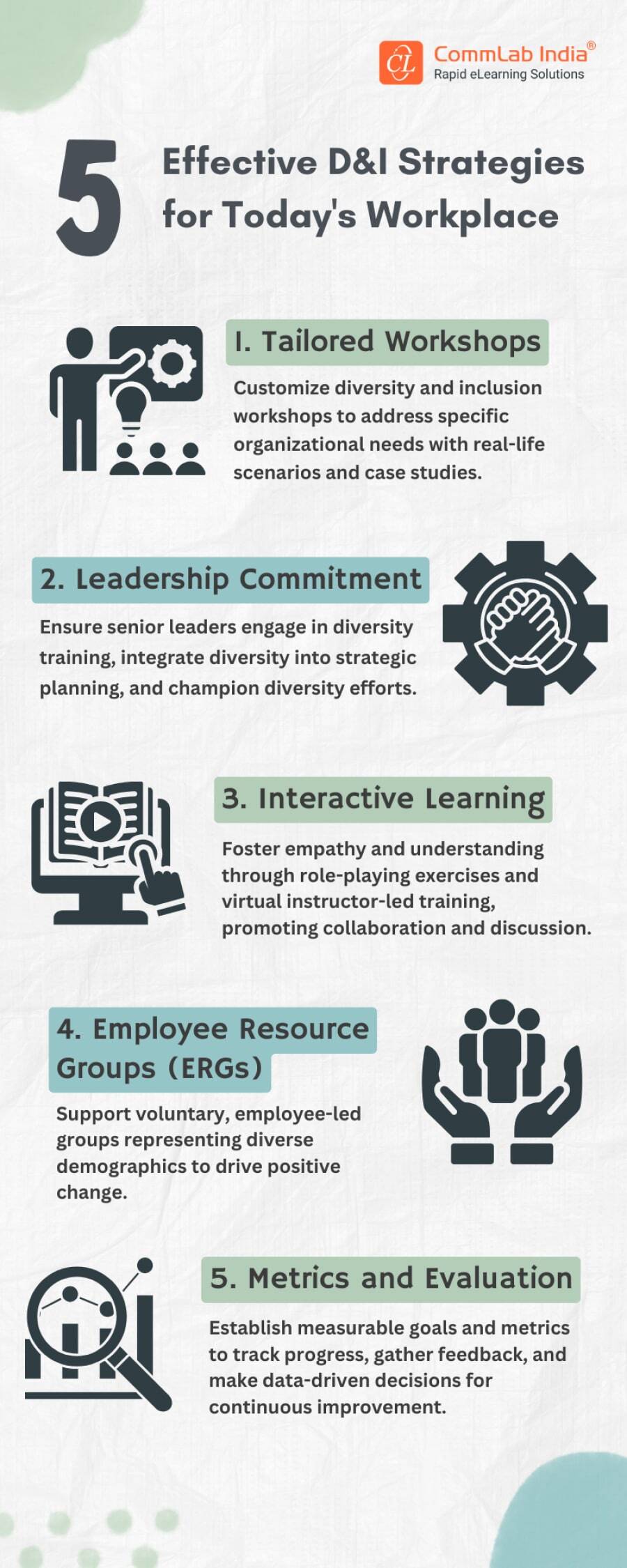
Effective DI strategies are purposeful actions that ensure every employee is treated fairly, given equal opportunities, and feels a true sense of belonging. They focus on reducing bias, promoting representation, and embedding inclusion into everyday workplace practices.
To truly understand how D&I is influencing the workplace, companies need to look beyond representation numbers and surveys.
Here are few ways to measure D&I impact:
- Inclusion Heatmaps: Visualize inclusion levels across teams, departments, shifts, and locations to identify hidden pockets of exclusion.
- Quality of Collaboration Scores: Track cross-functional project performance to see whether diverse teams collaborate effectively and equitably, and incorporate gamification elements—such as points, badges, or collaboration challenges—to encourage inclusive team behaviors and boost engagement.

- Idea-to-Implementation Ratio: Measure how many employee ideas (from brainstorming, innovation portals, ERGs) get implemented across different demographic groups.
- Leadership Inclusion Index: Assess leaders on behaviors like active listening, equitable decision-making, and openness to diverse perspectives—rated anonymously by their teams.
- Psychological Safety Mapping: Use behavioral analytics to evaluate how often team members speak up, challenge ideas, ask questions, or admit mistakes.
- Meeting Participation Equality: Track meeting transcripts (via AI tools) to see who speaks, who gets interrupted, whose ideas get acknowledged, and who gets ignored.
- Cross-Cultural Competency Scores: Evaluate employees’ ability to work effectively across cultures using scenario-based assessments, not just self-reports.
- Inclusion in Workload Distribution: Monitor how tasks, responsibilities, and “office housework” (note-taking, admin tasks) are distributed across genders and groups.
The Training Alignment Checklist
Aligned Training that Boosts Engagement, Skills, and ROI!
- 15 expert-crafted questions to assess alignment
- Built-in framework to spot gaps
- Quick, actionable tool to catch misalignment
- And more!
How Can D&I Initiatives Improve Employee Experience in the Workplace?
D&I initiatives directly shape how employees feel, work, and grow within an organization. When D&I is intentionally woven into everyday experiences, it creates a workplace where people feel respected, supported, and empowered to contribute meaningfully.
Here’s how strong D&I initiatives elevate the employee experience:
- Boosts Sense of Belonging: When employees see themselves represented and valued, they feel more connected to the organization and its mission.
- Enhances Psychological Safety: Inclusive environments allow individuals to express ideas without fear of judgment, leading to stronger collaboration and creativity.
- Strengthens Career Growth Opportunities: D&I-focused systems ensure that promotions, mentorships, and developmental programs are accessible to everyone.
- Improves Engagement and Retention: When employees feel included, they’re more motivated, satisfied, and likely to stay with the company long-term.
- Supports Well-Being: Inclusive policies related to work flexibility, accessibility, and accommodations contribute to better overall well-being.
By integrating thoughtful D&I initiatives into the employee lifecycle, organizations can create a workplace experience that attracts talent, nurtures growth, and sustains long-term success.
Towards a Diverse and Inclusive Workplace
Creating a truly diverse and inclusive workplace is a practical necessity in today’s interconnected world. By embracing diversity and fostering inclusion, companies can unlock a wealth of perspectives, drive innovation, and build a more engaged and committed workforce. This journey toward inclusivity begins with intentional actions, thoughtful strategies, and a commitment to continuous learning and improvement. To ensure your efforts are on the right track, it’s essential that your D&I training supports this journey in a meaningful way. To help you evaluate that alignment, here’s a practical Training Alignment Checklist. This quick diagnostic tool includes expert-designed questions that assess how well your objectives, content, and assessments work together—so your training leads to real behavioral change, not just awareness.