In many organizations, Learning and Development has long been associated with structured programs, scheduled training sessions, and compliance-driven initiatives. While these efforts have served their purpose, they often operate at the periphery of business strategy, disconnected from the outcomes that truly matter.
Today, that reality is rapidly changing. Organizations are navigating constant disruption, evolving workforce expectations, and an urgent need for continuous upskilling. In this environment, L&D can no longer afford to function as a support mechanism. It must evolve into a strategic capability that directly influences performance, productivity, and long-term growth.
Yet a critical gap persists. Training is delivered, but its impact is not always visible. Learning is consumed, but it does not consistently translate into improved performance. Engagement fluctuates, and adoption remains uneven.
This gap does not stem from a lack of effort, but from a lack of alignment and integration.
Modern L&D requires a fundamental shift in mindset. It is no longer about delivering courses or managing content libraries. It is about enabling measurable business outcomes, shaping workforce capabilities, and embedding learning into the rhythm of work itself.
This article explores how L&D is being redefined, what it takes to align it with business priorities, and how organizations can transform learning into a powerful driver of performance and change.
Download eBook: An L&D Manager’s Implementation Guide
Table of Contents
- The Shift from Training Function to Strategic Business Driver
- Why Traditional L&D Models Struggle in Modern Work Environments
- Expanding the Scope of L&D Across Organizational Impact
- Aligning Learning with Business Priorities and Outcomes
- Building a Culture Where Learning Becomes Continuous and Engaging
- From Metrics to Meaning: The Rise of Data-Driven L&D
- Designing Learning Experiences for a Diverse and Distributed Workforce
- The Role of AI in Shaping the Future of Learning
- Closing Skill Gaps in a Continuously Evolving Workplace
- Driving Adoption Through Internal Marketing
- Scaling L&D with Strategic Resourcing and Augmentation
- Moving Beyond Programs to Build Learning Ecosystems
The Shift from Training Function to Strategic Business Driver
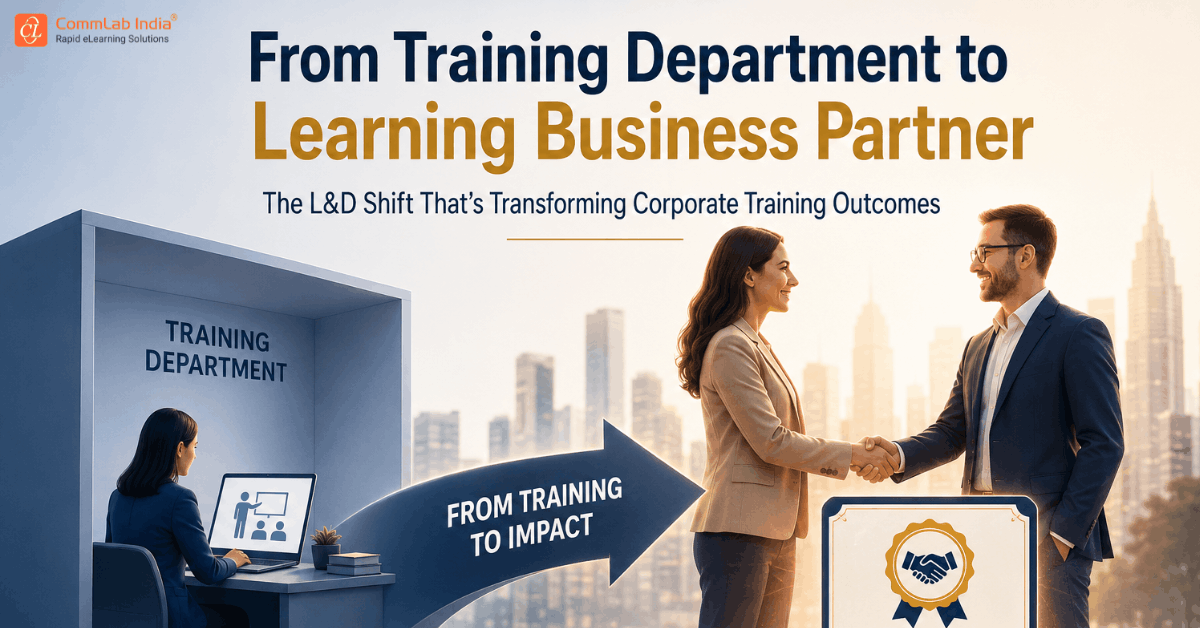
Learning and Development is undergoing a profound transformation, moving from a function focused primarily on delivering training to one that plays a central role in shaping business outcomes. This shift reflects a broader realization that workforce capability is not a byproduct of operations, but a core driver of organizational success.
In this new context, L&D is expected to do far more than design and deploy courses. It must actively contribute to improving productivity, enabling digital transformation, supporting innovation, and strengthening organizational resilience. This expanded role requires L&D leaders to think beyond instructional design and embrace a more strategic perspective.
Instead of asking what training should be delivered, organizations are beginning to ask what business challenges need to be solved and how learning can support those outcomes. This subtle but powerful shift redefines the purpose of L&D and elevates its importance within the enterprise.
The effectiveness of L&D is no longer measured by the volume of training delivered, but by its ability to influence meaningful business outcomes.
Why Traditional L&D Models Struggle in Modern Work Environments
Traditional L&D models were designed for a time when change was relatively predictable, roles were stable, and learning could be planned well in advance. These models emphasized structured programs, standardized content, and linear delivery approaches that assumed learners would progress through predefined pathways.
However, the modern workplace operates under very different conditions. Change is constant, business priorities evolve rapidly, and employees are expected to acquire new skills continuously while managing their day-to-day responsibilities. In such an environment, static and time-intensive training approaches quickly become outdated.
Long development cycles often result in content that is no longer relevant by the time it is deployed. One-size-fits-all programs fail to address the specific needs of diverse learner groups. Event-based learning creates gaps between training and application, reducing retention and impact.
As a result, organizations relying on traditional models frequently encounter low engagement, limited knowledge transfer, and minimal influence on performance.
In a fast-moving business environment, the value of learning is directly tied to its timeliness, relevance, and ability to adapt.
Expanding the Scope of L&D Across Organizational Impact
The influence of L&D now extends well beyond skill development, touching multiple dimensions of organizational performance. When designed and implemented effectively, learning initiatives can create a ripple effect that enhances productivity, strengthens engagement, and supports long-term growth.
Productivity Enhancement
From a productivity standpoint, targeted learning interventions can reduce errors, streamline processes, and accelerate the onboarding of new employees. This leads to faster time-to-competence and improved operational efficiency.
Employee Retention
In terms of employee retention, organizations that invest in continuous development signal a clear commitment to growth, which fosters loyalty and reduces attrition. Employees are more likely to stay when they see opportunities to build their skills and advance their careers.
Innovation and Creativity
Learning also plays a critical role in fostering innovation. By exposing employees to new ideas, encouraging experimentation, and promoting cross-functional collaboration, L&D helps create an environment where creativity can thrive.
Employee Engagement
Engagement is significantly influenced by the quality and relevance of learning experiences. When employees perceive learning as valuable and aligned with their goals, they are more likely to participate actively and apply what they learn.
L&D creates value not only by building skills, but by shaping behaviors, mindsets, and organizational culture.
Aligning Learning with Business Priorities and Outcomes
One of the most persistent challenges in L&D is demonstrating its impact in terms that resonate with business leaders. This challenge can only be addressed through deliberate alignment between learning initiatives and organizational priorities.
Effective alignment begins with a clear understanding of business goals, whether they relate to revenue growth, operational efficiency, customer satisfaction, or digital transformation. Learning initiatives should map directly to these outcomes.
Once these goals are defined, L&D can identify the capabilities required to achieve them and design targeted interventions that support those capabilities.
How to Achieve Alignment
- Define clear business goals
- Identify required capabilities
- Design targeted learning interventions
- Measure performance impact
For instance, a sales-focused organization may prioritize training that improves conversion rates and customer engagement, while a technology-driven company may focus on upskilling employees to adopt new systems and processes.
Equally important is the ability to measure outcomes. By linking learning initiatives to key performance indicators, organizations can move beyond activity-based metrics and demonstrate tangible results.
Alignment transforms learning from a support function into a strategic lever for achieving business success.
Building a Culture Where Learning Becomes Continuous and Engaging
For learning to have a lasting impact, it must extend beyond formal programs and become an integral part of everyday work. This requires cultivating a culture in which learning is continuous, accessible, and deeply embedded in organizational processes.
Such a culture encourages employees to seek knowledge proactively, apply what they learn in real time, and continuously refine their skills. It also recognizes that learning is not confined to structured courses, but occurs through experience, collaboration, and reflection.
Key enablers of this culture include
- Microlearning, which allows employees to access short, focused content when they need it, and
- Learning in the flow of work, which integrates learning with daily tasks.
- Social learning further enhances this experience by enabling knowledge sharing and collaboration among peers.
- Recognition and reinforcement, which not only strengthens retention but also motivates employees to actively engage in continuous development.
When learning is designed to be relevant, timely, and actionable, it becomes a natural part of work rather than an additional responsibility.
The most effective learning environments are those where learning is seamlessly woven into the fabric of work.
From Metrics to Meaning: The Rise of Data-Driven L&D
As L&D evolves, so too must the way its success is measured. Traditional metrics such as completion rates and learner satisfaction provide limited insight into the actual impact of learning initiatives.
Modern L&D organizations are increasingly adopting a data-driven approach that focuses on performance outcomes rather than activity levels. This involves tracking how learning influences behavior, improves skills, and contributes to business objectives.
Advanced analytics enable organizations to identify patterns, uncover insights, and make informed decisions about where to invest their efforts. For example, data can reveal which learning interventions are most effective, which skills are lacking, and how employees progress over time.
By leveraging data effectively, L&D can transition from a reactive function to a proactive one, continuously optimizing its strategies based on evidence.
Data gives L&D the credibility and clarity needed to demonstrate its true value.

An L&D Manager's Guide to Successful Planning & Implementation.
Learn:
- What Challenges do L&D Managers Face?
- How to Align Business and Project?
- How to be a Learning Consultancy?
- DOWNLOAD NOW!
Designing Learning Experiences for a Diverse and Distributed Workforce
The modern workforce is characterized by diversity in roles, locations, and learning preferences, which necessitates a more nuanced approach to learning design. A single, standardized experience is unlikely to meet the needs of all learners, making personalization and flexibility essential.
Employees require learning that is relevant to their specific roles and responsibilities, while managers need visibility into team performance and progress. Administrators, on the other hand, require systems that provide control, scalability, and efficiency.
Designing for these varied needs involves creating modular, adaptable learning experiences that can be tailored to different audiences. It also requires ensuring accessibility across devices, enabling employees to learn anytime and anywhere.
By addressing the unique needs of each user group, organizations can enhance both the effectiveness and the usability of their learning solutions.
Effective learning design acknowledges diversity and adapts to it, rather than attempting to standardize it.
The Role of AI in Shaping the Future of Learning
Artificial intelligence is transforming the way learning is designed, delivered, and experienced. By enabling greater personalization and automation, AI allows organizations to create more relevant and efficient learning experiences.
Key Applications of AI in L&D
- Personalized learning pathways
- Intelligent content recommendations
- Automated assessments
- Predictive analytics for skill gaps
AI enables L&D to move from standardized delivery to adaptive learning experiences. AI also streamlines processes such as content creation, assessment, and analytics, allowing L&D teams to focus on strategic initiatives. Predictive analytics further enhances this capability by identifying potential skill gaps and enabling proactive interventions.
As organizations continue to adopt digital technologies, L&D plays a critical role in supporting this transformation by ensuring that employees are equipped with the skills they need to succeed.
AI enhances the scalability and precision of L&D, enabling organizations to deliver more targeted and impactful learning experiences.
Closing Skill Gaps in a Continuously Evolving Workplace
Skill gaps are an inevitable consequence of rapid technological and organizational change, and addressing them requires a proactive and ongoing approach. Rather than reacting to gaps as they emerge, organizations must anticipate future needs and prepare their workforce accordingly.
This involves conducting regular skill assessments to identify areas of deficiency and designing targeted programs to address them. Role-based learning pathways can help ensure that employees acquire the specific skills required for their positions, while just-in-time learning resources provide support when it is needed most.
By adopting a continuous approach to skill development, organizations can remain agile and competitive in a rapidly changing environment.
The ability to close skill gaps quickly is a key determinant of organizational success.
Driving Adoption Through Internal Marketing
Even the most thoughtfully designed learning programs will fall short if they fail to engage their intended audience. This is where internal marketing becomes a critical component of L&D strategy.
Internal marketing involves promoting learning initiatives in a way that highlights their value and encourages participation. This can be achieved through targeted communication campaigns, leadership advocacy, and the use of success stories to demonstrate impact.
Gamification and incentives can further enhance engagement by making learning more interactive and rewarding. By adopting a marketing mindset, L&D teams can significantly improve adoption rates and ensure that their efforts translate into meaningful outcomes.
The success of learning initiatives depends as much on how they are communicated as on how they are designed.
Scaling L&D with Strategic Resourcing and Augmentation
As organizations expand their learning initiatives, internal teams often face limitations in terms of capacity and expertise. Strategic resourcing, including staff augmentation and outsourcing, can help address these challenges.
When to Consider Augmentation
- Large-scale training initiatives
- Rapid content development needs
- Specialized skill requirements
- Technology implementation
By leveraging external expertise, organizations can accelerate development timelines, access specialized skills, and improve the quality of their learning solutions. This approach also allows internal teams to focus on strategic priorities rather than operational tasks.
When implemented effectively, augmentation enables L&D to scale efficiently while maintaining high standards of quality and impact.
Scaling L&D requires a balance between internal capability and external expertise.
Moving Beyond Programs to Build Learning Ecosystems
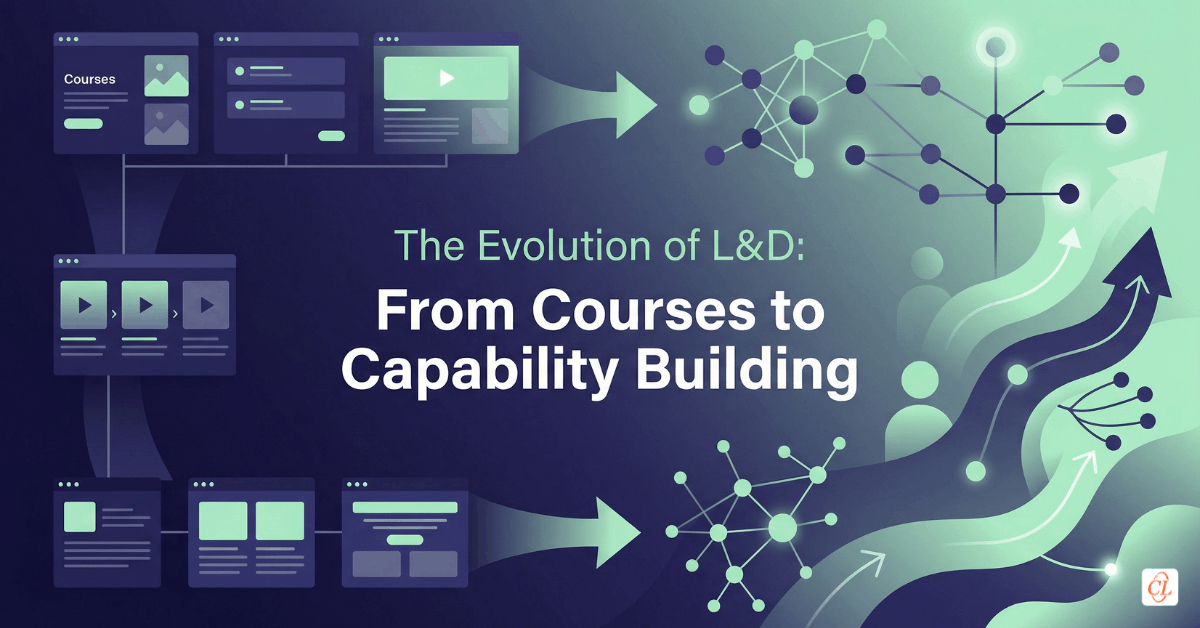
The future of L&D lies in the creation of integrated learning ecosystems that bring together platforms, content, tools, and data into a cohesive environment. Unlike traditional programs, which are often isolated and episodic, ecosystems provide continuous and interconnected learning experiences.
Characteristics of a Learning Ecosystem
- Seamless integration with work systems
- Real-time access to learning resources
- Continuous feedback and improvement
- Scalable and adaptable infrastructure
By shifting from programs to ecosystems, organizations can create a more dynamic and responsive approach to learning that aligns with the demands of the modern workplace.
Sustainable learning impact is achieved not through isolated initiatives, but through interconnected systems that evolve with the organization.
FAQ
1. What is the primary role of modern L&D?
A. Modern L&D focuses on building workforce capabilities that directly influence business performance, enabling organizations to adapt, innovate, and achieve strategic objectives.
2. How can L&D align with business goals?
A. Alignment is achieved by identifying business priorities, mapping required skills, designing targeted learning interventions, and measuring outcomes through performance metrics.
3. Why is data important in L&D?
A. Data provides insights into learning effectiveness, helps track skill development, and enables organizations to link learning initiatives to business outcomes.
4. How does AI impact learning and development?
A. AI enhances learning by enabling personalization, automating processes, providing predictive insights, and improving the overall efficiency and effectiveness of L&D strategies.
5. What is a learning ecosystem?
A. A learning ecosystem is an integrated environment that combines platforms, content, tools, and data to deliver continuous, personalized, and scalable learning experiences.
6. Why do L&D programs fail to engage employees?
A. Lack of relevance, insufficient communication, and poor alignment with learner needs often result in low engagement and limited adoption.
7. How can organizations bridge skill gaps effectively?
A. Organizations can bridge skill gaps by conducting continuous assessments, offering targeted upskilling programs, and providing just-in-time learning resources.
Conclusion
Learning and Development stands at a critical inflection point. Organizations that continue to treat it as a transactional function will find themselves struggling to keep pace with change, while those that embrace its strategic potential will unlock new levels of performance and resilience.
The future of L&D is defined by its ability to integrate seamlessly with business strategy, leverage data and technology, and create meaningful learning experiences that drive real-world impact.
Ultimately, success in L&D is not about delivering more training, but about enabling transformation, strengthening capabilities, and preparing the workforce for what lies ahead.