Corporate training has a timing problem. Employees are expected to learn in the middle of work, not apart from it. They are switching between meetings, tools, deadlines, systems, customers, and priorities, while organizations still need them to absorb new processes, adopt new technologies, stay compliant, and build skills fast enough to keep pace with change.
That tension is exactly why microlearning has moved from being a “useful format” to a serious training strategy.
But the real value of microlearning is often misunderstood. It is not simply about making learning shorter. It is not a shortcut for weak training design. And it is not the right answer for every learning problem.
At its best, microlearning helps organizations deliver training in a way that aligns with how work actually happens: in moments, in context, and often under pressure. It helps employees access focused learning without being pulled away from performance for long periods. It supports reinforcement, transfer, retention, and just-in-time application in ways that traditional formats often struggle to do well.
When used well, it can improve relevance, speed, flexibility, and learner engagement. When used poorly, it becomes fragmented content that feels efficient but delivers little real capability.
This article examines where microlearning truly fits in corporate training, why it has become strategically important, where it works best, where it does not, and how L&D teams should think about it beyond the hype.
Download Now: Microlearning — Where Does It Fit in Your Learning Strategy?
Table of Contents
- Why Microlearning Has Become Central to Corporate Training
- What Microlearning Really Is, and What It Is Not
- Why Microlearning Works So Well for Today’s Workforce
- The Business Benefits of Microlearning
- Where Microlearning Fits Best in Corporate Training
- When Microlearning Is the Wrong Choice
- Common Microlearning Myths That Hold Teams Back
- How Microlearning Supports Learning Science and Adult Learning
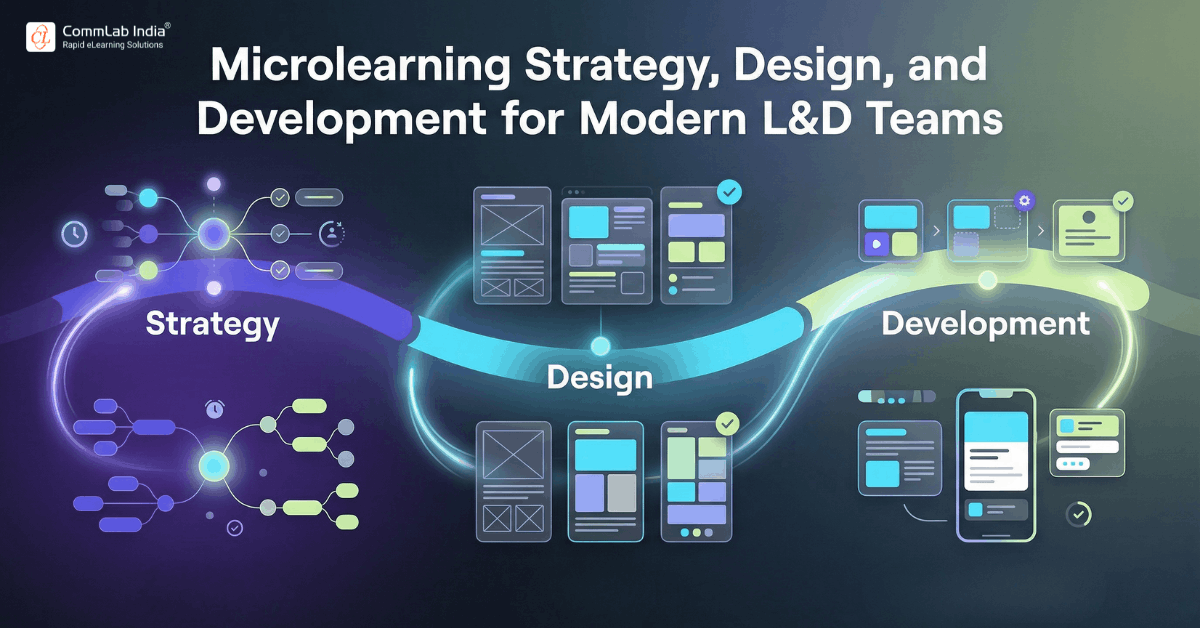
- What Strong Microlearning Strategy Looks Like
- The Strategic Role of Microlearning in Modern L&D
- FAQs
Why Microlearning Has Become Central to Corporate Training
The workplace has changed faster than most training systems.
Organizations are dealing with shorter skill cycles, more distributed workforces, constant software and process changes, tighter business timelines, and growing pressure to prove the value of training. At the same time, learners have less patience for generic, time-heavy learning experiences that feel disconnected from their day-to-day work.
Microlearning has become important not because attention spans have “collapsed,” but because training now needs to be more context-aware, more accessible, and more performance-oriented.
In many organizations, traditional training still assumes that learning happens in dedicated blocks of time. But employees often need support in smaller windows:
- Before a task
- During a process change
- After a system update
- Between customer interactions
- While preparing for a conversation, decision, or action
That is where microlearning becomes strategically useful. It allows L&D teams to shift from event-based training to workflow-aligned learning.
This is especially relevant in corporate environments where:
- onboarding needs to happen faster
- frontline teams need performance support
- managers need timely reinforcement
- compliance content must be remembered, not just completed
- product, process, and system changes happen continuously
Microlearning is not replacing all structured training. It is helping organizations build a more responsive learning ecosystem around it.
What Microlearning Really Is, and What It Is Not
Microlearning is often described as “short learning content,” but that definition is too weak to be useful.
A more accurate definition is this: Microlearning is a focused, outcome-driven learning experience designed to help learners understand, practice, reinforce, or apply one specific concept, skill, action, or decision in a short span of time.
That means effective microlearning is built around:
- one clear learning objective
- one specific performance need
- one manageable cognitive load
- one action or application context
The real difference is not just length. It is instructional scope.
Microlearning vs eLearning: The real distinction
| Dimension | Microlearning | Traditional eLearning |
| Scope | Narrow and focused | Broader and multi-concept |
| Duration | Short and targeted | Longer and more comprehensive |
| Use case | Reinforcement, quick learning, performance support | Foundational learning, structured capability building |
| Learning flow | Often standalone or sequenced in small units | Usually linear or module-based |
| Best for | Immediate relevance and fast access | Deeper understanding and broader skill development |
This distinction matters because many teams assume that cutting a 45-minute course into 6 smaller pieces automatically creates microlearning.
It does not.
If the content is still overloaded, poorly sequenced, or instructionally vague, the result is simply shorter content, not better learning.
True microlearning is not compressed training. It is deliberately designed training.
Why Microlearning Works So Well for Today’s Workforce
Microlearning aligns well with how modern employees experience work, information, and learning.
That does not mean it should follow consumer content trends blindly. It means it is better suited to the realities of work than many traditional formats.
It respects the rhythm of work
Most employees do not struggle because they are unwilling to learn. They struggle because learning competes with work.
Microlearning reduces that friction by making learning easier to access in realistic moments, rather than expecting long, uninterrupted blocks of time.
It reduces cognitive overload
Many corporate training experiences fail not because the content is wrong, but because too much is introduced at once. Microlearning helps by narrowing the learner’s focus and reducing unnecessary instructional clutter.
It improves relevance
A short, targeted learning unit often feels more valuable because the learner can immediately see why it matters. That perceived relevance is a major driver of engagement.
It supports action, not just awareness
When designed well, microlearning does not just explain. It helps the learner do something such as follow a process, avoid a mistake, make a decision, remember a key step and handle a real scenario.
That makes it highly useful in performance-driven environments.
The Business Benefits of Microlearning
Microlearning is often promoted in learner-centric terms, but its business value is what makes it strategically important.
The strongest case for microlearning is not that people “like it more.” It is that it can help organizations train more efficiently, more flexibly, and more effectively when applied to the right needs.
1. It helps training scale faster
When content is modular and focused, it becomes easier to update, localize, reuse, re-sequence, and deploy across audiences. That is especially useful for organizations dealing with frequent product, process, or policy changes.
2. It improves time-to-competence
Employees often do not need a full learning journey before they can start performing. They need the right support at the right point in the workflow. Microlearning helps accelerate early competence by delivering only what is needed, when it is needed.
3. It supports better retention through reinforcement
One of the biggest weaknesses of one-time training events is that learning fades quickly without reinforcement. Microlearning is highly effective when used to revisit, reinforce, and reactivate learning over time.
4. It fits distributed and hybrid work environments
In modern organizations, learners are spread across locations, roles, devices, and schedules. Microlearning offers a more flexible delivery model that fits asynchronous learning realities far better than many fixed-format training approaches.
5. It can improve ROI when tied to performance
Microlearning does not improve ROI simply by being shorter. It improves ROI when it reduces seat time, improves task accuracy, speeds up onboarding, supports adoption, lowers retraining needs and reinforces critical behaviors.
That is an important distinction. The return comes from better alignment to performance, not from duration alone.
Organizations invest in microlearning because it helps training become more agile, easier to maintain, better aligned to workflow, and more effective for reinforcement, adoption, and just-in-time performance support.
Where Microlearning Fits Best in Corporate Training
One of the biggest reasons microlearning succeeds in some organizations and disappoints in others is simple: it is often used for the wrong job.
Microlearning works best when the learning need is specific, actionable, and context-bound.
Strong use cases for microlearning
Performance support
When employees need help in the moment of need, microlearning is extremely effective. This includes quick reference, procedural reminders, decision support, and task guidance.
Reinforcement after formal training
Microlearning works exceptionally well after a larger learning experience. It helps sustain recall, revisit key concepts, and prevent knowledge drop-off.
Product, process, and policy updates
When something changes and employees need quick clarity, microlearning provides a fast and scalable way to communicate and reinforce what matters.
Sales and customer-facing enablement
Short, scenario-based or product-focused learning units are ideal for helping sales and service teams access practical knowledge quickly.
Onboarding support
While onboarding should not rely on microlearning alone, it is highly effective for role-specific refreshers, workflow support, systems training, and spaced learning after orientation.
Compliance reinforcement
Microlearning can support compliance well when used for reminders, situational judgment, policy refreshers, and scenario-based reinforcement, especially after core training.
Where it adds the most value
| Training Need | Microlearning Fit |
| Quick process updates | High |
| Software steps and task support | High |
| Reinforcement after formal training | High |
| New manager development | Moderate to High |
| Product knowledge refreshers | High |
| Deep conceptual mastery | Low to Moderate |
| Complex judgment-based capability building | Moderate, with larger design support |
| Regulatory or high-risk training by itself | Low |
Microlearning is most powerful when it is treated as part of a system, not a standalone answer to every learning need.

Where Does Microlearning Fit in Your Learning Strategy?
Uncover the Secrets to Crafting High-performing Micro Assets!
- What Microlearning is and What it is NOT?
- Types of Microlearning Assets
- Tips and Tools for Rapid Microlearning Development
- And More!
When Microlearning Is the Wrong Choice
This is the part many organizations skip.
Microlearning is valuable, but it has limits. Treating it as a universal solution creates weak learning experiences and unrealistic expectations.
Microlearning is not ideal when learners need:
- Deep conceptual understanding
If a topic requires layered explanation, synthesis, and conceptual development, microlearning alone is often too narrow to support meaningful understanding. - Complex skill development
Some capabilities need guided practice, reflection, coaching, discussion, and multi-step application. These outcomes usually require a broader learning architecture. - Nuanced decision-making in high-risk contexts
When errors carry serious business, legal, operational, or safety consequences, training usually needs more than a short learning burst. - Behavior change by itself
Behavior change is rarely caused by content alone. It typically depends on manager reinforcement, culture, systems, feedback, incentives, and practice. Microlearning can support this process, but it cannot carry it alone.
A useful rule of thumb
Ask this question: Can this learning need be meaningfully understood, practiced, or reinforced as one focused performance objective?
If yes, microlearning may be a strong fit. If not, it may need to be part of a broader learning solution. That is not a weakness. It is simply good instructional judgment.
Common Microlearning Myths That Hold Teams Back
Microlearning has been around long enough to be widely adopted, but also long enough to accumulate bad assumptions.
Myth 1: Microlearning just means short videos
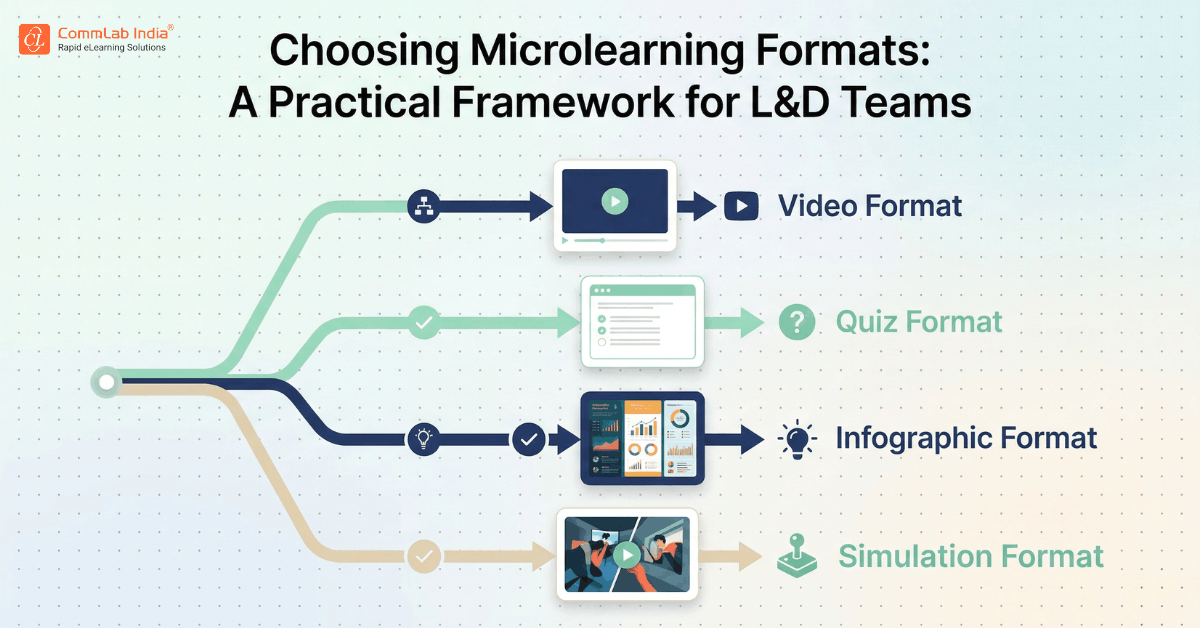
Short videos are one possible format, not the definition of microlearning. Microlearning can take many forms, including scenario cards, interactive decision paths, short explainers, quick simulations, job aids, quizzes, performance nudges, mobile modules, and guided practice sequences. The format matters less than the instructional intent.
Myth 2: Shorter always means better
Shorter is only better when the learning objective is genuinely narrow. Over-compressing content can reduce clarity, strip context, and create shallow learning.
Myth 3: Microlearning replaces all eLearning
It does not. Microlearning and eLearning are not enemies. They solve different instructional problems and often work best together.
Myth 4: It is only useful for millennials or Gen Z
Microlearning is not a generational preference strategy. It is a relevance and workflow strategy. Its value comes from clarity, accessibility, and utility, not age-based assumptions.
Myth 5: It is too lightweight for serious training
Poorly designed microlearning can feel lightweight. Well-designed microlearning can be highly strategic, especially when used for reinforcement, task support, adoption, and targeted performance enablement.
So, Microlearning is not a shortcut, a content trend, or a replacement for all formal learning. It is a targeted instructional approach that works best when matched carefully to the right learning need.
How Microlearning Supports Learning Science and Adult Learning
Microlearning is often treated as a format trend, but its real strength comes from how well it aligns with core learning principles. Adults learn best when learning is Relevant, Timely, Usable, Connected to real work, and Respectful of prior experience.
Microlearning naturally supports these conditions when designed well.
- It supports relevance and immediacy
Adult learners are more engaged when they can quickly understand why something matters and how it applies to their role. Microlearning works well because it often starts closer to action than abstraction. - It supports spaced reinforcement
Learning retention improves when key concepts are revisited over time instead of delivered in one large block and forgotten. Microlearning is well suited for spaced repetition and reinforcement design. - It supports retrieval and recall
Short quizzes, scenario prompts, and practice checks help learners actively retrieve information, which strengthens memory far more effectively than passive review. - It supports contextual application
Because microlearning is narrow and focused, it can be built around realistic job tasks, decisions, and scenarios, making transfer more likely.
This is one reason microlearning often feels more effective than longer content. It is not just easier to consume. It is often easier to use.
What Strong Microlearning Strategy Looks Like
Many organizations have microlearning content. Fewer have a microlearning strategy.
The difference is significant.
A strong strategy does not begin with “let’s create short modules.” It begins with a more useful question: Where in the learner journey would focused, timely, performance-relevant learning create the most value?
That shifts microlearning from a format choice to a design decision.
Strong microlearning strategy includes:
- Clear performance alignment: Each learning unit should connect to a real learner action, task, or decision.
- Modular design logic: Content should be intentionally structured so it can be reused, updated, and sequenced intelligently.
- Delivery fit: The format, channel, and timing should match the context in which the learner will actually need it.
- Reinforcement planning: Microlearning is most powerful when it is part of a sequence, not a one-off content drop.
- Role-based relevance: The more precisely it reflects learner context, the more likely it is to be used and remembered.
A simple strategic lens for L&D teams
Before building microlearning, ask:
- What specific learner action are we trying to support?
- What is the ideal moment for this learning to appear?
- Does this need a lesson, a reminder, a scenario, or a support asset?
- Will this be used once, or repeatedly over time?
- How will we know it improved performance?
These questions prevent microlearning from becoming a content trend and turn it into a capability enabler.
The Strategic Role of Microlearning in Modern L&D
Microlearning should not be treated as a content category sitting at the edge of the learning strategy. It should be treated as part of how modern L&D becomes more responsive, more scalable, and more embedded in work.
Its strategic value lies in its ability to help organizations move from:
- event-based training to continuous support
- information delivery to performance enablement
- monolithic courses to modular learning ecosystems
- generic content to contextual learning moments
That is a meaningful shift.
For L&D leaders, the real question is no longer whether microlearning has value. The more important question is whether the learning function is using it strategically enough.
Because the strongest microlearning programs are not just shorter. They are sharper, better timed, more relevant, and more closely connected to the work employees are actually trying to do. That is why microlearning matters. Not because it is small. Because it is precise.
FAQs
1. What is microlearning in corporate training?
A. Microlearning in corporate training is a focused learning approach that delivers short, purpose-driven learning units designed to help employees quickly learn, apply, or recall a specific concept, task, or skill. It is most effective when aligned to real work moments and clear performance needs.
2. What are the benefits of microlearning for employees?
A. Microlearning helps employees learn in shorter, more manageable bursts, making training easier to access during work. It can improve relevance, reduce overload, support retention, and make it easier for learners to apply knowledge quickly in real job contexts.
3. What are the benefits of microlearning for organizations?
A. For organizations, microlearning can improve scalability, speed up training deployment, support reinforcement, reduce seat time, and make content easier to update. It is especially valuable for onboarding, process changes, compliance refreshers, and ongoing workforce enablement.
4. When should microlearning be used?
A. Microlearning should be used when the learning need is specific, actionable, and context-based. It works well for task support, quick updates, reinforcement, refreshers, product knowledge, software steps, and performance support where employees need focused learning fast.
5. When should microlearning not be used?
A. Microlearning is not ideal as a standalone solution for deep conceptual learning, complex skill development, or high-risk training that requires discussion, guided practice, or layered understanding. In those cases, it should support, not replace, broader learning design.
6. Is microlearning better than eLearning?
A. Microlearning is not inherently better than eLearning. It is better suited to certain training needs. Traditional eLearning works well for broader, more structured learning, while microlearning works best for focused, timely, and performance-oriented learning moments.
7. Does microlearning improve ROI?
A. Microlearning can improve ROI when it is tied to business outcomes such as faster onboarding, better task accuracy, stronger retention, quicker adoption, or reduced retraining. The return comes from strategic use and performance alignment, not simply from shorter content.
Conclusion
Microlearning has earned its place in modern corporate training, but not for the reasons it is often marketed. Its value is not that it makes learning smaller. Its value is that it can make learning more usable, more timely, and more closely aligned to performance.
That is what makes it strategically important for L&D teams working in fast-moving, high-change environments.
Used well, microlearning helps organizations close the gap between training and work. It gives learners focused support when they need it most, and it gives businesses a more agile way to build capability without overloading people or overengineering every learning experience.
The opportunity, then, is not simply to create more microlearning. It is to use microlearning with better judgment. Because when it is aligned to the right needs, designed with precision, and embedded into the broader learning ecosystem, it becomes far more than a shorter format. It becomes one of the most practical tools in modern corporate training.