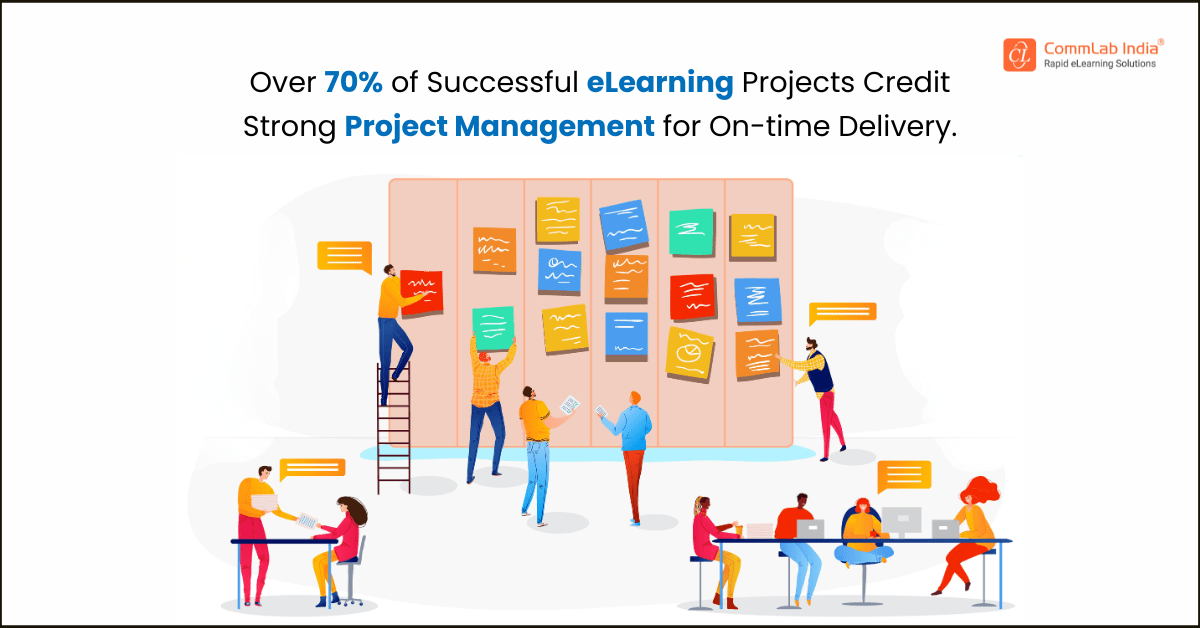
Charles is the lead eLearning developer at a large company. His company has recently decided to invest in new eLearning courses to train its employees on the latest industry trends and technologies. As the lead developer, he has been tasked with overseeing the development and delivery of these eLearning courses.
As he begins the project, he quickly realizes that developing an eLearning course is a complex and multifaceted process that requires careful planning and coordination. With a tight deadline, limited budget, and high expectations from the stakeholders, he knows that effective project management is crucial for the success of this project.
And if you’re wondering why? Here’s the answer.
Download Now: Instructional Design Strategies for Engaging eLearning Courses
Table Of Content
- What Makes Project Management So Critical in eLearning Development?
- What Are the Benefits of Each Stage in the Project Management Process?
- What Tools Can Support Each Stage of the eLearning Project Management Process?
What Makes Project Management So Critical in eLearning Development?
Project management keeps eLearning development structured, aligned, and predictable. It ensures teams stay on the same page, meet deadlines, and deliver courses that match both learning and business goals.
Developing eLearning involves many moving parts—SMEs, designers, developers, reviews, timelines, and deliverables. Without a clear plan, it’s easy for projects to drift, causing confusion, delays, and inconsistent course quality.
Here’s how project management makes the difference:
- Defines scope and objectives clearly so everyone understands what success looks like.
- Sets realistic timelines and budgets to avoid last-minute rush or cost overruns.
- Improves team coordination by assigning responsibilities and keeping workflows organized.
- Ensures steady progress through regular reviews and timely adjustments.
- Maintains quality and consistency across all stages of design and development.
By keeping everything structured and transparent, project management ensures eLearning projects move smoothly from idea to delivery—without unnecessary rework or chaos.
What Are the Benefits of Each Stage in the Project Management Process?
Which L&D Initiatives Rely Heavily on Strong Project Management?
High-Complexity Training Areas That Demand Structured Coordination
- Onboarding Programs: Multiple modules, role-based tracks, and deadlines require tight coordination.
- Compliance Training: Frequent updates, legal reviews, and strict rollout timelines make strong PM essential.
- Product & Process Training: SMEs, technical reviewers, and multimedia teams must stay aligned for accuracy.
- Software & System Training: Simulations, demos, and iterative builds need clear workflows and controlled revisions.
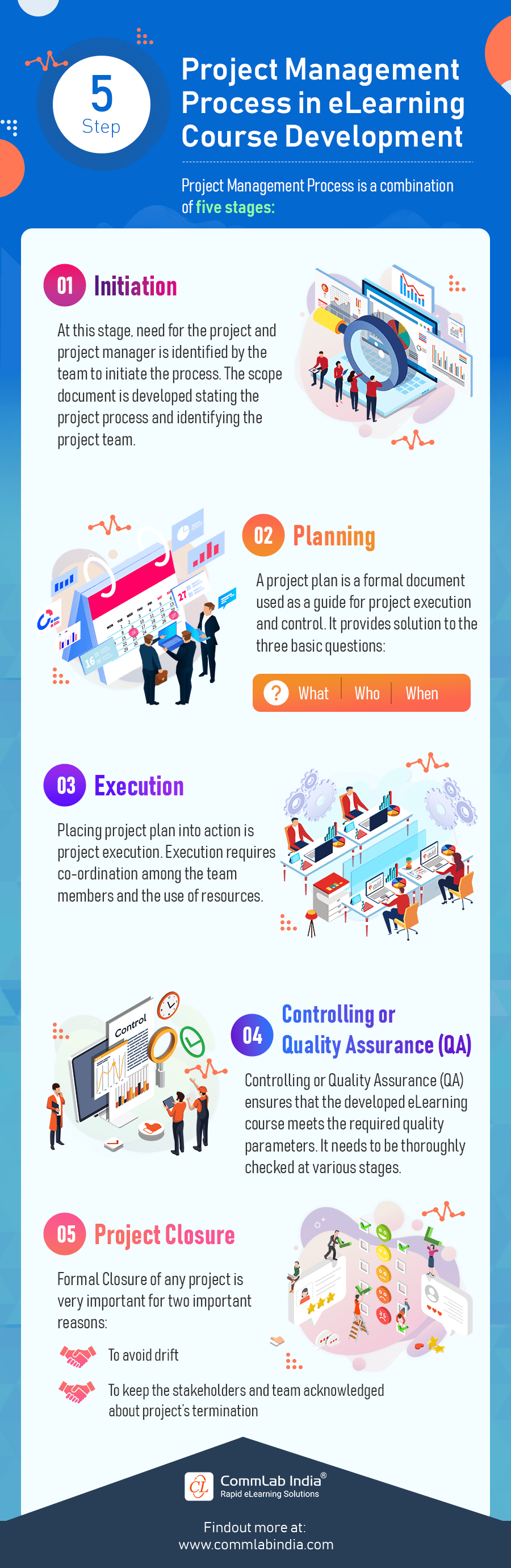
The five stages of the project management process in eLearning course development provide a structured and efficient approach for developing an eLearning course. Here we have the benefits of each stage:
1. Initiation stage:
By clearly defining the project scope, objectives, and deliverables in the initiation stage, your project team can ensure that they are focused on the right goals and that they have a clear understanding of what is expected of them. This helps to prevent scope creep and ensures that your eLearning design and development project stays on track.
2. Planning stage:
The planning stage is an important one as it helps you ensure that the project schedule, budget, and risk-management plan are realistic and attainable. It also gives your team clarity on what needs to be done and when, helping you avoid delays and cost overruns so the eLearning project is completed on time and within budget. And reinforcing this point, a recent overview of project-management trends highlights PM tools and automated data use as essential elements of effective planning—alongside AI integration and hybrid methodologies—showing a clear industry shift toward digital tools that enhance planning accuracy and overall project efficiency.
3. Execution stage:
By focusing on building the course during the execution stage, your project team works toward ensuring that the eLearning course meets stakeholder needs and is technically feasible. This stage is also where formats like microlearning take shape, helping teams break content into focused, high-impact learning nuggets. As a result, the final course is high quality, easy to consume, and effective in achieving its goals.
4. Monitoring and controlling stage:
The monitoring and controlling stage helps you in keeping your eLearning design and development project on track. It also enables you to stay aligned with the learning objectives of the course and meet the deliverables defined in the project charter.
5. Closing stage:
The closing stage helps to ensure that the eLearning course is finalized and delivered to the stakeholders. This stage guarantees that the course is of high quality and that it will be effective in achieving its goals. The project evaluation also helps to identify lessons learned and make recommendations for future projects.

What Tools Can Support Each Stage of the eLearning Project Management Process?
Because eLearning projects involve multiple specialists—SMEs, Instructional Designers, developers, designers, reviewers—having a solid tool stack ensures clarity and smooth handoffs. Instead of relying on long email threads or scattered notes, teams get one shared workspace for communication, updates, and decisions.
Here’s how different tools support each stage of the process:
- Initiation: Tools like Miro and Notion help teams gather ideas, define goals, map workflows, and capture stakeholder expectations. They make early planning visual and easy to align on.
- Planning: Platforms such as Trello, Asana, and Monday.com give clear visibility into timelines, task ownership, dependencies, and deadlines. This helps prevent bottlenecks and ensures everyone knows what’s happening next.
Instructional Design Strategies to Design Engaging eLearning Courses
Design Learner-Centric eLearning
- Importance of ID Strategies in eLearning
- Parameters to Select the Right ID Strategy
- ID Strategies for Effective Results
- Case Studies
- Content & Design: Authoring tools like Articulate Storyline, Adobe Captivate, and Lectora streamline course creation with templates, interactions, and built-in design capabilities—making it easier for IDs and developers to collaborate.
- Media Development: Tools like Vyond, Synthesia, Midjourney, and Canva make it possible to create videos, animations, images, and AI-powered assets quickly. These tools significantly cut production time for visuals and multimedia.
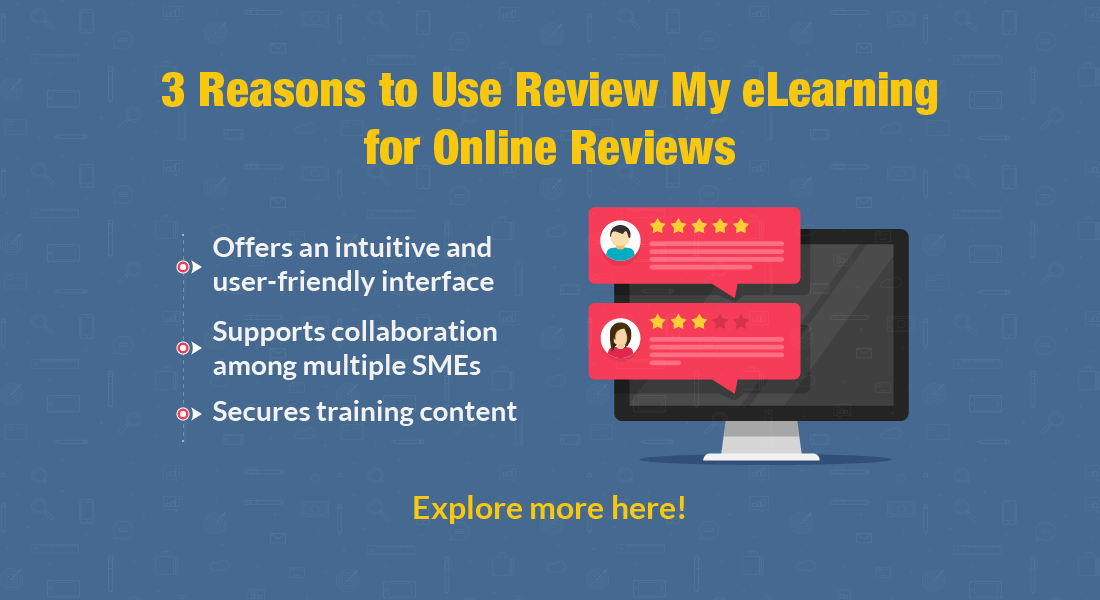
- Reviews & Collaboration: Review 360, Frame.io, and Google Workspace bring SMEs, reviewers, and stakeholders into one centralized space. Feedback becomes faster, clearer, and easier to track—reducing revision cycles.
Watch how the right tools can make your eLearning project management effortless
- Delivery & Tracking: Effectus LMS, Moodle, and Adobe Learning Manager help deploy courses and give insights into learner progress, completion rates, and overall performance—ensuring the course meets its intended goals.
By matching each stage with the right tools, eLearning teams work more confidently, collaborate more smoothly, and deliver high-quality training with fewer delays and less friction.
Wrapping It Up!
The project management process in eLearning course development is a vital tool for ensuring that the course is delivered on time, within budget, and to the satisfaction of the stakeholders. The five stages of the process are initiation, planning, execution, monitoring and controlling, and closing. By planning and following these stages diligently, Charles and his team ensured that the courses were of high quality and effective in achieving their goals. Well-planned project management process helped them affirm that their eLearning courses were a success and that the learners acquired the necessary skills and knowledge they needed to be successful in the industry.
Intrigued to design and develop eLearning courses? Here’s a little recommendation from Charles — an eBook on instructional design strategies that is sure to help. So, check it out now!