If you lead learning and development at a large organization, you have probably sat through a vendor pitch where "machine learning," "deep learning," and "generative AI" were used interchangeably in the same breath. They are not the same thing, and the difference matters. It shapes which AI tools actually solve your training problems and which ones are just rebranded software with a new label.
This blog breaks down machine learning, deep learning, and generative AI in plain language, with direct application to corporate training. No engineering background required.
Table Of Content
- What is Machine Learning and Where Does it Show Up in L&D?
- What is Deep Learning, and Why does it Matter for Training Content?
- What is Generative AI, and how is it Different from ML and Deep Learning?
- How do these Three Technologies Work Together in a Modern L&D Stack?
- Frequently Asked Questions
What is Machine Learning and Where Does it Show Up in L&D?
Machine learning is a system that improves its predictions by analyzing patterns in data, rather than following rules a programmer wrote by hand. Feed it enough examples, and it gets better at spotting what comes next.
In L&D, machine learning already powers tools you likely use without thinking of them as "AI":
- Adaptive learning platforms that adjust question difficulty based on a learner's past responses
- LMS recommendation engines that suggest the next course based on role, skill gaps, or completion history
- Skills-gap analytics that flag which teams are falling behind on compliance or capability targets
Machine learning is prediction-focused. It is good at answering "what is likely to happen" or "who needs this training next." It is not built to create new content on its own.
What is Deep Learning, and Why does it Matter for Training Content?
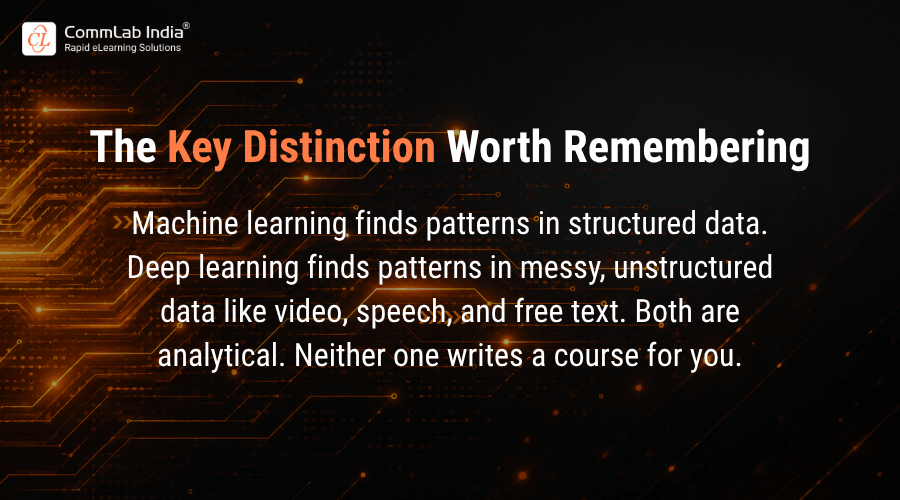
Deep learning is a more advanced form of machine learning that uses layered neural networks to process complex, unstructured information such as images, audio, and natural language. Instead of relying on a human to define which features matter, deep learning models learn those features directly from raw data.
This is the technology behind:
- Speech-to-text and text-to-speech used in AI voiceover tools for eLearning modules
- Automated video and image tagging for large digital asset libraries
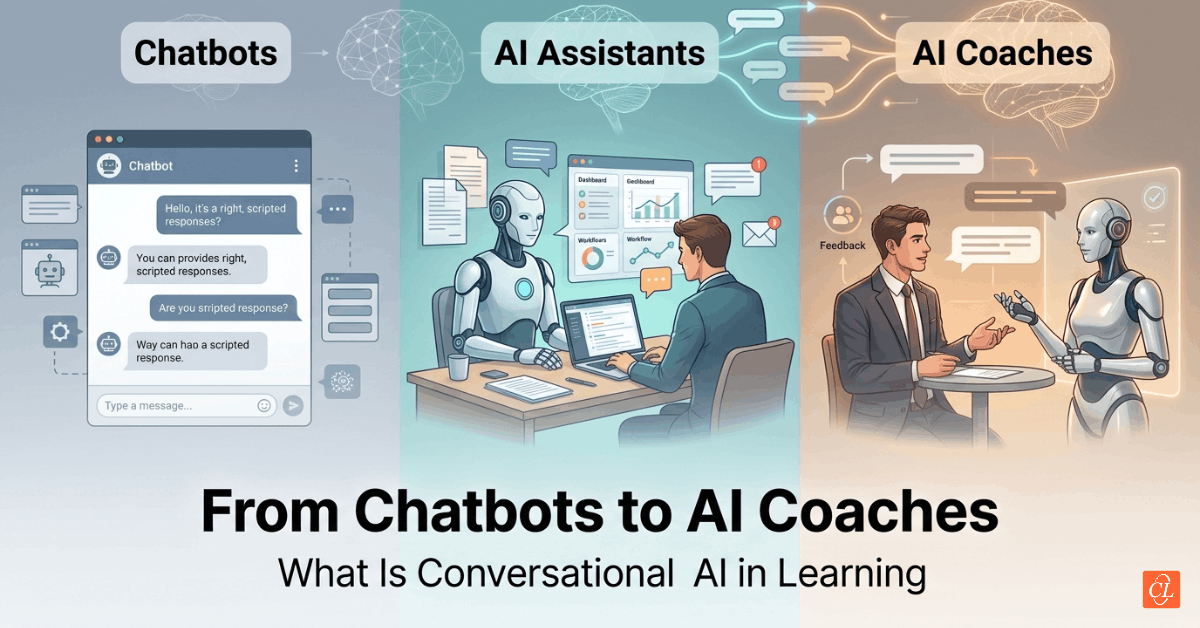
- Natural language processing that powers chatbots answering employee questions about benefits or policy
For L&D teams managing multilingual training or large content libraries, deep learning is the layer that makes it possible to search, transcribe, and localize content at scale without manual tagging for every asset.
What is Generative AI, and how is it Different from ML and Deep Learning?
Generative AI is a specific application built on deep learning that produces new content instead of only analyzing existing content. Large language models are trained on vast amounts of text, then generate original text, images, audio, or code in response to a prompt.
This is the layer most L&D teams are experimenting with right now, including:
- Drafting first versions of eLearning course scripts, storyboards, or scenario-based training
- Generating AI voiceovers and multilingual audio for eLearning modules
- Creating quiz questions, case studies, or role-play dialogue from existing source material
- Summarizing lengthy policy documents into digestible microlearning content
The practical difference for a training manager: machine learning and deep learning help you understand your learners and your content library. Generative AI helps you produce new training materials faster.
Watch this video to know how GenAI is transforming L&D.
Where Generative AI Still Needs Human Oversight
For instance, compliance training, technical certifications, or anything tied to regulatory requirements, subject matter expert review remains non-negotiable. Treat generative AI output as a strong first draft, not a finished deliverable.
How do these Three Technologies Work Together in a Modern L&D Stack?
They are not competing options you choose between. Most enterprise AI tools in the eLearning authoring and LMS space combine all three:
- Machine learning analyzes learner data to identify skill gaps and recommend content
- Deep learning processes video, audio, and text within your content library to make it searchable and translatable
- Generative AI uses that processed understanding to draft new scripts, voiceovers, or assessments
Frequently Asked Questions
1. Is generative AI a type of machine learning?
A. Yes. Generative AI is built on deep learning, which is itself a subset of machine learning. The distinction is purpose: traditional machine learning and deep learning analyze and predict, while generative AI creates new content such as text, audio, images, and video.
2. Which AI technology should L&D teams prioritize first?
A. It depends on the problem. Teams focused on personalizing learning paths should look at machine learning-driven recommendation tools. Teams producing high volumes of multilingual or multimedia content often see faster returns from generative AI for drafting and voiceover work.
3. Can generative AI replace instructional designers?
A. No. Generative AI can accelerate drafting, scripting, and localization, but it cannot replace instructional design judgment, learning objective alignment, or accuracy review. It works best as a drafting assistant within a human-led design process.
Next Steps for Using AI in L&D
Start by auditing your current tech stack against these three categories. Ask your platform vendors directly which layer powers each feature they are selling you. This single question cuts through a lot of marketing language.
Then match the technology to the problem. If you need to predict who is falling behind on compliance training, that is a machine learning problem. If you need to make years of recorded training videos searchable and translatable, that is a deep learning problem. If you need to produce more training content without expanding headcount, that is where generative AI earns its place, with clear review checkpoints built in.
Understanding machine learning, deep learning, and generative AI is not about becoming a data scientist. It is about asking sharper questions when you evaluate AI tools, so your organization invests in capabilities that actually solve training problems rather than paying for buzzwords.
Want a practical starting point? Download our free eBook on the AI toolkit for training design and development, the key challenges to plan for during implementation, and how AI can enhance your existing programs without disrupting them.