
Technical training doesn’t have to be boring. Let’s be honest, no one gets excited about endless slides or monotone lectures. But technical skills are the foundation of innovation, problem-solving, and growth in any industry. Whether it’s learning new software, understanding complex systems, or staying ahead in a fast-changing field, good technical training can make all the difference.
The challenge? Making it stick.
That’s where engaging, hands-on training comes in. Picture sessions that use interactive tools, real-world examples, and practical exercises keeping teams motivated and excited to learn. It’s about turning "I have to do this" into "I want to do this."
When technical training is done right, it builds confidence, boosts productivity, and inspires people to tackle challenges and innovate. Because learning isn’t just about gaining knowledge, it’s about unlocking potential.
This article answers key questions such as what learner engagement is and how it transforms technical training, why engagement is critical for improving skill retention and performance, and how to design engaging technical training using practical, real-world strategies.
Table Of Content
- What is Learner Engagement and How Does it Transform Technical Training?
- How to Design Engaging Technical Training for Maximum Impact?
What is Learner Engagement and How Does it Transform Technical Training?
Learner engagement in technical training helps establish a genuine connection with the learning process. Engaged learners are more likely to grasp complex technical concepts, apply them in real-world scenarios, and retain knowledge effectively. This heightened engagement transforms technical training from a routine task into a dynamic and impactful learning adventure, fostering a culture of continuous improvement and innovation within the organization.
Why is Engagement Important in Technical Training?
- Improves understanding of complex concepts
- Helps learners apply skills on the job
- Increases long-term retention
- Encourages innovation and continuous improvement
How to Design Engaging Technical Training for Maximum Impact?
To design engaging technical training for maximum impact, focus on relevance, interaction, and application. Training should connect directly to job tasks, give learners hands-on practice, and use real-world scenarios that make complex concepts easier to understand and apply.
Here are ten strategies to create impactful technical training programs:
1. Real-Life Technical Stories for Context
Real-world examples bring technical training to life by relating abstract concepts to practical situations. Sharing stories about how technicians solved intricate problems or overcame unusual challenges makes the content relatable and memorable. For example, a case study about troubleshooting a critical machine failure gives learners a real-life scenario to connect with, helping them see how concepts apply to their daily work.
Additionally, case studies and firsthand accounts act as a guide for real-world problem-solving. These stories provide actionable insights into how similar challenges can be approached. Learners walk away not only informed but also inspired to apply these lessons when they encounter similar situations, reinforcing both confidence and competence.

2. Mobile-Optimized Learning for On-the-Go Teams
Technical teams are often on the move or working on-site, which makes mobile access essential. A mobile-optimized training program allows them to learn during downtime, whether on a tablet or smartphone. Responsive design ensures content adjusts to any screen size, while features like voice narration or offline capabilities make lessons accessible even in areas with limited connectivity.
According to Forbes, optimizing content for mobile devices empowers users to choose when, where, and how they engage with training, a crucial factor in today's hybrid work environments. Mobile-friendly resources also make it easy for technicians to review relevant material when they need it most—on the job. For instance, they can quickly reference troubleshooting steps before performing a task. By providing training that fits seamlessly into their workday, you make learning both convenient and practical
3. Gamified Technical Skills Development
Gamification introduces an element of fun and competition that motivates engagement. By incorporating features like leaderboards, time-bound quizzes, badges, or skill milestones, you can transform complex technical training into interactive challenges. Imagine technicians earning a badge for completing a troubleshooting module or unlocking advanced levels as they master specific skills.
This approach not only makes learning enjoyable but also fosters a sense of achievement. Gamification encourages consistent participation, as learners are driven to complete tasks and improve their standing on leaderboards. The result is higher retention rates and a more motivated team eager to apply their new skills in real-world settings.

4. Video-Based Learning for Mastering Technical Skills
Videos are a powerful tool for technical training, offering visual demonstrations of complex processes. Formats like tutorials, explainer videos, and step-by-step walkthroughs make intricate tasks easier to understand, especially for learners who prefer to see concepts in action rather than reading about them.
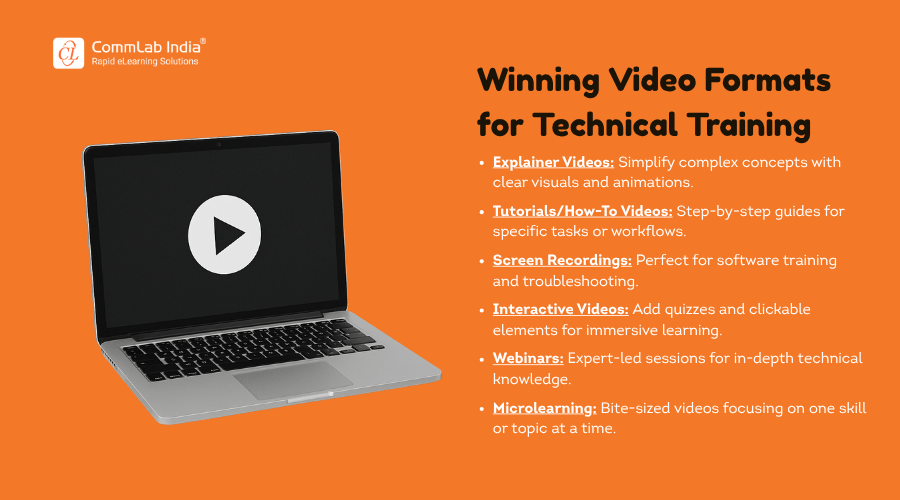
Video-based learning provide flexibility, allowing trainees to revisit content whenever needed. This on-demand access helps learners go at their own pace and reinforces key concepts. By combining videos, such as instructional clips or hands-on demo formats, with practical training methods, organizations can create a dynamic, engaging, and effective learning experience for technical teams.
Using the latest AI video development technologies and authoring tools, you can even add a healthy level of interactivity to your technical videos.
Let’s look at a few tips and suggestions to create impactful interactive videos to facilitate technical learning.
Analyze Your Target Audience and Learning Objectives
Connect with Subject Matter Experts and learning managers to analyze the actual purpose behind the technical training. Then you can figure out where interactivities will fit into the videos.
Include Hyperlink-based Interactivities
Embedding hyperlinks in onscreen text can be a great interactive asset for your technical training videos. This can be links that redirect corporate learners to third-party sites, online articles, or supplemental online training resources – all of which can greatly boost learner involvement. You can even create hot spots that lead to surveys, questionnaires, or additional trivia based on your technical learning topic.
Add Branched Videos
With today’s advanced authoring features, you can turn your training video into a branching scenario by creating paths. You can set up specific points at which the video pauses and demands a response from the learners. For example, you can give your workshop employees the option to pick the correct spare part in case of a breakdown, and based on their response, proceed with the rest of the video accordingly. Each choice in such a case leads to a different online training video nugget.
Track Results
Since you would have spent a lot of time in creating the interactive video, you need to ensure it achieves the desired results. Using advanced analytics, corporate learner feedback, and customized reports, you can get valuable insights into the various interactivities.

5. Microlearning Modules
Breaking down complex topics into short, focused lessons helps keep learners engaged. Interactive elements like quizzes, polls, or drag-and-drop exercises make microlearning more engaging and effective. For instance, a 5-minute module on equipment calibration with an interactive checklist can be far more impactful than a lengthy, text-heavy manual.
Microlearning for technical training also caters to busy schedules, as technicians can complete lessons during short breaks. This flexibility ensures consistent learning without taking away from their day-to-day responsibilities, making training more accessible and less overwhelming.
6. Simulations to Bridge the Gap
Simulations allow learners to practice technical skills in a safe, risk-free environment. For example, a scenario-based exercise might simulate a machine malfunction, guiding trainees through diagnosing and resolving the issue step-by-step. This hands-on approach helps technicians build confidence and decision-making skills without the fear of real-world consequences.
Additionally, simulations create a deeper understanding of complex tasks by allowing learners to experiment, make mistakes, and learn from them. By bridging the gap between theory and practice, simulations ensure that training translates directly into job-ready skills.
7. Mentorship for Hands-On Learning
Digital training is powerful but pairing it with mentorship enhances its impact. Less experienced technicians can learn by shadowing seasoned professionals, gaining practical insights and guidance. Quick debriefs after tasks or collaborative problem-solving during troubleshooting create opportunities for hands-on learning.
Mentorship also creates a culture of peer learning, where team members feel supported and valued. It allows for the transfer of tacit knowledge, skills, and techniques not easily taught through formal training, ensuring that theoretical lessons translate seamlessly into real-world expertise.

AI-Powered Technical Training – A Practical Guide
- Training formats that work best for technical learners
- 3-touchpoint model for seamless collaboration with SMEs
- Practical tools and templates
- And More!
8. Social Learning for Collective Expertise
Encourage collaboration by creating platforms for knowledge-sharing through discussion boards, chat groups, or collaborative tools. Social learning allows technicians to exchange tips, troubleshooting techniques, or equipment handling best practices, building a strong sense of community.
User-generated content, such as how-to videos or annotated guides, further enriches training programs. When teams share their expertise and experiences, everyone benefits from a diverse pool of knowledge, fostering innovation and collective growth.
Discover how to unlock the power of social learning to make your corporate training more engaging and effective!
9. On-Demand Technical Resources
Equip your team with a library of easily accessible resources, such as step-by-step guides, troubleshooting videos, or equipment manuals. These tools serve as quick-reference materials that technicians can use in real time while on the job.
On-demand resources not only reinforce training but also empower technicians to solve problems independently. Having answers readily available increases efficiency and reduces downtime, ensuring smoother operations and more confident teams.
10. Scenario-based Learning for Real-World Application
Scenario-based learning makes technical training more engaging by placing learners in realistic job situations where they must apply knowledge, make decisions, and solve problems. Instead of passively consuming information, learners interact with real-world challenges, which makes technical concepts easier to understand, remember, and use on the job.
For L&D professionals, this approach is especially useful because it connects training directly to workplace performance. In manufacturing, scenarios can simulate machine failures, safety issues, or quality-control problems. In healthcare and pharma, they can focus on compliance, patient safety, equipment handling, or regulatory decision-making. When grounded in real tasks and common challenges, scenario-based learning improves engagement, builds confidence, and helps employees apply technical skills more effectively in high-stakes environments.
Next Step
By using strategies like real-world examples, interactive tools, and practical application, companies can completely transform their technical training programs. These methods make training more engaging and relevant while giving employees the hands-on skills they need to succeed in today’s fast-paced work environment. When your team has the right knowledge and tools, they can adapt to challenges, innovate, and excel in their roles—paving the way for long-term success.
Looking ahead, the key to effective corporate training is embracing flexible, efficient solutions that meet the changing needs of modern businesses. Online learning is a game-changer, offering personalization, scalability, and convenience to create impactful training experiences.
Take the next step toward smarter technical training. Download our eBook to discover proven training formats, outcome-driven measurement strategies, a seamless SME collaboration model, and practical AI-powered tools you can implement right away. Transform your technical training into a performance engine.