Building Skills at Scale in Global Manufacturing: A Conversation with Luz Lozano
Know Who’s Talking
Luz Lozano
Luz Lozano is HR Director, Americas – Talent and Development at Albéa Group, a global leader in beauty packaging solutions. With more than 15 years of experience leading HR and Learning & Development initiatives across manufacturing operations in Mexico, the United States, Italy, Indonesia, and other global locations, Luz specializes in talent development, leadership capability building, organizational culture, workforce readiness, and learning transformation.
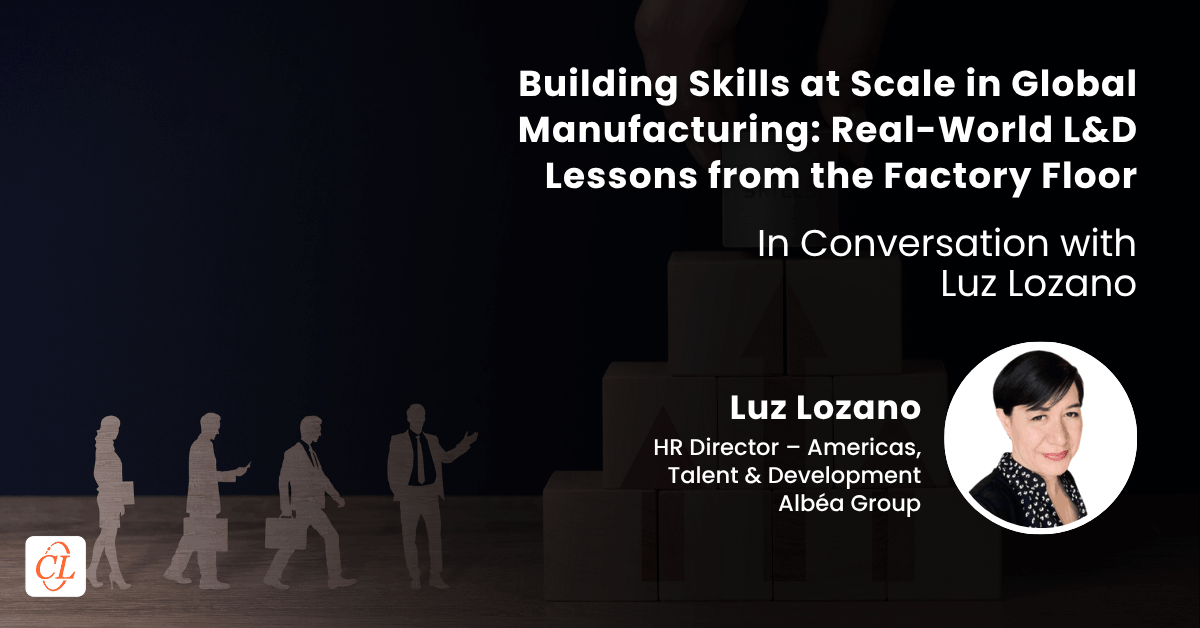
Welcome to CommLab India's eLearning Champion Podcast featuring Luz Lozano, HR Director, Americas – Talent and Development at Albéa Group. In this insightful conversation, Luz shares how global manufacturing organizations build skills at scale across thousands of employees, balance global learning frameworks with local needs, develop leaders across regions, and create learning cultures that thrive amid rapid technological change.
Drawing from her experience leading talent development across multiple continents, Luz discusses practical approaches to onboarding, leadership development, multilingual learning, workforce readiness, AI adoption, and sustaining learning cultures in complex manufacturing environments.
Click Here To Read Transcript
[00:00:10] RK Prasad
So today's podcast topic is Building skills at scale in global manufacturing, real world L&D lessons from the factory floor or shop floor with Luz Lozano, HR director, North America Talent and Development, Albéa Group.
[00:00:22] RK Prasad
With more than 15 years of experience leading HR&L&D across manufacturing operations.
[00:00:29] RK Prasad
In Mexico, the United States of America, Italy, and Indonesia, Luz brings deep expertise in global talent development, cultural transformation, leadership coaching, and building practical learning programs that actually work on the shop floor.
[00:00:48] RK Prasad
In this conversation, we explore how HR and L&D leaders are successfully scaling skills and capabilities.
[00:00:57] RK Prasad
Capability building in complex manufacturing environment, the real changes happening in workplace readiness, and proven strategies that deliver results.
[00:01:07] RK Prasad
Luz, a very warm welcome to the show.
[00:01:12] RK Prasad
I would like to open this conversation with asking you have led HR and L&D roles across multiple countries' manufacturing facilities.
[00:01:25] RK Prasad
Right from South America to North America, then Europe and Southeast Asia.
[00:01:32] RK Prasad
What initially drew you to the world of talent and learning and what has been the most rewarding part of driving people development in a global manufacturing environment?
[00:01:44] Luz Lozano
Great.
[00:01:45] Luz Lozano
Well, thank thank you, RK.
[00:01:46] Luz Lozano
Thank you for the invitation.
[00:01:48] Luz Lozano
I'm very happy to be able to contribute.
[00:01:52] Luz Lozano
a bit to what I have gone through and my experience with this type of setup.
[00:01:58] Luz Lozano
So what I would say, one of the things that I find from working across organizations globally, and specifically with manufacturing, is that you find pretty much the same challenges everywhere, right?
[00:02:18] Luz Lozano
We have a
[00:02:21] Luz Lozano
a set of we have in Albéa, we have a global footprint where we have different manufacturing processes.
[00:02:31] Luz Lozano
Our main processes are injection, molding, assembly, and decoration.
[00:02:37] Luz Lozano
So that's our product is packaging for beauty products and it's based on those processes.
[00:02:47] Luz Lozano
So we have plants across the world.
[00:02:50] Luz Lozano
We're based globally and we have global customers that we've worked with for a long time.
[00:03:02] Luz Lozano
And what we find is that our sites are all very similar.
[00:03:07] Luz Lozano
We have pretty much the same setup of a manufacturing organization.
[00:03:16] Luz Lozano
Where we have a group of leaders, we have a group of technical people, and we have a group of operators that manage getting the product out the door everyday right to service our customers.
[00:03:33] Luz Lozano
So we have big sites in China, in Indonesia, in Mexico, and now recently in South America.
[00:03:42] Luz Lozano
And the plants are all pretty much the same.
[00:03:44] Luz Lozano
There's a big manufacturing site that is that is being managed and operated by local people that normally live close by, were educated.
[00:04:02] Luz Lozano
In that area and have a very strong work ethics and very we have also a very strong retention, high seniority, but also high turnover in some cases.
[00:04:21] Luz Lozano
So we have a balance there of new people coming in old.
[00:04:27] Luz Lozano
more seasoned or experienced and people that have had higher seniority.
[00:04:32] Luz Lozano
And we see pretty much the same pattern in each of those organizations.
[00:04:36] Luz Lozano
We also have quite a bit of plants in Europe, where we have in France, in Germany, in Poland, in Italy, Slovakia, and they tend to be smaller plants with maybe a bit of higher automation.
[00:04:57] Luz Lozano
but with the same needs in terms of leadership, experts development and expert leveraging approach.
[00:05:08] Luz Lozano
So I would say that my experience in manufacturing has come to conclude that there is a need to develop all the time.
[00:05:23] Luz Lozano
And we need to address the local needs very, very specifically and consistently.
[00:05:35] Luz Lozano
And the local needs might be similar, but they're never the same.
[00:05:37] Luz Lozano
So I think that one of the things that has helped us is that we have kind of a global framework
[00:05:48] Luz Lozano
Or the way that we've evolved in the talent and development and training area is that what I guess what has worked is that we have a global framework where we have some fundamental fundamentals that are both soft skills and hard skills or technical skills and some road maps.
[00:06:17] Luz Lozano
But there's also the local component.
[00:06:20] Luz Lozano
So we don't impose, let's say, all the way down to the detail, but we give some fundamentals that are consistent across all of the global footprint.
[00:06:34] Luz Lozano
OK, because we have these differences.
[00:06:36] Luz Lozano
No, we have different levels of seniority, different levels of influx of.
[00:06:43] Luz Lozano
employees.
[00:06:44] Luz Lozano
And as you know, we need to make sure that on their first day they are safe and they are received, let's say, in embraced within the organization that they learn as quickly as possible so that they reach the level of safety, equality and effectiveness that the organization needs and that is
[00:07:12] Luz Lozano
The best for them also as employees makes them feel secure and effective.
[00:07:19] RK Prasad
Okay, so one question comes to my mind.
[00:07:23] RK Prasad
What kind of numbers are we talking about when we talk a large plant, say in South America?
[00:07:32] Luz Lozano
Number of so in number of people.
[00:07:34] Luz Lozano
So in South America we have in.
[00:07:39] Luz Lozano
Latin America, let's say, in Mexico, are one of our largest plants, it's 1200 employees.
[00:07:45] Luz Lozano
So it's it's 1200 employees in one facility, let's say or and in one city.
[00:07:56] Luz Lozano
And then we have of those 1200 employees, maybe about 800 are operators, shop floor operators.
[00:08:07] Luz Lozano
About 200 would be or 250 would be the technician setters supervisory some super yeah.
[00:08:19] Luz Lozano
And then we have another 200 that would be from supervisors, engineers and management.
[00:08:25] Luz Lozano
So it's a it's kind of a pyramid there and but in terms of operators, maybe we can.
[00:08:34] Luz Lozano
extend 300 more operators without extending the core team.
[00:08:39] RK Prasad
Okay.
p00:08:40] Luz Lozano
So we have some flexibility, but it remains pretty much stable around 1200.
p00:08:46] Luz Lozano
In Asia, we have larger plants.
p00:08:48] Luz Lozano
So in north and south China, we have I think it's about the plants are from 1500 to 2000 in the big cities, Indonesia.
[00:09:02] Luz Lozano
and in China, Mexico, and now in South America, we have one large plant in Colombia, which about 800, and another smaller plant, about 500 in Lima, Peru.
[00:09:17] Luz Lozano
Yes.
[00:09:18] RK Prasad
Okay, so I think that's a very good coverage.
[00:09:23] RK Prasad
So you have skills development, onboarding, safety training is what I could understand.
[00:09:32] RK Prasad
And you also said that although there is a retention is very good, but still there is some turnover.
[00:09:40] RK Prasad
So I think onboarding is a continual thing.
[00:09:44] RK Prasad
Where do you spend most of your energy in these 3 levels?
[00:09:48] RK Prasad
Like is it at the shop floor training, technical technicians, supervisory and manager in this pyramid?
[00:09:57] RK Prasad
Where does the bulk of your energy goes?
[00:10:01] Luz Lozano
In the bulk of the HR teams goes on to the operators, let's say, in terms of everyday activity and everything that's happening or the number of hours, let's say, that are spent are spent on the operators.
[00:10:16 ]Luz Lozano
My scope as a global leader is spent mostly on the leadership teams.
[00:10:22] Luz Lozano
So my I my participation is on setting the processes and the programs.
[00:10:31] Luz Lozano
and animating them and making sure that they are done consistently and completely.
[00:10:41] Luz Lozano
So we, I, the team or it's very small team that we focus on managing the programs.
[00:10:49] Luz Lozano
We would be focusing mostly on the leadership team because they are the ones that are managing everything else.
[00:10:54] Luz Lozano
So we we focus on.
[00:10:58] Luz Lozano
We have some programs right now that are global.
[00:11:03] Luz Lozano
That would be our leadership training.
[00:11:06] Luz Lozano
So we have 2 main leadership programs online that are for new manager and for emerging, emerging.
[00:11:16] Luz Lozano
I'm sorry, experienced leader and emerging leader.
[00:11:20] Luz Lozano
It it's yeah.
[00:11:22] Luz Lozano
So those are online and they are self paced, et cetera.
[00:11:28] Luz Lozano
We also have some classroom training that we manage of for leadership as well that is that is done in each region.
[00:11:36] Luz Lozano
So we have in North America, in Europe and in Asia, about 2 groups every year, very selected people that are identified as high potentials or that are in new leadership roles.
[00:11:52] Luz Lozano
We have a very strong right now, but we this is our second year with language training with English.
[00:12:00] Luz Lozano
Yes, we started a language program.
[00:12:04] Luz Lozano
I think this is our, I think we're starting actually our 3rd year with English for anyone anyone.
[00:12:12] Luz Lozano
So it was open.
[00:12:15] Luz Lozano
Well, at first we had some nominations, but it was taking too long.
[00:12:21] Luz Lozano
I think also one of our one of our strategies has been to make training open whenever we can so that it's easily accessible to anyone that wants to and we don't put in too much friction to get training.
[00:12:40] Luz Lozano
So we have English and then this year we started with adding on French and Spanish.
[00:12:46] Luz Lozano
So those are very popular as well.
[00:12:49] Luz Lozano
So it's been
[00:12:50] Luz Lozano
It's been quite quite interesting to see them.
[00:12:53] Luz Lozano
The ramp up started a bit slow, but now we're getting a lot more attraction with some nice features with AI simulations and avatar practicing and things like that.
[00:13:05] Luz Lozano
So it's been.
[00:13:07] RK Prasad
So my question here is that you do most of the language training digitally.
[00:13:14] Luz Lozano
Yes, yes, it's it it's digital, but the partnership includes.
[00:13:22] Luz Lozano
Live or sessions with a facilitator and that the employees can okay sign up for that.
[00:13:34] RK Prasad
So you talked about AI, but before we come there, I have one question.
[00:13:40] RK Prasad
You are dealing with different cultures, yes.
[00:13:45] RK Prasad
Okay, even in South America, you I'm sure.
[00:13:50] RK Prasad
Colombia, Mexico and Peru have their own cultures.
[00:13:57] Luz Lozano
Same but different.
[00:13:58] Luz Lozano
Same but different.
[00:13:59] RK Prasad
Yes, same but different.
[00:14:01] RK Prasad
And I think Colombia also speaks Spanish or is it Portuguese?
[00:14:09] RK Prasad
French, Spanish, Peru also.
[00:14:13] Luz Lozano
Yeah, Spanish.
[00:14:16] RK Prasad
Yeah.
[00:14:16] RK Prasad
And then you have so much of large presence in Europe where you have French, German, Sloven.
[00:14:2] RK Prasad
I don't know what language you speak in Sloven.
[00:14:27] Luz Lozano
Slovakian, Slovakian, Polish, Italian.
[00:14:32] RK Prasad
And then coming to China, you have Mandarin Yes and yes, Indonesian.
[00:14:40] RK Prasad
So language is one thing, culture is another thing.
[00:14:44] RK Prasad
But you have kind of standardised the framework, right, of leadership training and things like that.
[00:14:53 ]RK Prasad
So what challenges do you face when you try to bring in and try to train these different cultures, different people speaking different languages?
[00:15:08] Luz Lozano
I think the challenges in the application right where you have.
[00:15:13] Luz Lozano
You can deliver the training.
[00:15:15] Luz Lozano
So we have the courses, the actual content, but it's not it doesn't become meaningful until there is some context connected, right?
[00:15:31] Luz Lozano
So the context is normally done through application and through more of a local animation.
[00:15:39] Luz Lozano
So we provide the content, but we find that each site is very creative in how they deploy, who they involve, how they connect with the content itself.
[00:15:57] Luz Lozano
So we have that kind of balance between, OK, here is.
[00:16:04] Luz Lozano
The materials here is the messaging here is the connecting.
[00:16:13] Luz Lozano
Connecting threads right between all of the sites.
[00:16:18] Luz Lozano
But then each HR manager and with their steering committee.
[00:16:25 ]Luz Lozano
Manages it a little bit differently and sometimes they combined it also with local.
[00:16:32] Luz Lozano
With local trainers or either internal trainers or external trainers, but that they're that they're from the same city or from the same at least from the same country.
[00:16:46] Luz Lozano
So they can connect culturally and they can connect last choice.
[00:16:53] Luz Lozano
We do have as a strategy that all of the contents that we have online is available in at least 11:50 of the Albéa languages.
[00:17:06] Luz Lozano
so.
[00:17:07] Luz Lozano
that is specifically the where we have the biggest populations so that that is one of the things that when we when we come up with a project that that's one of the main criteria.
[00:17:22 ]Luz Lozano
It has to be something that is deployed the implemented that can be implemented worldwide and it needs to be available in the different languages.
[00:17:35] RK Prasad
Right, so.
[00:17:37] RK Prasad
You use a very effective combination of local resources, standardised content, and you localise the content to suit the culture and languages.
[00:17:52] RK Prasad
So you use a lot of local partners to do this, and but your content is centralised, yes.
[00:18:03 RK Prasad
OK, yes, yes.
[00:18:04] RK Prasad
So just a side question.
[00:18:06] RK Prasad
How have you been using Commlab earlier?
[00:18:09] RK Prasad
I mean where do we fit in?
[00:18:12] Luz Lozano
The what we have found is that we have we can buy some off the shelf content or we can buy some specialized content and it works well when we have a partner, somebody that is an.
[00:18:32] Luz Lozano
The best, let's say, in language training or the best in injection molding training or very good in leadership training.
[00:18:42] Luz Lozano
But then we find that we have some Albéa messaging that we want to that we want to say, OK, this is the Albéa leadership model.
[00:18:51] Luz Lozano
This is the Albéa finance vocabulary.
[00:18:56] Luz Lozano
This is the Albéa code of conduct, for example, or.
[00:19:01] Luz Lozano
Trainings that are for Albéa only and very Albéa specific messages that we want to deploy also that we want to get have them translated and deployed worldwide.
[00:19:13] Luz Lozano
So that's where CommLab has come in for some of the main the fundamentals again some some customization for the fundamentals that are specific to the company.
[00:19:26] RK Prasad
Yeah, your company so.
[00:19:29] RK Prasad
Let us move on to technology part of it.
[00:19:33] RK Prasad
If I understand correctly, your manufacturing technology, which is basically for the layperson, is injection only, which means you work with plastic and other polymers.
[00:19:49] Luz Lozano
Yes.
[00:19:50] RK Prasad
OK.
[00:19:50] RK Prasad
So is there a great change?
[00:19:56] RK Prasad
In the process or in the tools and technology in your industry compared to some industries where the change of technology is very, very rapid?
[00:20:09] Luz Lozano
I would say there is a good balance.
[00:20:11] Luz Lozano
I think most of the change right now is coming from the materials with environmental.
[00:20:21] Luz Lozano
Expectations and also environmental targets that we have as part of our corporate social responsibility.
[00:20:29] Luz Lozano
We have many initiatives that are around making sure that we have the best and most advanced in terms of at least environmental impact.
[00:20:42 ]Luz Lozano
And always looking at reducing, reusing, and recycling in the design of the materials and in the design of the products and in the quality of the materials.
[00:20:53 ]Luz Lozano
So I think most of the change comes from that, and but the process itself, the let's say that technology.
[00:21:04] Luz Lozano
There's always advancement in technology, but the advancement in technology has more to do with speed and automation.
[00:21:14] Luz Lozano
But it's molding machines and they're just maybe different sizes or different with different modularity.
[00:21:23] Luz Lozano
But I would say that the biggest change or where we need to train the most and we have also some.
[00:21:29] Luz Lozano
A big library of content on CSR is coming from the materials.
[00:21:36] RK Prasad
So you do have internal sustainability goals?
[00:21:40] Luz Lozano
Yes.
[00:21:43] RK Prasad
So it just occurred to me that your product packages, cosmetics, beauty products like lipsticks or compacts and stuff.
[00:21:56] RK Prasad
Most of it comes with a beautiful
[00:21:58] RK Prasad
plastic or some other polymer material, and most of them are thrown away after use.
[00:22:09] Luz Lozano
There's a lot of innovation going on right now, with and a lot of it is led by the customer.
[00:22:18] Luz Lozano
So Albéa is known for very strong partnerships with the customer.
[00:22:24] Luz Lozano
I think that's our one of our greatest assets or value added.
[00:22:29] Luz Lozano
And the customer has all of very strong initiatives on making products reusable, for example.
[00:22:39] Luz Lozano
So in the design of the product, there's a lot of innovation and mostly it's going to be focused around reducing the material.
[00:22:49] Luz Lozano
So we use less material.
[00:22:51] Luz Lozano
Obviously, we use more environmentally friendly material, recyclable materials.
[00:22:58] Luz Lozano
reusable products that you can exchange maybe just the fill filling and and and reuse it.
[00:23:07] Luz Lozano
So a lot of those very exciting and nice projects are coming from the customer or in also being proposed by Albéa in very close partnerships with them, right.
[00:23:23] RK Prasad
So because I have been reading a lot about the changes in cosmetics where a lot of natural ingredients are used.
[00:23:35] RK Prasad
I mean, one example which comes to my mind is Body Shop.
[00:23:37] RK Prasad
I don't know whether it is I heard it was not doing very well, but we have so many like which use all organic stuff for.
[00:23:53] RK Prasad
beauty products or hair care or skin care.
[00:23:59] RK Prasad
Do you, I mean your R&D, is it anywhere near bringing a complete organic packaging?
[00:24:07] Luz Lozano
There's a lot, a lot of, a lot of new, new, there's a lot of new packaging coming in, a lot of innovation, a lot of experimentation.
[00:24:17] Luz Lozano
So yes, for sure there there's there's a lot of initiatives around that.
[00:24:22] Luz Lozano
Yeah.
[00:24:23] RK Prasad
Wow, okay, so now moving on to a I, you did mention that for language training you use avatars and a I and stuff like that.
[00:24:39] RK Prasad
Can you expand a little bit more on what kind of tools and what kind of policies you have in place so that they are used properly?
[00:24:49] RK Prasad
Governance part of it.
[00:24:51] Luz Lozano
Yeah.
[00:24:52] Luz Lozano
Yeah, so we have an AI.
[00:24:56] Luz Lozano
I would say it's a charter or or an AI.
[00:25:02] Luz Lozano
Yeah, that's policy document.
[00:25:03] Luz Lozano
We have our internal AI tool, which is we we call it Albert, which is Albéa.
[00:25:13] Luz Lozano
And.
[00:25:14] Luz Lozano
It the they came up with the name of Albert.
[00:25:18] Luz Lozano
So we we call our internal AI.
[00:25:21] Luz Lozano
system Albert and it's it's got some controls and some features.
[00:25:29] Luz Lozano
It's right now we're we're working we're working on developing training on the again the fundamentals of of AI and how it's used and how it can be used safely so that there have been some workshops but we're still working on.
[00:25:49] Luz Lozano
A more universal and to get to more people approach.
[00:25:53] Luz Lozano
So that is currently in process of setting up the basics, lets say, but that doesn't stop people from learning by doing right.
[00:26:02] Luz Lozano
So we have its open and you can you start to see the.
[00:26:10] Luz Lozano
the different speeds know that people are adopting it and we've started creating some functional learning circles, let's say, where we have people sharing best practices and OK, I'm I'm doing this, I'm doing that and showing others what they've come up with.
[00:26:32] Luz Lozano
So it it's kind of been an interesting approach because you can't stop.
[00:26:39] Luz Lozano
People from learning, right?
[00:26:41] Luz Lozano
You shouldn't.
[00:26:42] Luz Lozano
I mean, it's something that we want it to be organic.
[00:26:46] Luz Lozano
We want it to be our culture that we're learning all the time and we're learning by doing, we're learning by experience, we're learning by relationships.
[00:26:55] Luz Lozano
and training itself, it's very important.
[00:26:57] Luz Lozano
And we set up the foundations, but it's 10% right if we look at the model.
[00:27:03] Luz Lozano
So the course itself will be important, but we people are looking at tutorials online and they're they go into the into the same help features from the tool itself to figure things out.
[00:27:18] Luz Lozano
But there's also been a what I really like is there's been a lot of learning by sharing.
[00:27:25 Luz Lozano
a lot of learning by just showing what you have done and people asking, how did you do it?
[00:27:30] Luz Lozano
And we try it right and hands on experimentation.
[00:27:36] Luz Lozano
So I think that AI approach, in a way it's similar to the approach that we used for learning and for the Albéa Academy or the or e learning platform is that we left it open for anybody to.
[00:27:52] Luz Lozano
To access it.
[00:27:53] Luz Lozano
So there's very no friction, let's say, in you getting the tool or you accessing training.
[00:28:02] Luz Lozano
So I think that really opens up the learning experience for everyone.
[00:28:07] Luz Lozano
And it becomes kind of custom, right?
[00:28:10] Luz Lozano
Because each person goes at it as its own speed and based on their own needs.
[00:28:16] Luz Lozano
And And we we we're starting to see some.
[00:28:21] Luz Lozano
Real progress right now in terms of more and more people using the AI functionalities.
[00:28:27] RK Prasad
So I don't know whether you can, you know about, I mean, you have access to that information, but your Albert is developed in house.
[00:28:39] RK Prasad
But on what gen AI is it based on?
[00:28:42] RK Prasad
Is it ChatGPT or?
[00:28:44] Luz Lozano
It's ChatGPT.
[00:28:45] Luz Lozano
Yeah, it's Alverb powered by ChatGPT.
[00:28:49] RK Prasad
ChatGPT and it is exclusively for the Albéa group.
[00:28:54] Luz Lozano
Yes.
[00:28:54] RK Prasad
And you have a charter which takes care of the governance part of it.
[00:28:58] Luz Lozano
Yes.
[00:28:59] RK Prasad
But you are leaving the learning open, which is great.
[00:29:02] RK Prasad
As you mentioned, 702010, only 10 is some structured learning.
[00:29:06] RK Prasad
Everything else is like application and group learning.
[00:29:11] RK Prasad
So.
[00:29:12] Luz Lozano
And learning by solving problems, right?
[00:29:15] Luz Lozano
Learning by solving the situations, right.
[00:29:20] RK Prasad
We have been doing a lot of primary research in AI.
[00:29:26] RK Prasad
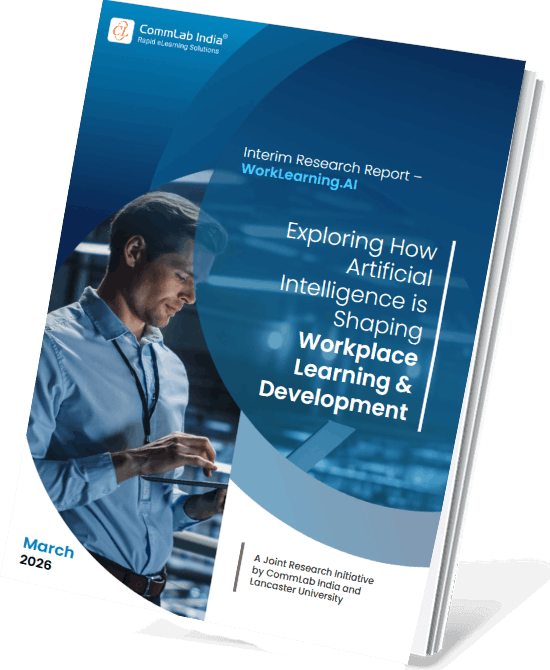
Comlab has tied up with Lancaster University in UK and we are doing how adoption is taking place in companies and what are the hindrances or what are the you know, enabling factors and inhibiting factors.
[00:29:41] RK Prasad
So we are in the 3rd stage, the final stage of research, and I'll be very happy to share the research findings with you.
[00:29:49] Luz Lozano
Yes, please.
[00:29:49] Luz Lozano
Yeah, very very interested.
[00:29:51] Luz Lozano
We're in that point right now.
[00:29:53] RK Prasad
Yeah.
[00:29:53] RK Prasad
So one last question before we wrap up, Loz here is that given this whole change in manufacturing, globalization, but the current tariff.
[00:30:09] RK Prasad
Regimes going on politically, every country wants, talking nationalism, there's lot of change.
[00:30:20] RK Prasad
And on top of that, we have A I which is changing fundamentally how we do business.
[00:30:25] RK Prasad
So as a people's manager, can you give 3 pieces of advice to my audience who are essentially learning leaders like ourselves?
[00:30:40] Luz Lozano
Well, I think one of the most important things for a leader is to embrace change, to take a moment, right, to observe and see how things are evolving.
[00:30:56] Luz Lozano
I think we cannot.
[00:31:00] Luz Lozano
We have some control, but.
[00:31:03] Luz Lozano
Mostly we it's more about adaptability and and understanding trying to understand trends from a very open and critical perspective, right?
[00:31:18] Luz Lozano
So we know that the world has gone through major change and and we can probably cite some of the main.
[00:31:27] Luz Lozano
Triggers know that that that really.
[00:31:30] Luz Lozano
Move things.
[00:31:32] Luz Lozano
This seems to be one of those things and we will probably not be able to predict much of.
[00:31:39] Luz Lozano
There's a lot of speculation obviously about AI and the impact that it would have as there was about industrialization, about Internet or.
[00:31:50] RK Prasad
Internet mobile technology.
[00:31:52] Luz Lozano
Or even before that, even before that, the P C's and all the all of the computer power, right?
[00:31:58] Luz Lozano
So, and now we were talking earlier about SpaceX and space travel and what it means to launch 1000 1000 rockets from our beach, right?
[00:32:13] Luz Lozano
So it is something that I would not venture to.
[00:32:20] Luz Lozano
Speculate right, because it that there is a there anything can go.
[00:32:24] Luz Lozano
What I can say is that as HR leaders, we need we need to to really connect with with the human being.
[00:32:32] Luz Lozano
We need to connect with with people, people as consumers, people as employees, people as.
[00:32:42] Luz Lozano
The infrastructure around our organization and.
[00:32:48] Luz Lozano
And focus on what needs to be done, right?
[00:32:50] Luz Lozano
What do we need to do?
[00:32:52] Luz Lozano
What is the best way to do it?
[00:32:54] Luz Lozano
And how do we move forward with an open mind?
[00:32:59] Luz Lozano
Take what works and discard the rest, right?
[00:33:04] Luz Lozano
Because we could really get, we can really lose our sleep from overthinking, overthinking a lot of these things and we'll have to wait and see.
[00:33:15] Luz Lozano
But that's kind of the learning culture, right?
[00:33:18] Luz Lozano
The learning culture is about curiosity, about what's question, you know, what is this for?
[00:33:26] Luz Lozano
What is it going to do and what can I do to make it better?
[00:33:31] Luz Lozano
I think those are the main things that I would say.
[00:33:36] RK Prasad
Wonderful.
[00:33:36] RK Prasad
So we need to keep an open mind.
[00:33:40] RK Prasad
We need to embrace change.
[00:33:43] RK Prasad
But we shouldn't be carried away by all the things which are happening.
[00:33:46] RK Prasad
We should be well grounded to see what is good, what can be implemented at this point of time.
[00:33:53] RK Prasad
More importantly, we should be in touch with our people, whether they are customers, whether they are our employees or our business associates, suppliers and all.
[00:34:04] RK Prasad
Thank you very much, Luz.
[00:34:05] RK Prasad
It has been a wonderful, wonderful session.
[00:34:09] Luz Lozano
It's been great.
[00:34:09] Luz Lozano
Thank you, RK.
[00:34:10] RK Prasad
Thank you very much.
Here are some takeaways from the interview.
What makes learning and development particularly challenging in global manufacturing environments?
Manufacturing organizations face a unique combination of challenges: large frontline workforces, varying levels of employee experience, ongoing hiring needs, and diverse cultural contexts. While facilities across regions may appear similar operationally, every location has distinct workforce dynamics, learning needs, and business realities.
Successful organizations balance global consistency with local flexibility. They establish common learning frameworks, leadership principles, and technical standards while allowing local teams to adapt implementation based on regional needs and workforce characteristics.
How do global manufacturers build skills consistently across thousands of employees?
The key is creating a global framework supported by local execution.
Organizations need foundational learning programs that establish consistent expectations around safety, quality, leadership, and technical competencies. At the same time, local HR and operational leaders must have the flexibility to contextualize learning and make it meaningful for their workforce.
Rather than imposing identical solutions everywhere, successful companies provide shared roadmaps while empowering local teams to adapt delivery methods and examples.
Where should L&D teams focus their efforts in large manufacturing organizations?
While much of the day-to-day training effort focuses on frontline operators, strategic L&D initiatives often concentrate on leadership development.
Leaders influence every level of the organization. By equipping supervisors, managers, and emerging leaders with the right skills, organizations create a multiplier effect that improves communication, engagement, performance, and capability development across the workforce.
Why is multilingual learning becoming a strategic priority?
As organizations become increasingly global, language skills enable stronger collaboration, knowledge sharing, and career mobility.
Modern platforms now incorporate AI-powered simulations, avatars, and conversational practice tools that make language learning more engaging and effective.
The lesson for L&D leaders is clear: accessibility matters. The fewer obstacles employees face when accessing learning, the greater the adoption and impact.
How can organizations balance global consistency with local cultural relevance?
Content alone is never enough.
While organizations can standardize frameworks, messaging, and learning objectives, learning only becomes meaningful when employees can connect it to their local context and daily work.
Successful global organizations combine centralized content development with local facilitation, regional examples, cultural adaptation, and in-country learning support. This approach ensures consistency without sacrificing relevance.
Why is localization critical for enterprise learning programs?
Global deployment requires more than simple translation. Learning experiences must be available in the languages employees use every day. Localization enables organizations to scale learning globally while maintaining learner engagement and comprehension.
How is AI changing learning and development in manufacturing organizations?
AI is accelerating learning in several ways.
Luz highlights that some of the most valuable learning happens when employees demonstrate how they are using AI, exchange best practices, and help one another discover new possibilities. This collaborative approach supports faster adoption and continuous capability building.
What role does learning culture play in successful AI adoption?
Organizations cannot force curiosity, but they can create environments that encourage it.
Rather than restricting exploration, promoting open access to learning resources and tools. Employees learn through experience, collaboration, experimentation, and problem-solving.
This reflects the broader principle behind learning cultures: people learn best when they are empowered to explore, share knowledge, and apply what they learn in real situations.
What advice does Luz have for L&D leaders navigating rapid change?
Luz offers three powerful lessons:
• Embrace change without becoming overwhelmed by it.
• Stay connected to people—the employees, customers, partners, and communities who drive organizational success.
• Maintain curiosity and continuously evaluate what works, adapting as circumstances evolve.
For learning leaders, the future belongs to organizations that combine adaptability, human-centered leadership, and continuous learning.
What is the larger lesson for L&D leaders?
One of the strongest themes from this conversation is that effective learning at scale requires both structure and flexibility.
Organizations need global frameworks, leadership development pathways, accessible learning technologies, multilingual delivery, and strong local ownership. At the same time, they must create cultures where employees are encouraged to learn, experiment, share, and grow.
As AI, globalization, and workforce expectations continue to evolve, the organizations that succeed will be those that make learning accessible, practical, and deeply connected to business outcomes.
WorkLearning.AI Interim Research Report
A Joint Research Initiative by Lancaster University, UK and CommLab India