From ICE to EV: Global Sales Leadership Lessons in the Age of Automotive Transformation
Know Who’s Talking
Akli Aggoune
Akli Aggoune is Vice President of Global Sales and Strategy for PowerDrive Systems at BorgWarner. With more than 12 years at BorgWarner and leadership experience spanning Europe and North America, he has guided multi-billion-dollar sales organizations through one of the biggest transformations in automotive history—the shift from internal combustion engines (ICE) to hybrid and electric vehicles (EVs).
Combining an engineering background with deep commercial expertise, Akli has led product strategy, customer engagement, organizational transformation, talent development, and global sales excellence initiatives. His experience offers valuable lessons for business leaders, sales professionals, and L&D teams navigating change in rapidly evolving industries.
Welcome to CommLab India’s eLearning Champion Podcast featuring Akli Aggoune, Vice President of Global Sales and Strategy for PowerDrive Systems at BorgWarner.
In this episode, you'll learn how successful leaders balance long-term innovation with short-term business realities, create alignment across global teams, and prepare organizations for rapid technological disruption.
Click Here To Read Transcript
00:00:10 RK Prasad
So welcome to the eLearning Champion Podcast.
00:00:15 RK Prasad
Today's episode title is From Ice to EV: Global Sales Leadership Lessons in the Age of Automation Transformation with Akli Aggoune, Vice President, Sales and Strategy, Borg Warner.
00:00:22 RK Prasad
Today I am joined by Akli.
00:00:26 RK Prasad
who is the Vice President of Global Sales and Strategy for Power Drive Systems at Borg Warner.
00:00:32 RK Prasad
With over 12 years experience at Bog Warner and a career spanning Europe and North America, Accley had led multi billion dollar sales organizations through one of the most transformative shifts in automotive history from internal combustion engines ice.
00:00:54 RK Prasad
To hybrid and fully electric vehicles.
00:00:57 RK Prasad
In this conversation, we will explore how to lead global sales teams through massive technological and organizational change, build high performing cultures, and develop people at scale.
00:01:11 RK Prasad
So whether you are in L&D leadership or management transformation in your own industry, I'm sure you'll walk away with.
00:01:21 RK Prasad
Very practical, real world insights that you can apply immediately.
00:01:28 RK Prasad
And now let us learn from the expert.
00:01:31 RK Prasad
Akali, welcome once again to the show.
00:01:35 Akli Aggoune
Thanks for having me.
00:01:38 RK Prasad
So shall I start with our first question, which is just a background question?
00:01:44 RK Prasad
You spent more than 12 years at Bog Warner, moving from sales director in Europe to leading North America and now global sales strategy for Power Drive Systems.
00:01:54 RK Prasad
What initially drew you to the automotive world and how has your engineering background influenced the way you approached sales leadership and business transformation today?
00:02:08 Akli Aggoune
Well, my father was working in the auto industry.
00:02:13 Akli Aggoune
So I got to do an internship very early when I was younger.
00:02:19 Akli Aggoune
And yeah, I think that influenced my choice to work in the auto industry.
00:02:25 Akli Aggoune
So the engineering degree that I selected was really preparing me really well for working in that industry.
00:02:34 Akli Aggoune
So that that would be probably why I selected that.
00:02:39 Akli Aggoune
And in the second part of the question.
00:02:42 Akli Aggoune
I really think my engineering background shaped the way I approach my whole career, particularly in sales.
00:02:52 Akli Aggoune
I'm I'm more of a structured leader, very organized and and you know, logical.
00:03:01 Akli Aggoune
So whatever I I I do, it's it's usually always follows certain logic.
00:03:11 Akli Aggoune
And this probably comes from my engineering background, right?
00:03:15 RK Prasad
So because you have come from a quantitative engineering background, you're a logical thinker.
00:03:23 RK Prasad
But I was just wondering, actually, that why didn't you go into the design and production side of it?
00:03:29 RK Prasad
Why did you come into marketing and sales, which is more people oriented?
00:03:37 Akli Aggoune
Yeah, that's correct.
00:03:37 Akli Aggoune
Actually, I so I started as an engineer my career and after a couple of years, my company, my first company pulled me into the sales role, which initially I didn't necessarily want to do.
00:03:54 Akli Aggoune
Okay.
00:03:54 Akli Aggoune
But the company felt that I was a good fit for the job.
00:03:59 Akli Aggoune
As an engineer, I was working closely with sales.
00:04:03 Akli Aggoune
I was working with sales to define the next generation products.
00:04:08 Akli Aggoune
So I was exposed to that side of the business and I was, you know, early in my career and I thought it was at the end, a great idea to try it out and see if that works.
00:04:21 Akli Aggoune
And if it didn't, I still had a chance to come back to engineering.
00:04:25 Akli Aggoune
Right.
00:04:26 Akli Aggoune
And finally, finally, it worked well and I stayed in sales for the rest of my career.
00:04:31 RK Prasad
Right.
00:04:32 RK Prasad
I was going through it and you were a very high level salesperson handling key accounts and major accounts and which happened to be very large companies, you know, Fortune 5 companies like Reno, Nissan and Mitsubishi and companies like that.
00:04:50 RK Prasad
So what do you think is your unique strength in sales?
00:04:54 Akli Aggoune
So sales in the auto industry as a tier one is very different from other companies.
00:05:00 Akli Aggoune
We have a limited number of customers.
00:05:02 Akli Aggoune
We serve mainly the OEMs.
00:05:05 Akli Aggoune
So we work with all major OEMs.
00:05:09 Akli Aggoune
So it's you're going to have a number of key relationships to manage.
00:05:16 Akli Aggoune
Right.
00:05:16 Akli Aggoune
I would say the unique.
00:05:23 Akli Aggoune
The most important thing in this job is building relationships with the key people that you need to work with and you or you're targeting to work with, building the trust because in the end humans are going to make the decisions.
00:05:42 Akli Aggoune
So if you have that trust established, you know, if you are authentic, if you are honest, not always.
00:05:51 Akli Aggoune
Try to oversell what you can offer, what your company can offer.
00:05:56 Akli Aggoune
That's how you build trust.
00:05:57 Akli Aggoune
If you deliver on your commitments, that's how you build trust.
00:06:01 Akli Aggoune
And over over time, people tend to be willing to work with your company because because they feel they have the truth coming from you and they they know what's going on in your company and they understand who they they're selecting as a as a partner.
00:06:19 RK Prasad
Right.
00:06:20 RK Prasad
So you you are you're a first rate engineer as well as a first rate salesperson.
00:06:26 RK Prasad
Which do you take more pride in?
00:06:37 Akli Aggoune
I take more pride in being having been able to find my path, you know, starting from one.
00:06:50 Akli Aggoune
one field engineering and moving to another one out of out of the blue, let's say.
00:06:56 Akli Aggoune
And yeah, I take pride of, you know, having been able to change my path and found really a path that fits me and that I really enjoy working in and love working in.
00:07:11 RK Prasad
Right.
00:07:12 RK Prasad
So one last question here is that how much did your engineering degree
00:07:19 RK Prasad
is helping you in meeting customers' needs and building trust, as you said.
00:07:32 Akli Aggoune
I don't see a direct link between my engineering degree and building trust with customers.
00:07:40 Akli Aggoune
I think all those skills, I I've redeveloped them in the job and not in my degree.
00:07:48 Akli Aggoune
Of course, you always develop communication skills, whatever degree that you follow.
00:07:56 Akli Aggoune
But I would say most of what I'm I practice today and I continue to practice and learn is based on my experience.
00:08:06 RK Prasad
Right.
00:08:07 RK Prasad
So you really don't need to be using your engineering knowledge here.
00:08:14 RK Prasad
But it is more like people's skills and people's knowledge.
00:08:18 Akli Aggoune
Well, we sell highly complex products.
00:08:21 Akli Aggoune
So I would say if you are an engineer, it helps you articulate better.
00:08:32 Akli Aggoune
What's your unique value proposition or what are the advantages of that technological solution versus the other?
00:08:41 Akli Aggoune
I would say directly it helps, but.
00:08:44 Akli Aggoune
that can be developed even if people don't come from sales, they can also deliver on that part of the job as well.
00:08:53 RK Prasad
So probably it will also help you to understand their requirements because they talk the technical language.
00:09:00 Akli Aggoune
Yeah, that's true.
00:09:01 Akli Aggoune
Yeah.
00:09:02 Akli Aggoune
System level constraints that they have.
00:09:06 Akli Aggoune
And yes, absolutely, you're making a good point.
00:09:09 RK Prasad
Yeah, thank you.
00:09:11 RK Prasad
So let us move on to the next question.
00:09:13 RK Prasad
Which is about the major shift in the automobile industry.
00:09:19 RK Prasad
You have been at the forefront of transition from internal combustion engines to hybrid and full electric vehicles.
00:09:26 RK Prasad
What were the biggest challenges you faced when leading sales teams and customer strategy through this massive industry transformation?
00:09:40 Akli Aggoune
The real heavy part was the product strategy.
00:09:45 Akli Aggoune
It's been a very intense period of time working on redefining the strategy.
00:09:52 Akli Aggoune
Where do we want to play?
00:09:55 Akli Aggoune
Where are we best fit in?
00:09:57 Akli Aggoune
You know, you take all those inputs from your customers and all the trends and the signals and you feel where is this going.
00:10:04 Akli Aggoune
You also need to collect that.
00:10:06 Akli Aggoune
information from the organization, just not it's not just not me.
00:10:11 Akli Aggoune
It's really make sure different people in the organization who are in touch with the market, in engineering, in sales, you connect with them, you organize information and from there you analyze what are your best, where is your value, what where is your right to play?
00:10:35 Akli Aggoune
And, you know, and you just connect right to play in the market and then you make the right decisions.
00:10:43 Akli Aggoune
And those decisions are made at the top.
00:10:45 Akli Aggoune
So also requires a lot of alignment with senior leadership functions.
00:10:54 Akli Aggoune
And I would say that that's been the heaviest part of the job.
00:10:58 Akli Aggoune
And then from there, once you have a full alignment, we have a right strategy, we know where we're going to play, where we're going to win.
00:11:06 Akli Aggoune
Then it's about how do you win and how do you win?
00:11:10 Akli Aggoune
This is discussed also a lot with sales and engineering.
00:11:14 Akli Aggoune
You know what type of actions we put in place to execute the strategy.
00:11:20 Akli Aggoune
So I would say defining strategy is was the heaviest part.
00:11:25 Akli Aggoune
Then once once you was defined execution part, I would say is more.
00:11:33 Akli Aggoune
traditional is not necessarily unique to that particular phase of the business.
00:11:40 RK Prasad
Right.
00:11:42 RK Prasad
So was putting together the product strategy more difficult or selling it to the top management that we have to make this shift was more difficult?
00:12:03 Akli Aggoune
No, I would say really defining the strategy was a real challenge, right?
00:12:09 Akli Aggoune
Yeah, because this you had constraints coming from everywhere.
00:12:17 Akli Aggoune
The biggest challenge I think was the maturity of the products on electric vehicles is not as high as in combustion engines, which means correct you still have major.
00:12:31 Akli Aggoune
Innovations, major improvements to make on the products to deliver higher efficiency and especially lower costs because there's a real affordability issue in electric vehicles.
00:12:47 Akli Aggoune
And to do that, you need to invest heavily in engineering and innovation, product innovation and.
00:12:57 Akli Aggoune
At the same time, we were hit by real crisis where, you know, all the programs we had launched and, you know, the market has invested in the technology, but the volumes didn't come.
00:13:10 Akli Aggoune
So you have those 2 situations where if you want to remain relevant, you have to continue to invest.
00:13:17 Akli Aggoune
How do you balance the short term, the long term really is a tough questions, tough question.
00:13:25 Akli Aggoune
And then.
00:13:26 Akli Aggoune
With the process that we put in place, it's again, a logical process, organized, structured, selling it is not about selling it, is about presenting it, is about bringing the clarity about, you know, everybody being on the same page and then making decision is, you know, my team makes a recommendation in alignment with engineering and sales and then.
00:13:55 Akli Aggoune
And then the senior leadership, the top management reviews and we align together, you know, where, what do we want to do?
00:14:05 Akli Aggoune
What are the pros and cons?
00:14:06 Akli Aggoune
And I don't think the alignment is not the tough part here, especially in our culture of collaboration.
00:14:15 Akli Aggoune
And I think everything is transparent, all information is shared, so it's not the tough part.
00:14:23 RK Prasad
OK, one very quick question here.
00:14:26 RK Prasad
This internal combustion engine, if I know I'm a layperson, it has been there for 100 years, right?
00:14:38 Akli Aggoune
Sorry, could you say it again?
00:14:39 Akli Aggoune
I didn't hear the beginning of your question.
00:14:41 RK Prasad
Sorry, I said this ice model, that internal combustion engine.
00:14:48 RK Prasad
Yeah, OK, was there for the last 100 years, right.
00:14:51 Akli Aggoune
Yeah, that's correct.
00:14:52 Akli Aggoune
Yes.
00:14:53 RK Prasad
So what is one main trigger which moved the industry towards electric?
00:15:04 RK Prasad
One main trigger.
00:15:06 Akli Aggoune
The main trigger was the environmental concerns around emissions in general, I would say Co 2 in particular.
00:15:19 Akli Aggoune
Yeah.
00:15:20 RK Prasad
Right.
00:15:20 RK Prasad
OK, great.
00:15:23 RK Prasad
So, emissions, yeah, go ahead, please.
00:15:28 Akli Aggoune
Yeah, emissions in cities is going to be different harmful emissions for it's been, it's become a public health issues in issue in big cities.
00:15:38 Akli Aggoune
And globally, you have the whole, you know, global warming concern that really triggered the political decisions.
00:15:49 Akli Aggoune
and.
00:15:50 Akli Aggoune
and any industry to develop zero emission technologies and BEV battery electric vehicles are today the best fit for zero emission vehicles.
00:16:07 RK Prasad
So the UN goals of sustainability has a direct impact on the government and thereby.
00:16:15 RK Prasad
Okay, correct.
00:16:18 RK Prasad
One other question, you talked about emissions and this obviously will bring down the emissions to almost zero.
00:16:28 RK Prasad
But what do you think about the pollution caused by the batteries?
00:16:38 Akli Aggoune
So when you look at the big picture, you know, energy is coming from the battery.
00:16:49 Akli Aggoune
The batteries themselves, the production, if you take what we call well to wheel, which means a full cycle, the emissions of how you produce the batteries, then how you assemble them in the vehicle, and then you compare that to the full cycle with an ICE vehicle, it's still going to be much more favorable with the BEV than with the ICE vehicle.
00:17:17 Akli Aggoune
OK, so even including the battery from the raw materials as well, it's still, it's still much more beneficial when it comes to Co 2 emissions?
00:17:34 RK Prasad
So you think that very soon the industrial combustion engines will just you know, become obsolete?
00:17:43 Akli Aggoune
No, well, first of all, nobody knows, but it's very unlikely that ice engines will become obsolete anytime soon.
00:17:52 Akli Aggoune
And you know, especially if you think of it globally, you're going to have different paces in different regions.
00:18:01 Akli Aggoune
Get it going to zero emissions, zero emission vehicles everywhere is not going to happen.
00:18:09 Akli Aggoune
Until I would say, I wouldn't give you a date, but long, long time.
00:18:15 Akli Aggoune
Yeah, every region is going to transition at their pace.
00:18:18 Akli Aggoune
And it's not necessarily a transition.
00:18:20 Akli Aggoune
Actually, some regions may never transition 200%.
00:18:26 Akli Aggoune
So it might be just a change, but not necessarily a tradition from zero to 100.
00:18:35 RK Prasad
Right.
00:18:35 RK Prasad
OK, that makes sense.
00:18:37 RK Prasad
Yeah.
00:18:38 RK Prasad
So let us move on to the next question, which is more in our realm of training and development and people.
00:18:48 RK Prasad
You talked about restructuring organizations, modeling business processes and sizing up people.
00:18:57 RK Prasad
Can you share a specific example of how you redesigned a sales organization or a commercial approach to stay ahead during the shift to electrification?
00:19:11 Akli Aggoune
So when it comes to sizing up people, so we work with you on that great initiative, the personal development maps, right?
00:19:21 Akli Aggoune
So that again organized approach to personal development help us understand.
00:19:30 Akli Aggoune
Where are the areas that we want?
00:19:35 Akli Aggoune
To develop collectively in the sales function within the company.
00:19:39 Akli Aggoune
So so it's really, it really helped us identify where do we need like fundamental the fundamental push.
00:19:49 Akli Aggoune
So we elevate, we size up the whole organization at once.
00:19:54 Akli Aggoune
So one of the areas that we looked at was customer relationship management, customer relationship building and development.
00:20:04 Akli Aggoune
We felt like in these particular times of uncertainty, we went through really tough times.
00:20:11 Akli Aggoune
At the end, the most important thing, and I think I mentioned it earlier, is really having the right relationships in place and making sure we proactively build them and advance them.
00:20:26 RK Prasad
Did you have any challenge in change management?
00:20:29 RK Prasad
Like they were doing a particular kind of
00:20:34 RK Prasad
Sale based on certain relationships and certain products.
00:20:39 RK Prasad
Now that it is going to a new this thing and as you said, customers may ask tough questions saying that we have used this, but you know, it is not giving us enough traction in the market.
00:20:52 RK Prasad
So these people have to, you know, really become more like, you know, consultants and.
00:21:02 RK Prasad
guide guides and stuff like that.
00:21:06 RK Prasad
So there must be a lot of resistance to the new methods and new new markets, new requirements.
00:21:14 RK Prasad
So was there a change management problem?
00:21:19 Akli Aggoune
Yeah, making a very good point.
00:21:22 Akli Aggoune
Yeah, you you will always have people who need more time to adopt a change and first to embrace the change, right?
00:21:32 Akli Aggoune
So yeah, managing changes is really part of the success.
00:21:38 Akli Aggoune
I would say how well you manage the change.
00:21:42 Akli Aggoune
I would say in general, my company, we are, I think overall very agile and overall compared to other other companies, people are used to change and they just it's just part of.
00:22:01 Akli Aggoune
Part of what we've been doing even before this electrification, these electrification challenges.
00:22:09 Akli Aggoune
But still, despite that, it takes active leadership, you know, and strong focus on change management.
00:22:19 Akli Aggoune
When.
00:22:20 Akli Aggoune
So one thing that is really, really key, crucial for sales is when you when you.
00:22:27 Akli Aggoune
Explain when you roll out, let's say, a change in strategy, change in the approach, say before we were doing this and now we're going to do that.
00:22:37 Akli Aggoune
And we before we were doing this, now we're going to stop or we're going to start something new.
00:22:42 Akli Aggoune
And even sometimes we had to change, you know, more than once a year, the same strategy changed because because just the market was so volatile.
00:22:51 Akli Aggoune
We had to react and go fast and make sure we remain relevant and fit.
00:22:58 Akli Aggoune
So the most important thing is that when you do that is to explain why.
00:23:02 Akli Aggoune
So if you just say go do it, you know, then you may trigger some resistance and people are going to adopt and I'm going to criticise and why do we do this?
00:23:15 Akli Aggoune
And that makes no sense.
00:23:17 Akli Aggoune
Six months ago we were doing this, now we want to do this and you know, you can trigger a lot of.
00:23:24 Akli Aggoune
A lot of question and anxiety.
00:23:28 Akli Aggoune
So before you say we're going to do this, you say, OK, here is what's what's happening.
00:23:34 Akli Aggoune
Here is the vision, the new vision.
00:23:38 Akli Aggoune
And based on that, we did that type of analysis and we checked those options, A, B, C, D and you know, and you go through that process that you've been through.
00:23:51 Akli Aggoune
And you share with some transparency.
00:23:53 Akli Aggoune
Of course, you can't share the massive amount of details that is behind, but there's a lot of work, by the way, in simplifying complex analysis.
00:24:03 Akli Aggoune
But then you share that simplified version of it.
00:24:07 Akli Aggoune
And, you know, people say, oh, okay, I get it.
00:24:09 Akli Aggoune
So we looked at that, we looked at that and, you know, and then I understand why we went there, why we want to do this.
00:24:19 Akli Aggoune
And sometimes some people may think option B or C or was better, more relevant, but at the end, they trust that there is more information that is behind that they don't know.
00:24:29 Akli Aggoune
And that that justifies why we picked that particular strategy.
00:24:36 Akli Aggoune
And I think as soon as you spend enough time for that, people feel like, okay, now let's talk about how we win.
00:24:46 Akli Aggoune
Like I said earlier, how do we, how do we make it work, right?
00:24:49 Akli Aggoune
And then it's like it's like the one team approach, you know, we need as a as a team.
00:24:55 Akli Aggoune
And when I say team is not just sales, especially sales and engineering together going to the market.
00:25:03 Akli Aggoune
And yeah.
00:25:05 Akli Aggoune
embracing, embracing it because they figured out.
00:25:09 Akli Aggoune
The other aspect is also when you go through that whole process of data collection, we try to involve as many people as possible.
00:25:16 Akli Aggoune
So they feel like they also had a chance to voice their view of where the market is going and where we need to, what we need to do, where we need to play and all those things.
00:25:29 Akli Aggoune
So if you have more of them involved early in the process,
00:25:34 Akli Aggoune
When the whole process develops and when we come to a conclusion, they feel, you know, they probably feel they're going to embrace the change.
00:25:46 Akli Aggoune
Yeah, they're part of the definition and they're going to embrace the change faster and better.
00:25:54 RK Prasad
Fantastic.
00:25:55 RK Prasad
I think I could glean 3 lessons here.
00:25:58 RK Prasad
The first and the foremost thing is you must make the effort and spend the time
00:26:04 RK Prasad
To explain why.
00:26:08 RK Prasad
So the second thing is that even though they may see some other option as a better option, they need to trust the company and the management that they have better reasons which they cannot share, obviously for different purposes, different reasons.
00:26:28 RK Prasad
So yeah, we trust them.
00:26:31 RK Prasad
So maybe.
00:26:33 RK Prasad
That is a better option.
00:26:35 RK Prasad
So I will accept it.
00:26:38 RK Prasad
But more importantly, what's resonated in me is what you said at the end.
00:26:43 RK Prasad
That is even while data collection, even before you decide what to change and why to change when you're collecting the data itself involve as many people as possible or key people.
00:26:59 Akli Aggoune
No, I would say really as many people as possible because diversity of opinions, you know, brings a lot of value, especially, you know, we're talking about global strategy.
00:27:13 Akli Aggoune
So you're going to have very different markets, different views, you know, people thinking differently.
00:27:20 Akli Aggoune
And sometimes you might have people who have that bright.
00:27:24 Akli Aggoune
vision or clear vision and you need to make sure they can voice it.
00:27:32 Akli Aggoune
So you know there is a that type of open process bottom up that is part of our of the way we drive the strategy.
00:27:45 RK Prasad
So by doing so you are preempting resistance to change.
00:27:52 RK Prasad
By being very transparent and also making them a part of the whole process.
00:28:00 Akli Aggoune
Yes, exactly.
00:28:03 RK Prasad
OK, actually I am coming to the next question, which is global leadership and teams.
00:28:11 RK Prasad
So here you led teams across Europe and North America, across diverse cultures and markets.
00:28:20 RK Prasad
So when we look at a global team, the need to be aligned and motivated and at a high performance level during these rapid changes, what were some observations or lessons you learned which you can share with my audience?
00:28:43 RK Prasad
Global workforce alignment and performance.
00:28:54 Akli Aggoune
I really feel, especially today, actually, we have some different dynamics in the different regions, right?
00:29:04 Akli Aggoune
And you have China that is already pretty much into the electrification and going really, really fast.
00:29:13 Akli Aggoune
And then you're going to have Europe that is
00:29:16 Akli Aggoune
accelerating and is going to become a huge market as well, very likely, and then the North America that is much lower.
00:29:27 Akli Aggoune
In that context, global alignment brings so much power and strength to the people, especially those who are not sitting in China.
00:29:37 Akli Aggoune
They need they need to understand what's happening in China and they need to talk to their Chinese colleagues.
00:29:44 Akli Aggoune
So.
00:29:45 Akli Aggoune
Yeah, I would say that's why we have those global roles in the first place because we are highly regionalized, you know, tailored to the local customer needs and so on.
00:29:56 Akli Aggoune
But we need a couple of global roles to make sure we really transfer, you know, the knowledge and even the know how from a region to the other.
00:30:07 Akli Aggoune
Yeah, so best practice sharing.
00:30:11 Akli Aggoune
And right now it's really a lot about transferring what China does outside of China, the way they the way they can deliver so fast, how do they do it right?
00:30:21 Akli Aggoune
And actually, it was my first my first big question myself when I took the role was like, how do they do that?
00:30:29 Akli Aggoune
You know, I don't understand.
00:30:31 Akli Aggoune
And I spent time in China and I asked a lot of questions, basic questions.
00:30:35 Akli Aggoune
OK, but how do you do it practically?
00:30:37 Akli Aggoune
How do you?
00:30:38 Akli Aggoune
Like, how do you deliver the same inverter program in one year in China when it takes three years in the US, you know?
00:30:49 Akli Aggoune
Yeah.
00:30:49 Akli Aggoune
And you know how and you got to get into the details and understand and you find out, okay, it's not just us, it's a whole industry.
00:30:57 Akli Aggoune
So it's, you know, the customer is also very, very different, very much more pragmatic.
00:31:02 Akli Aggoune
The specifications are.
00:31:04 Akli Aggoune
You know, 10 times thinner in China than they are.
00:31:08 Akli Aggoune
So there's a lot of there are a lot of differences in the end, but transferring those practices.
00:31:17 Akli Aggoune
You can collect those that are applicable in other regions.
00:31:21 Akli Aggoune
You know what I mean?
00:31:22 Akli Aggoune
Some of that you cannot apply them because if your customer is different, you can't necessarily behave the same the same way.
00:31:29 Akli Aggoune
But.
00:31:30 Akli Aggoune
But some of that you can actually do like being more pragmatic.
00:31:34 Akli Aggoune
Sometimes no overanalyzing is one of the one of the things when it comes to cost.
00:31:42 Akli Aggoune
You know, the approach to how do I get to the best cost is very different too.
00:31:46 Akli Aggoune
And it's all about risk taking and it's balancing the opportunity and the risk.
00:31:54 Akli Aggoune
When when it's a more of a tactical change or more of a
00:31:59 Akli Aggoune
A procedure like that region does it really well.
00:32:02 Akli Aggoune
They have like recently we had that situation where one of the regions took the initiative of setting up a call, like a monthly alignment call and they had that great format and it was really well executed.
00:32:15 Akli Aggoune
And I was like, oh, that's great, you know, it very works very well and you could see the participation, everybody participates and it was very effective and.
00:32:24 Akli Aggoune
So I just recorded that call and asked the person who took the initiative to spread, you know, the process that he put in place to the other regions and say, FYI, we do this here, have a look at that video and you know, just sharing how others are doing and and you know, every region can decide at some point how they how they want to drive and coordinate and align.
00:32:54 Akli Aggoune
We have some global processes, of course, that they have to follow with, you know, policy and but overall, how they want to communicate is really up to the region to decide.
00:33:06 Akli Aggoune
But sharing how others, you know, sharing the best practices through a video, a concrete example, is a good way of motivating the regions to embrace doing something differently.
00:33:22 RK Prasad
Great.
00:33:23 RK Prasad
So do you archive all these things and made available whenever it has to be referred to or training for new people or people who have moved into that saying that this is the best practice or this is how China has done it?
00:33:47 RK Prasad
Do you have an archive?
00:33:50 RK Prasad
a?
00:33:51 RK Prasad
you know, repository.
00:33:55 Akli Aggoune
Yeah, so that's what I call the process.
00:33:58 Akli Aggoune
So we have, we have like a procedure archive where we define what needs to be done globally and every region and every part of the company needs to follow.
00:34:17 Akli Aggoune
So as an example, before you submit a quotation to a customer, there needs to be a couple of steps and there needs to be some formal approvals and because you're engaging the company.
00:34:27 Akli Aggoune
So account managers cannot just go and send an offer that is not vetted and fully fully approved.
00:34:34 Akli Aggoune
So just that's just one example of those procedures that we have that apply to all of them, to all the to the whole company.
00:34:42 Akli Aggoune
So yeah, we have a couple of these.
00:34:44 Akli Aggoune
And it's always, again, the balance.
00:34:46 Akli Aggoune
You have to have those, but you also don't want that to be too heavy because you need speed.
00:34:51 Akli Aggoune
So we're optimising those all the time.
00:34:54 Akli Aggoune
It's part of the job in the VP of Sales.
00:34:59 RK Prasad
So these are all documented and archived and ready for use.
00:35:05 RK Prasad
But how exactly do you train people on processes?
00:35:11 Akli Aggoune
The way we do it is we.
00:35:14 Akli Aggoune
We, especially for major process changes, and we do, we do them almost every year because we continuously improving the standards.
00:35:25 Akli Aggoune
We run meetings where we present the changes in teams setting.
00:35:36 Akli Aggoune
You know, we do several of them.
00:35:37 Akli Aggoune
So we manage the different time zones and people being busy and so on.
00:35:41 Akli Aggoune
So we have to do several of them.
00:35:44 Akli Aggoune
And sometimes when the changes are major, we say, okay, it's a mandatory.
00:35:48 Akli Aggoune
So you have to select one of these sessions and you need to attend.
00:35:51 Akli Aggoune
And then we record on video.
00:35:54 Akli Aggoune
In those sessions, we we also keep a Q&A opportunity so people can ask questions, etcetera.
00:36:04 Akli Aggoune
And when it comes to.
00:36:09 Akli Aggoune
To a tool, like say when the change is not just a procedure, but also there's a tool that is changing that takes a little more time because people after the session needs to practice, right?
00:36:20 Akli Aggoune
And then they have more questions when they practice, right?
00:36:22 Akli Aggoune
So we have quite a few loops where we say, OK, this tool.
00:36:29 Akli Aggoune
Is introduced at that time and we have about 3 months and in 3 months it will become a mandatory tool.
00:36:35 Akli Aggoune
So people have a few months.
00:36:37 Akli Aggoune
To master get accommodated, to learn and after 3 months we terminate the former tool and I say 3 can be more depends on the on how big of a change it is.
00:36:47 Akli Aggoune
But so that's how we how we drive it.
00:36:51 RK Prasad
Did you consider changing it to a self learning module for future use?
00:37:00 Akli Aggoune
Indirectly it is a self learning module in the sense that the whole content that we present is.
00:37:08 Akli Aggoune
Usually would be like in a PowerPoint format, which has, you know, information showing how to do things and you know, schematics, visual.
00:37:18 Akli Aggoune
And then usually those documents are archived as part of the process.
00:37:23 Akli Aggoune
So you're going to have the process will be, let's say, maybe a document that describes formally a process and then you're going to have a a work instructions.
00:37:37 Akli Aggoune
Document that would be a PowerPoint that would be more, let's say you mentioned earlier you have a new hire.
00:37:44 Akli Aggoune
The new hire needs to understand what's expecting how to do things and that PowerPoint is going to be probably the first thing that that new hire will look at because it's it's visual simplified.
00:37:57 Akli Aggoune
And then once that power point is absorbed then they can go through the procedure itself that is more detailed and has more you know.
00:38:08 Akli Aggoune
precise, precise indications, right?
00:38:14 RK Prasad
So actually, I'll just take a little deviation.
00:38:17 RK Prasad
When we do a process training in ComLab, which you have done for many companies, we follow a method called watch, try and do.
00:38:26 RK Prasad
So the first 2 parts is what you have described.
00:38:31 RK Prasad
That is, we explain at.
00:38:34 RK Prasad
A higher level and a deeper level.
00:38:38 RK Prasad
And then we give them an opportunity to try.
00:38:45 RK Prasad
So we simulate that thing and it's more like learning by exploring.
00:38:52 RK Prasad
And then he goes to a piece where it is, there is no hint or there is no help, which is there in a try.
00:39:00 RK Prasad
So without any help.
00:39:02 RK Prasad
Is given an instruction to follow the process.
00:39:05 RK Prasad
So what should I do is a very, very good model.
00:39:08 RK Prasad
I just for your yeah, no, that's interesting.
00:39:12 Akli Aggoune
And what did you do then?
00:39:13 Akli Aggoune
Yeah, the 3rd one.
00:39:15 RK Prasad
What is the 3rd one they actually yeah, they actually do on the tool.
00:39:21 RK Prasad
OK or in the real environment?
00:39:26 Akli Aggoune
OK, understood.
00:39:27 RK Prasad
Yeah, yeah, so we'll be very happy to do you a prototype.
00:39:31 RK Prasad
Just give us one of those recorded things.
00:39:34 RK Prasad
Maybe for future you can find it useful.
00:39:37 Akli Aggoune
OK, yeah, absolutely we can look at that.
00:39:40 RK Prasad
Thank you.
00:39:41 RK Prasad
OK, the I think I will.
00:39:45 RK Prasad
Skip one question here and I will go to the last but one actionable advice for L&D leaders.
00:39:56 RK Prasad
Many L&D and management professionals listening today are responsible for preparing teams for similar transformations.
00:40:04 RK Prasad
If you were to design a learning program for global sales, technical customer facing, what are the 2 or 3 important things you keep in mind?
00:40:20 Akli Aggoune
Learning programs like a general learning programs, learning programs.
00:40:29 RK Prasad
But when we talk about this transformation and there is technology, there's a subject matter is technical.
00:40:41 Akli Aggoune
OK, let me think a little bit about that question.
00:40:49 Akli Aggoune
Yeah, because there are quite a few things.
00:40:52 Akli Aggoune
Yeah, first of all.
00:40:56 Akli Aggoune
The foundations, what I call the foundations in the sales role.
00:41:03 Akli Aggoune
You're going to have the foundations.
00:41:04 Akli Aggoune
Do do I have the right skills to deliver on expectations?
00:41:09 Akli Aggoune
And do I understand well the standard and the process and the how how am I expected to do things?
00:41:17 Akli Aggoune
So these are for me the foundations, which I call sales excellence.
00:41:23 Akli Aggoune
And continuous process management.
00:41:26 Akli Aggoune
So these are the 2 foundations.
00:41:32 Akli Aggoune
So if I think about a program, I would I would first focus on those foundations because then everything else depends on that.
00:41:44 RK Prasad
Right.
00:41:46 Akli Aggoune
Then the.
00:41:48 Akli Aggoune
The other aspect is the business and we talked about earlier, you know, understanding the market, understanding the strategy that the company is following and why.
00:41:59 Akli Aggoune
Okay, we talked about that.
00:42:03 Akli Aggoune
Once they have that, we which we transfer that into a what's what's a customer strategy.
00:42:11 Akli Aggoune
You know, once you know the product strategy, what's your customer strategy.
00:42:16 Akli Aggoune
So when we think about.
00:42:19 Akli Aggoune
Your question was around like aspects.
00:42:25 RK Prasad
Yeah.
00:42:25 RK Prasad
Do you keep in mind learning program?
00:42:27 Akli Aggoune
Yeah, it's it's really then OK, how do I translate the company strategy to a customer strategy?
00:42:35 Akli Aggoune
People would know very well the customer and and they have to define their own ways of doing things and align also with other people who work with the same customer.
00:42:48 Akli Aggoune
So for that piece, you're going to have really the global coordination and alignment aspect that is very critical, making sure for the same OEM, there is one way of doing things.
00:43:03 Akli Aggoune
You don't say China is going to have that strategy for that customer and for the same OEM in Europe.
00:43:13 Akli Aggoune
You know, Europe is going to have a different approach and strategy.
00:43:16 Akli Aggoune
And
00:43:17 Akli Aggoune
That just cannot work.
00:43:19 Akli Aggoune
So, okay, these are the few things that come to my mind.
00:43:26 RK Prasad
I have one question here.
00:43:28 RK Prasad
You have a diverse sales force across countries and across markets, and you also have different levels of experience and competence among your sales.
00:43:44 RK Prasad
So do you follow some kind of adaptive learning, meaning that if I know certain parts of the training, then I can skip and go to the next part?
00:43:56 RK Prasad
I mean, I don't waste time here.
00:43:59 RK Prasad
So is it customised to different levels of competence?
00:44:10 Akli Aggoune
Yes, it is.
00:44:11 Akli Aggoune
So.
00:44:13 Akli Aggoune
We don't have so many trainings that are mandatory for all.
00:44:17 Akli Aggoune
We don't have many of them.
00:44:18 Akli Aggoune
When we do, when we do a training that's mandatory for all, it's because there's something new that nobody's using like a new tool or a major change in the process that applies to everyone.
00:44:31 Akli Aggoune
But then the training plan is not is not collective in general.
00:44:37 Akli Aggoune
You have a few of them that are collective, like I said, the customer relationship management.
00:44:41 Akli Aggoune
But then most of them are not collective and they are on individual basis discussion with the manager.
00:44:49 Akli Aggoune
We use the personal development map and we understand where do I need training.
00:44:57 Akli Aggoune
And it's a discussion.
00:44:58 Akli Aggoune
I think I need training here.
00:44:59 Akli Aggoune
The manager will say, I think you need you may benefit from that training here.
00:45:04 Akli Aggoune
And then we come to a conclusion.
00:45:06 Akli Aggoune
OK, let's do this.
00:45:08 Akli Aggoune
So training is tailored.
00:45:10 Akli Aggoune
To the needs.
00:45:11 RK Prasad
Yeah, that's very smart way of doing it.
00:45:16 RK Prasad
So actually, I think we have just about 4 minutes left.
00:45:21 RK Prasad
So I would like to point out the takeaways for my audience.
00:45:28 RK Prasad
The first and the foremost thing which struck me as an L&D professional is how you manage change, which I found it to be very, very powerful.
00:45:39 RK Prasad
And very comprehensive, that is that involve all concerned as early as possible in the process and then get their buy in.
00:45:51 RK Prasad
And once they get the buy in, and then they themselves talk about how to do it.
00:45:58 RK Prasad
So that is one great thing.
00:46:00 RK Prasad
And the other thing which struck me is that when you design a training program.
00:46:09 RK Prasad
You talk about the market, you talk about the customer, you talk about the product strategy, how it needs to be translated.
00:46:18 RK Prasad
And there should be knowledge transfer from areas and markets which are doing well, which can be adapted or adopted as it is, as the case may be.
00:46:35 RK Prasad
So thank you very much.
00:46:38 RK Prasad
And if you wish to give one piece of advice to the L&D fraternity, what will that be?
00:46:52 Akli Aggoune
One advice for me is really focus on your foundations, you know, the foundations I talked about.
00:47:02 Akli Aggoune
And like everyday people are always
00:47:07 Akli Aggoune
tend to work on the most urgent aspects.
00:47:13 Akli Aggoune
But do you need to plan for whenever you have a chance and you don't have those urgencies that you need to plan for working on your foundations and working on the not urgent but very important things, right?
00:47:28 Akli Aggoune
And the balance in your days and your week.
00:47:32 Akli Aggoune
When am I going to do my training?
00:47:34 Akli Aggoune
When am I going to work on this and that aspect?
00:47:37 Akli Aggoune
And really, you need some planning and some scheduling because if you don't, then you're always going to look at your mailbox and follow what your customer wants you to do, what your management wants you to do.
00:47:49 Akli Aggoune
And then you you're missing your foundations.
00:47:51 Akli Aggoune
And with weak foundations, the house is not going to stand still.
00:47:54 Akli Aggoune
So that's my advice.
00:47:57 RK Prasad
Thank you very much, actually.
00:47:59 RK Prasad
We really appreciate your time.
00:48:01 RK Prasad
And great wisdom that you have shared with us.
00:48:04 RK Prasad
Thank you very much, have a great day.
00:48:06 Akli Aggoune
Thanks, was a pleasure.
00:48:07 RK Prasad
Bye bye.
Here are some takeaways from the interview.
How can leaders navigate large-scale industry transformation?
Major transformations rarely fail because organizations cannot execute. They struggle because leaders lack clarity on where to compete and how to win.
One of the key lessons from the transition to electric vehicles is the importance of building strategy from multiple sources of market intelligence:
- Gather insights from customers, engineering teams, and sales teams
- Analyze long-term industry trends and market signals
- Identify where the organization has the strongest right to win
- Align senior leadership around strategic priorities
- Balance long-term innovation investments with short-term business realities
The most challenging part is often not execution. It is defining the right strategy amid uncertainty and competing priorities.
What role does customer trust play in complex B2B sales?
In highly technical industries, products may be complex, but buying decisions are still made by people.
Trust becomes a critical differentiator.
Strong customer relationships are built when sales professionals:
- Deliver consistently on commitments
- Communicate honestly and transparently
- Avoid overselling capabilities
- Focus on long-term partnerships rather than short-term wins
- Understand customer constraints and business objectives
Over time, customers become more willing to work with organizations they trust because they feel confident in both the people and the solutions behind them.
How can organizations manage resistance during periods of change?
One of the strongest lessons from the discussion is that successful change management begins long before a new strategy is announced.
Instead of simply directing teams to adopt new approaches, leaders should:
- Involve employees early in the data-gathering process
- Encourage diverse perspectives and viewpoints
- Clearly explain the reasons behind every major change
- Share the analysis and thought process that led to decisions
- Create transparency around strategic priorities
When people understand why a change is happening and feel their voices were heard during the process, resistance decreases significantly.
The lesson is simple: explain the "why" before discussing the "how."
How do global teams stay aligned during rapid market shifts?
Global organizations face a unique challenge. Markets often evolve at different speeds.
During the transition to electrification:
- China emerged as a fast-moving innovation leader
- Europe accelerated adoption at a different pace
- North America followed its own trajectory
This makes knowledge transfer essential.
High-performing organizations create mechanisms to:
- Share best practices across regions
- Transfer lessons learned from advanced markets
- Encourage cross-regional collaboration
- Capture successful processes and make them reusable
- Balance global standards with local flexibility
Global alignment creates organizational strength by ensuring that learning in one market benefits the entire enterprise.
What is the best way to train employees on new processes and tools?
The discussion highlighted a practical approach to process training that combines structure with flexibility.
Successful organizations typically:
- Introduce process changes through live sessions and workshops
- Record training sessions for future access
- Maintain process documentation and visual work instructions
- Allow employees time to practice before changes become mandatory
- Create opportunities for ongoing questions and feedback
When new tools are introduced, employees need time to experiment and build confidence before old systems are retired.
The focus should be on enabling adoption rather than forcing compliance.
What should L&D leaders prioritize when designing sales learning programs?
According to our guest, learning programs should begin with strong foundations.
The first priority is sales excellence:
- Core selling skills
- Customer relationship management
- Process discipline
- Business communication
- Commercial effectiveness
The second priority is business understanding:
- Market dynamics
- Organizational strategy
- Product strategy
- Customer strategy
- Competitive positioning
Only after these foundations are established should organizations focus on advanced capability building.
Another important lesson is that training should not be identical for everyone. Learning plans should be tailored to individual needs, career goals, and competency gaps through ongoing conversations between employees and managers.
What is the biggest lesson for L&D and business leaders?
One of the most powerful messages from this conversation is that organizations often spend their time responding to urgent demands while neglecting the foundational capabilities that drive long-term success.
Whether in sales, leadership, or learning and development, sustainable performance depends on continuously strengthening the fundamentals.
Leaders should intentionally create time for:
- Skill development
- Process improvement
- Strategic thinking
- Knowledge sharing
- Continuous learning
As our guest explained, strong foundations determine whether the house can withstand future challenges.
When organizations invest consistently in those foundations, they become better prepared for whatever transformation comes next.
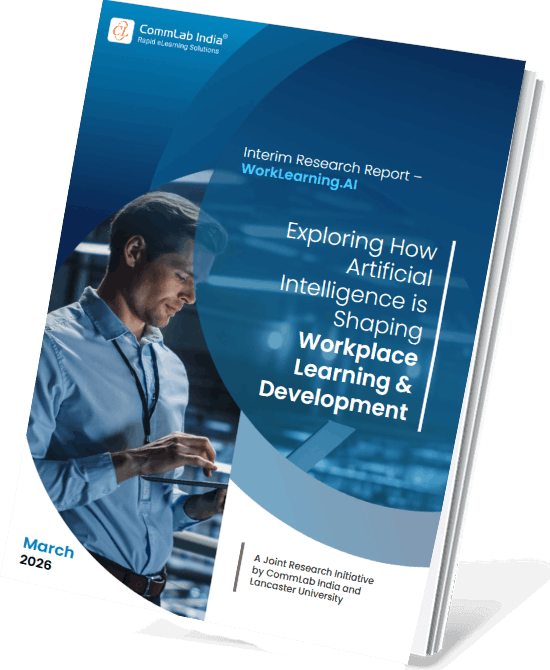
WorkLearning.AI Interim Research Report
A Joint Research Initiative by Lancaster University, UK and CommLab India